
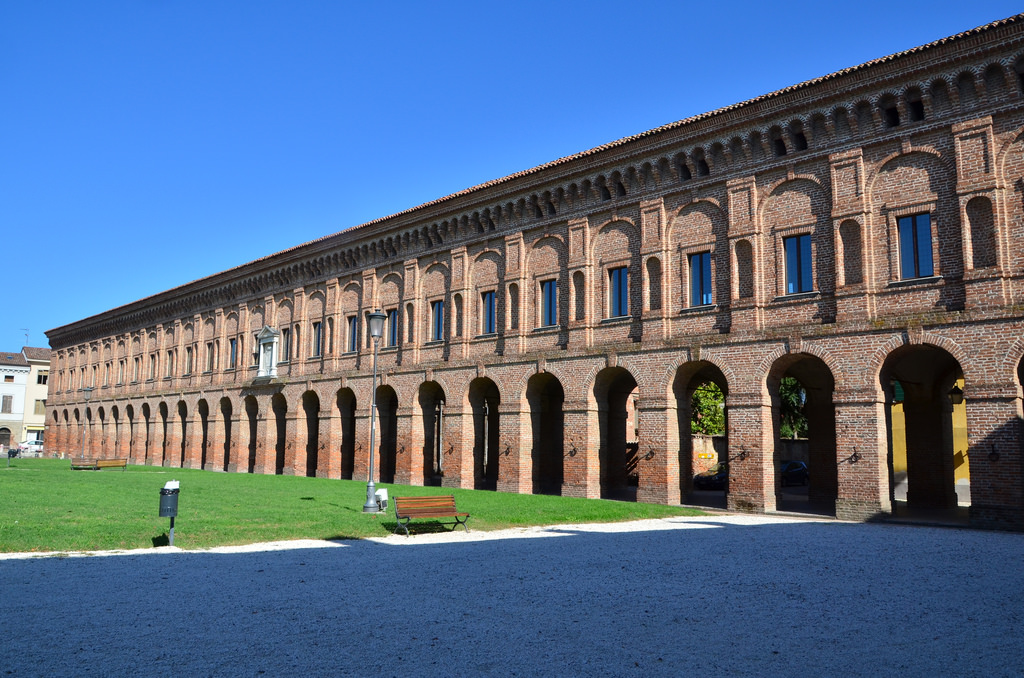

Nestled in the enchanting town of Sabbioneta, the Garden Palace (Palazzo Giardino) stands as a testament to the vision of Vincenzo Gonzaga, the Duke of Sabbioneta. Founded in the late 16th century, Sabbioneta was designed as a model Renaissance city, and this palace played a crucial role in the Duke's ambition to create a center for art and culture. A UNESCO World Heritage site since 2008, Sabbioneta reflects the ideals of the Italian Renaissance through its meticulously planned streets and stunning architecture.

The Garden Palace, constructed between 1579 and 1582, showcases a remarkable blend of Mannerist and early Baroque architectural styles. Despite its exterior simplicity, the palace is adorned with an exquisite cycle of frescoes painted by Bernardino Campi, a prominent artist of the time. These frescoes, dedicated to political and military virtues, illustrate the Duke’s ideals of governance and strength. Visitors will find scenes depicting Virtue, Fortitude, and Justice, which were intended to inspire and instruct the Duke's court.
As a private residence, the Garden Palace served as a retreat for the Duke, where he could indulge in the pleasures of life—his otium—amidst the beauty of nature. The palace is strategically located between the Galleria degli Antichi and the Corridor Piccolo, both significant architectural features that enhance the grandeur of the estate. The harmonious integration of the gardens with the palace design is a hallmark of Renaissance ideals, emphasizing the connection between nature and artistic expression.

Local culture in Sabbioneta is vibrant, characterized by its historical roots and the enduring traditions that have been passed down through generations. The town celebrates various festivals throughout the year, with the Sabbioneta Historical Festival being a highlight. This event, held in mid-August, brings the Renaissance era to life with parades, theatrical performances, and historical reenactments. Participants dress in period costumes, showcasing the town's rich heritage and inviting visitors to immerse themselves in its storied past.
Gastronomy in the region is equally compelling, with local cuisine reflecting the agricultural bounty of the surrounding countryside. When visiting Sabbioneta, one must try Tortelli di Ricotta, a delicious pasta filled with ricotta cheese and dressed in a sage butter sauce. Another local specialty is Cotechino, a type of pork sausage traditionally served during festive occasions. Pair these dishes with a glass of Lambrusco, a sparkling red wine native to the Emilia-Romagna region, to truly savor the flavors of Sabbioneta.
While many tourists are drawn to the obvious beauty of the Garden Palace, there are lesser-known curiosities that make a visit even more intriguing. For instance, the palace's gardens were designed using a geometric layout, embodying the Renaissance ideal of harmony and order. Moreover, the frescoes by Bernardino Campi include hidden symbols and allegories that speak to the political climate of the time, encouraging viewers to look deeper into the artwork's meaning.
Practical visitor information is crucial for a fulfilling experience. The best time to visit Sabbioneta is during the spring (April to June) or early fall (September to October), when the weather is mild, and the gardens are in full bloom. The palace is open to the public, and guided tours are recommended to fully appreciate the historical and artistic significance of the site. Be sure to take time to explore the surrounding gardens and the intricate details of the frescoes, as they are vital components of the palace's allure.
When planning your visit, consider downloading the Secret World app to customize your itinerary and discover the hidden gems of Sabbioneta.


