
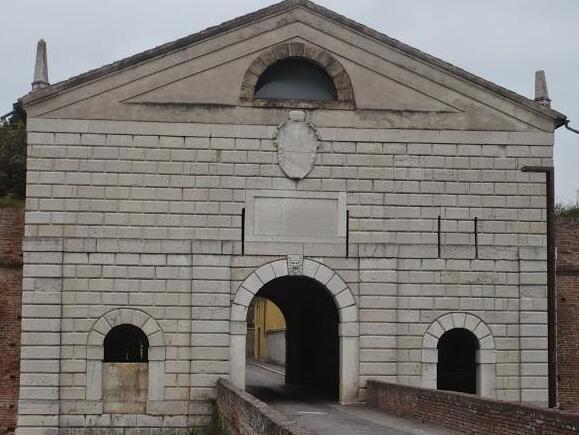

Nestled in the fertile plains of the Po Valley, Sabbioneta is a small yet remarkable town that stands as a testament to the vision of its founder, Vespasian Gonzaga. Established during the late 16th century, this UNESCO World Heritage site is renowned for its well-preserved fortifications, which include an impressive wall belt that encircles the town in an irregular hexagonal shape. Designed by the ingenious architects Girolamo Cattaneo and Bernardino Panizzari, the wall boasts six wedge-shaped bastions that create an imposing yet elegant silhouette against the landscape.
The origins of Sabbioneta trace back to its establishment in 1556 when Vespasian Gonzaga sought to create a model town that epitomized the ideals of Renaissance urban planning. He envisioned a fortified city that not only served military purposes but also became a cultural hub. The walls, completed in the late 1500s, were integral to this vision, providing both protection and a symbol of power.
Architecturally, the wall belt of Sabbioneta is a stunning example of Renaissance military engineering. The hexagonal shape was not only strategic for defense but also aesthetically pleasing. The Imperial Gate, constructed in 1579 and dedicated to Emperor Rudolf II of Hapsburg, serves as a grand entrance and is adorned with intricate sculptures and decorations that reflect the artistic sensibilities of the period. Each bastion offers a unique vantage point, revealing sweeping views of the surrounding countryside.
The artistic significance of Sabbioneta extends beyond its walls. The town is home to various Renaissance artworks, including frescoes and sculptures that adorn public buildings and churches. Notably, the Teatro all'Antica, one of the oldest theaters in the world, showcases Vespasian's commitment to the arts. The theater’s design follows classical principles, featuring a proscenium arch and seating for 250 spectators, encapsulating the cultural aspirations of the era.
Local culture in Sabbioneta thrives on traditions that echo its storied past. Festivals such as the Festa di San Rocco, held each August, bring the community together to celebrate with processions, music, and local delicacies. The town also observes the Sabbioneta Carnival, where locals don traditional costumes, reviving historical narratives through lively performances and street festivities. These events not only celebrate the town's history but also foster community spirit and pride.
Culinary experiences in Sabbioneta are a delight for food enthusiasts. Traditional dishes often feature local ingredients, with tortelli di zucca (pumpkin tortelli) being a must-try. This dish, filled with sweet pumpkin and seasoned with sage and butter, showcases the region’s agricultural bounty. Pair it with a glass of Lambrusco, a sparkling red wine that complements the rich flavors of the local cuisine, and you have a meal that encapsulates the essence of Sabbioneta.
For those intrigued by lesser-known curiosities, Sabbioneta holds a few surprises. One notable fact is that the town was designed to reflect Vespasian’s ideals of perfection, with meticulous attention to symmetry and proportion. Additionally, there are hidden passages within the walls that served as secret escape routes during times of siege, illustrating the strategic foresight of its engineers.
The best time to visit Sabbioneta is during the spring and early autumn months when the weather is mild, and the surrounding landscapes are vibrant. To fully appreciate the wall belt, take a leisurely walk around its perimeter, stopping at each bastion for a moment of reflection. Don’t forget to explore the charming streets of the town where quaint shops and cafés beckon you to pause and enjoy the local ambiance.
As you plan your visit to this architectural gem, consider using the Secret World app to tailor your itinerary and immerse yourself in the unique experiences that Sabbioneta has to offer.


