
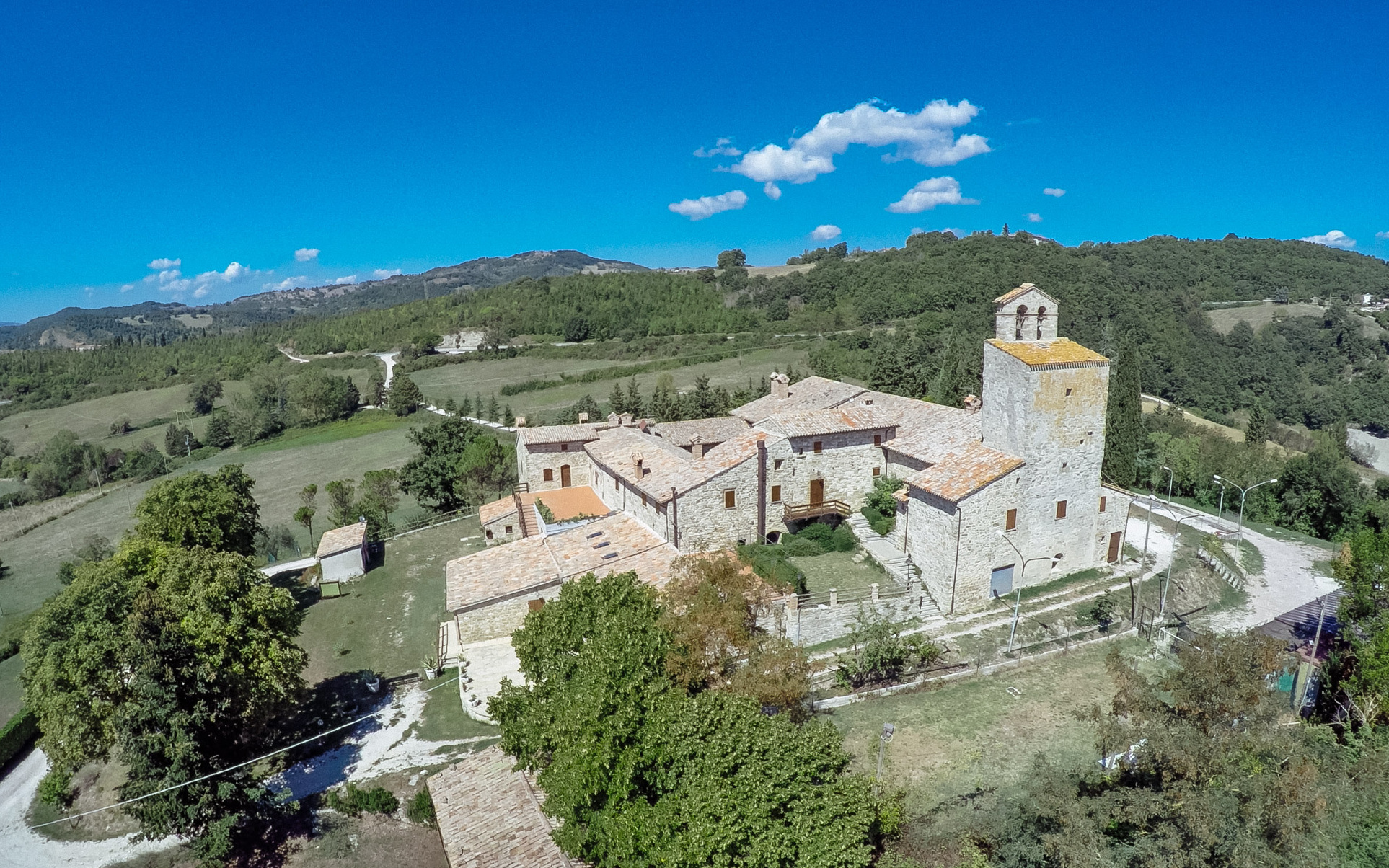

Perched elegantly atop a hill just a few miles from Gubbio, the Abbey of Vallingegno beckons visitors with its rich tapestry of history and serene beauty. Enshrined in the stunning Umbrian countryside, this abbey is not merely a relic of the past but a living testament to the intertwining of faith, art, and nature.
The history of the Abbey of Vallingegno is steeped in mystery, with its exact founding date shrouded in ambiguity. However, it first appears in the "Legenda Sancti Verecundi," a 7th-century text that recounts the martyrdom of a young knight who embraced Christianity. Legends suggest that the site may have originally been a temple dedicated to the Pagan god Genio, which is reflected in its Latin name, Vallis Genii. The abbey became a sanctuary of contemplative life when Benedictine monks took residence, flourishing for nearly four centuries until its suppression around 1442. This long history is echoed in the architecture and stories that permeate the site.
Architecturally, the Abbey of Vallingegno is a remarkable blend of styles that captures the essence of its long-standing heritage. The current complex consists of a single-nave church, a monastery, and a striking brick bell-gable that punctuates the horizon. Inside, the church reveals traces of earlier constructions, particularly notable in the square-plan crypt. This crypt is a hidden gem, showcasing column capitals sculpted in styles that predate the 11th century, offering a glimpse into the artistic evolution of the region. The vaulting overhead, supported by a central pillar, adds to the crypt's majestic yet austere atmosphere.
The abbey's connection to Saint Francis of Assisi is particularly poignant. Biographers recount an episode where Francis sought refuge here after an attack near Caprignone. The abbey's prior, however, did not extend a warm welcome, assigning Francis to menial tasks. This story highlights not only the saint's humility but also the human element of monastic life, reminding visitors that even revered figures faced challenges. Years later, the prior sought Francis’s forgiveness, illustrating the transformative power of humility and reconciliation.
Beyond its spiritual significance, the local culture surrounding the Abbey of Vallingegno is vibrant and steeped in tradition. The Umbrian region is known for its rich customs and festivals, many of which celebrate the agricultural calendar. Gubbio's Festa dei Ceri, held annually in May, is a lively event where locals carry towering wooden candles through the streets, culminating at the Sant'Ubaldo church. This festival, infused with fervor and camaraderie, reflects the deep-seated traditions of the community and their connection to the land.
No visit to the abbey would be complete without indulging in the local gastronomy. The Umbrian countryside is celebrated for its exquisite cuisine, characterized by rustic flavors and fresh, locally-sourced ingredients. Torta al Testo, a traditional flatbread often filled with savory ingredients, is a must-try. Pair it with a glass of Sagrantino di Montefalco, a robust red wine unique to the region, and you have a culinary experience that embodies the spirit of Umbria. The local olive oil, noted for its exceptional quality, further enhances the flavors of the region’s dishes.
For those who venture beyond the well-trodden paths, the Abbey of Vallingegno offers many lesser-known curiosities. One intriguing element is the ancient groin-vault ceiling in the crypt, which not only showcases architectural ingenuity but also serves as a testament to the abbey’s endurance through centuries of change. Additionally, the surrounding landscape is dotted with remnants of the monks' agricultural practices, such as terraced fields that once flourished under their care. These quiet details paint a broader picture of the abbey's role in sustaining both spiritual and material life.
The best time to visit the Abbey of Vallingegno is during the spring and early fall. The mild weather complements the stunning scenery, allowing visitors to fully appreciate the lush Umbrian landscape. When planning your visit, consider arriving early in the day to enjoy the tranquility of the site before larger crowds descend. Don’t forget to take a moment to explore the surrounding countryside, where trails lead through olive groves and vineyards, offering breathtaking views of the region.
As you explore the Abbey of Vallingegno, be sure to observe the intricate details that often escape the casual visitor—from the weathered stones of the façade to the echoes of ancient prayers whispered within its walls. This abbey, rich in history and cultural significance, is a treasure in the heart of Umbria.
For a tailored experience that uncovers the hidden gems of the abbey and its surroundings, consider using the Secret World app to plan your personalized itinerary.


