



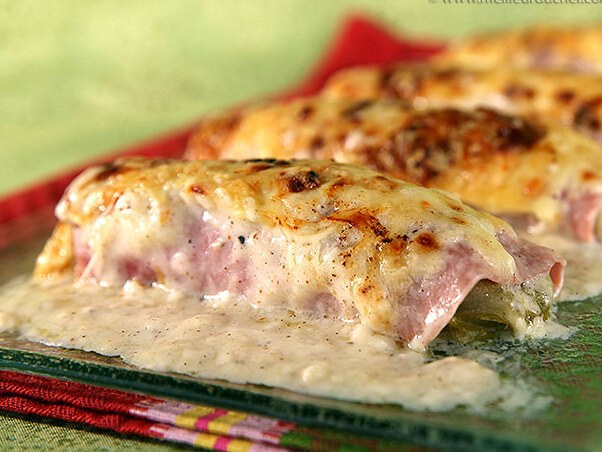
In the heart of Belgium, the culinary landscape is as rich and varied as its storied past, with dishes that tell tales of the country’s cultural tapestry. Among these is the comforting chicons au gratin, a beloved dish that captures the essence of Belgian gastronomy. This delightful concoction of Belgian endives, tender ham, and a creamy mornay sauce, baked to golden perfection, offers a taste of Belgium's culinary heritage.
The origins of chicons au gratin are deeply entwined with the history of the Belgian endive itself. Known locally as witloof, meaning "white leaf," this vegetable was first cultivated in the mid-19th century. Legend has it that endives were accidentally discovered by Jan Lammers, a Belgian farmer, who stored chicory roots in his cellar during the winter of 1830. When he returned in the spring, he found that the roots had sprouted pale, tender leaves. This serendipitous discovery quickly spread throughout Belgium, and by the late 19th century, endives had become a staple in Belgian kitchens, especially in the region of Brabant.
Belgium's art and architecture, much like its cuisine, are a testament to its vibrant history. The country is renowned for its Art Nouveau movement, with architects like Victor Horta leaving an indelible mark on the urban landscape. While chicons au gratin itself may not be a subject of artistic representation, the dish is often enjoyed in homes and restaurants filled with intricate art and decor reflective of Belgium’s artistic heritage. Dining rooms with heavy woodwork and stained glass windows, reminiscent of the Art Deco style, provide the perfect backdrop for savoring this hearty dish.
Culturally, Belgium is a mosaic of traditions, with influences from neighboring France, Germany, and the Netherlands. The dish chicons au gratin reflects this blend, drawing from French culinary techniques, evident in the preparation of the mornay sauce—a béchamel enriched with cheese. Festivals like Carnaval de Binche, recognized by UNESCO, showcase Belgium's rich tradition of pageantry and celebration, where food plays a central role, and dishes like chicons au gratin are served to warm the soul during colder months.
Gastronomy in Belgium is a delightful journey of flavors. Beyond chicons au gratin, the country is famed for its moules-frites, waffles, and, of course, its world-renowned chocolate. Belgian beers, from Trappist ales to lambics, are perfect accompaniments to the rich flavors of the local cuisine. Each dish and drink tells a story, rooted in local produce and time-honored recipes.
As with any dish, chicons au gratin holds its curiosities. The Belgian endive is sometimes referred to as "white gold" due to its labor-intensive cultivation process and economic importance. In Belgium, the preparation of this dish is often a family affair, with secret recipes and variations passed down through generations. Some families might add a touch of nutmeg to the sauce or use regional cheeses, adding a personal signature to the dish.
For those visiting Belgium, the best time to savor chicons au gratin is during the colder months, from late autumn through winter, when endives are in season and at their peak. While this dish can be found on menus year-round, experiencing it in the cozy ambiance of a traditional Brussels brasserie, such as Chez Léon or La Roue d’Or, offers a truly authentic experience. Visitors should also explore local markets like Marché du Midi in Brussels, where fresh endives can be found alongside other seasonal produce.
In conclusion, chicons au gratin is more than just a dish; it is a symbol of Belgian heritage and hospitality. It invites you to savor not only its delicious flavors but also a piece of Belgium’s cultural and historical mosaic. Whether enjoyed in a bustling city brasserie or a quaint countryside inn, this dish is a testament to the enduring appeal of Belgian cuisine.
