
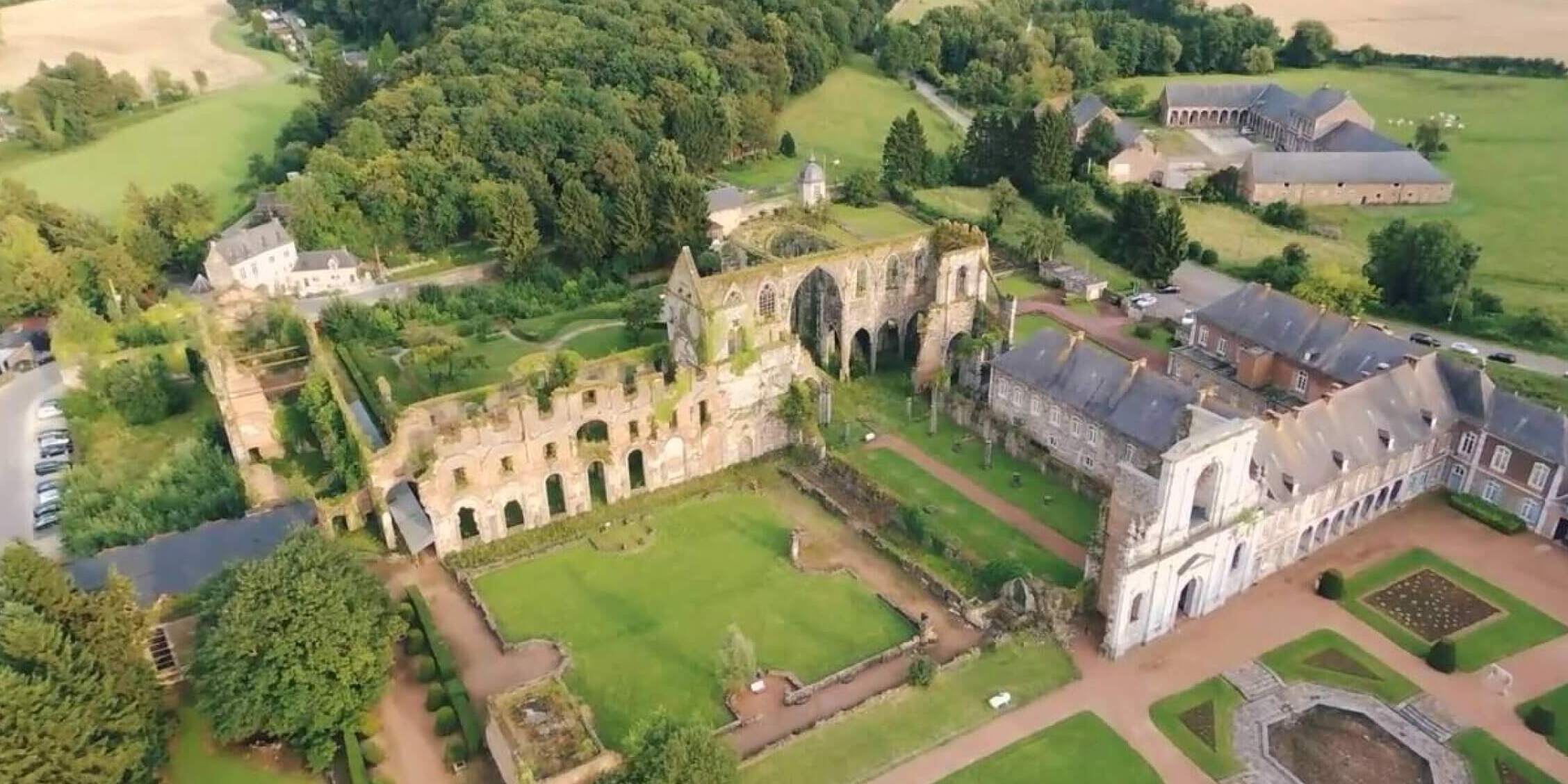

Nestled in the serene Vallée de la Paix (Valley of Peace) along the banks of the Sambre River, the ruins of the Aulne Abbey stand as a testament to centuries of spiritual heritage and architectural grandeur. Founded in 657 by Abbot Landelin of Crespin, who would later be canonized, this site has witnessed the ebb and flow of monastic life, shifting from a Benedictine monastery to a Cistercian Abbey in 1147.
The early years of the abbey were marked by growth and prosperity, largely due to its strategic location and the diligence of its monks. It became a pivotal site for the Cistercian reform movement, which emphasized simplicity and self-sufficiency. Over the centuries, Aulne Abbey flourished, becoming a center of agriculture and education. However, its fortunes waned during the French Revolution, when in 1794, revolutionary troops ravaged its structures, leaving scars that would never fully heal.
With the death of the last monk in 1859, the abbey was abandoned, and its once-hallowed halls were repurposed into a hospice. Today, visitors can explore the evocative ruins, which whisper tales of monastic life and the relentless passage of time. The remnants of the abbey’s Romanesque and Gothic architecture still inspire awe, with crumbling walls and arches that hint at the original splendor of the church.
The architectural significance of Aulne Abbey lies in its harmonious blend of styles. The Cistercian design principles are evident in the austere yet majestic structure, characterized by a lack of ornate decorations, which reflects the monastic ideals of humility and simplicity. The remaining stonework, particularly the intricate carvings and the robust columns, offer a glimpse into the medieval craftsmanship that once defined the abbey.
Artistic treasures, although largely lost to time, once adorned the abbey's interiors. The monks were known for their contributions to illuminated manuscripts and liturgical artifacts. Art historians note that Aulne Abbey played a role in the preservation of knowledge during the Middle Ages, housing a library that contained precious texts, many of which were hand-copied by the resident monks.
Local culture is deeply intertwined with the history of Aulne Abbey. The nearby town of Thuin celebrates its monastic legacy through various customs and festivals, particularly during the Saint Landelin Festival. This annual event, held in honor of the abbey's founder, brings together locals and visitors alike, featuring traditional music, local crafts, and culinary delights that pay homage to the abbey’s heritage.
Gastronomy in the Thuin region reflects the rich agricultural history fostered by the abbey. The famous Thuin honey, produced by bees that flourish in the surrounding meadows, is a local delicacy. Additionally, the area is known for its artisanal cheeses and craft beers, some of which are inspired by the brewing traditions of the monks. Visitors can enjoy tasting these local specialties at nearby bistros and markets, allowing them to savor the flavors of the region.
Among the lesser-known curiosities about Aulne Abbey is the legend of the "Cursed Well." It is said that a hidden spring within the abbey grounds possesses healing properties, but only to those who approach it with a pure heart. While the well is no longer visible, many locals still recount tales of its miraculous waters, adding an air of mystery to the site. Additionally, the abbey's ruins are frequented by artists and photographers, drawn to its haunting beauty and the captivating interplay of light and shadow.
For those looking to visit, the best time to explore Aulne Abbey is during the spring and early autumn when the surrounding landscape is lush and vibrant. The ruins are accessible year-round, but guided tours are offered from April to October, providing deeper insights into the abbey's history. It’s advisable to wear comfortable shoes, as the terrain can be uneven and the paths may be overgrown. Don’t forget to bring a camera—every corner of the abbey offers a frame-worthy shot.
As you wander through the Aulne Abbey ruins, take a moment to reflect on the lives that once thrived within its walls. The stories of faith, resilience, and artistry that permeate this site continue to resonate, inviting visitors to connect with a bygone era.
To make the most of your journey to Thuin, consider using the Secret World app to plan a personalized AI itinerary.


