


The water reaches your thighs when you first enter the darkness of Hang Va. There is no paved path, there is no ticket office with convenient hours: to reach this cave in the heart of the Phong Nha-Ke Bang National Park, in Quảng Bình province, you must first trek through the jungle on foot for several hours, then wade through an underground river multiple times, with the water rising and falling depending on the season. It is this physical and raw approach that makes Hang Va something radically different from conventional tourist caves.

Located in the commune of Thượng Trạch, Hang Va has only recently been made accessible to adventurous tourism, after explorations conducted by the British Cave Research Association in collaboration with Vietnamese authorities systematically mapped the caves of the park. Phong Nha-Ke Bang has been recognized as a UNESCO World Heritage Site since 2003, and its karst system is among the most extensive and ancient on the planet, with rock formations dating back about 400 million years.
The towers of stalagmites: an alien landscape underground

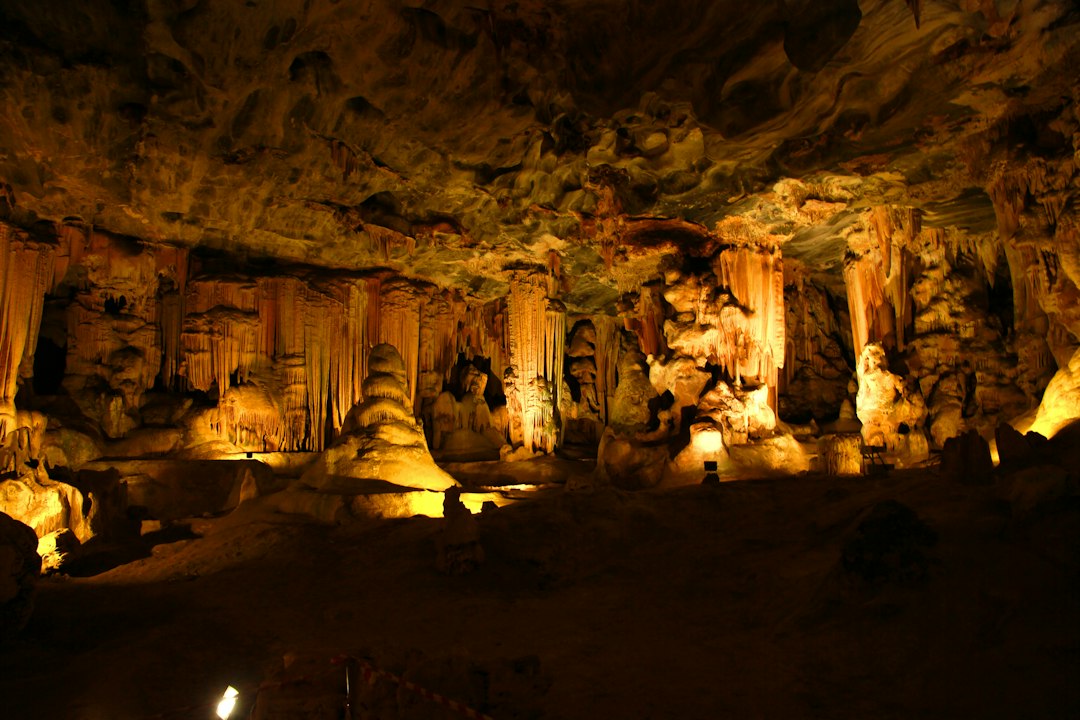
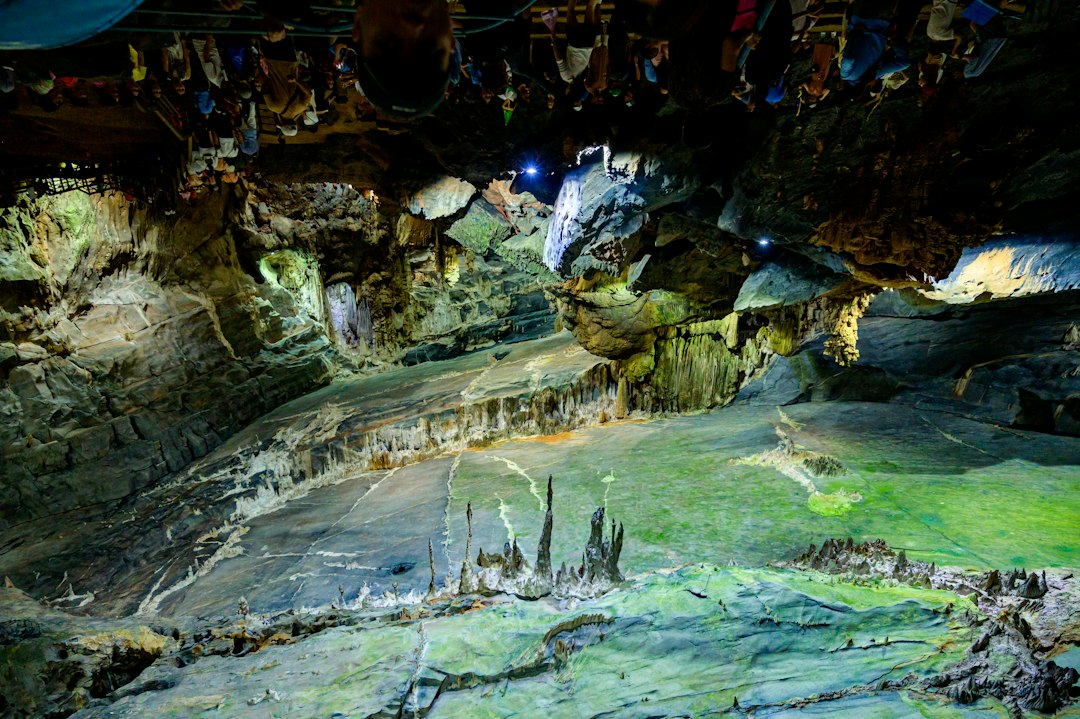
What awaits the visitor inside Hang Va is difficult to mentally prepare for. From the underground river that flows on the cave floor emerge hundreds of coralloid stalagmites, whitish and yellowish towers that can exceed one meter in height, some with shapes reminiscent of giant mushrooms or marine corals. These formations grow directly from the water, creating an almost underwater scene even on the surface: the lights from headlamps bounce off the water and the stalagmites, producing reflections that multiply the shapes infinitely.
The geological peculiarity of these structures is linked to the chemical composition of the water that feeds them: rich in calcium carbonate, it slowly deposits the mineral around organic or inorganic nuclei, building these natural architectures over time. Walking among them requires attention and respect: the guided path imposes not touching the formations, as the heat and oils from human skin can irreversibly alter the growth process.
How to get there and what to expect physically
The starting point for Hang Va is the city of Phong Nha, reachable in about 500 kilometers from Hanoi or in just over 2 hours from Đồng Hới, the nearest city with an active airport. From Phong Nha, organized tours — the only legal way to access the cave — typically depart at dawn. The complete excursion lasts between 8 and 10 hours and involves trekking through the jungle for several kilometers, repeated crossings of the underground river, and sections where it is necessary to swim or move with the water up to the chest.

The difficulty level is medium-high: no specific caving experience is required, but good physical fitness is essential. The tours include certified local guides, safety equipment, and packed meals. The cost of a one-day tour generally ranges between 100 and 150 US dollars per person, depending on the operator. Oxalis Adventure is one of the most well-known and structured operators in the area, with years of experience in the caves of Phong Nha.
When to go and what to avoid
The ideal season to visit Hang Va is from February to August. During the rainy season, which mainly affects the region between September and December, the level of the underground river can rise significantly, making the cave inaccessible or dangerous. Local operators regularly suspend tours during the rainiest months for safety reasons, so it is essential to check availability before planning your trip.
It is advisable to book at least a few weeks in advance, especially during the high season between March and May, when demand often exceeds available spots. Groups are intentionally small — usually no more than 10-12 people — to reduce the environmental impact on the cave. Bringing hiking shoes with a non-slip sole suitable for water, a change of waterproof clothes in dry bags, and a spare headlamp is considered essential minimum equipment.
Why Physical Sacrifice is Worth It
Not many places in the world require this level of commitment to reach, and perhaps that is their most honest value. Hang Va is not equipped for mass tourism, it has no illuminated walkways or explanatory panels. What it offers is a direct contact with a nature that has existed for millions of years in perfect indifference to the human observer.
Exiting the cave at sunset, with clothes still wet and muscles tired, gives a rare sensation of concreteness. It is not a metaphor: it is simply the result of having walked, waded, and swum for hours inside a Vietnamese mountain. And the towers of stalagmites reflecting in the dark water remain etched with a clarity that no photograph can truly capture.


