
← Back

Hannibal's Bridge : Among the oldest in Italy

87057 Scigliano CS, Italia ★★★★☆ 1,067 views
Raffaella Bellanova
Scigliano
🏆 AI Trip Planner 2026

Get the free app

Discover the best of Scigliano with Secret World — the AI trip planner with 1M+ destinations. Get personalized itineraries, hidden gems and local tips. Free on iOS & Android.

🧠 AI Itineraries 🎒 Trip Toolkit 🎮 KnowWhere Game 🎧 Audio Guides 📹 Videos
Scan to download iOS / Android
Scan for AppGallery Huawei users

About Hannibal's Bridge : Among the oldest in Italy

Hannibal's Bridge : Among the oldest in Italy - Scigliano | Secret World Trip Planner

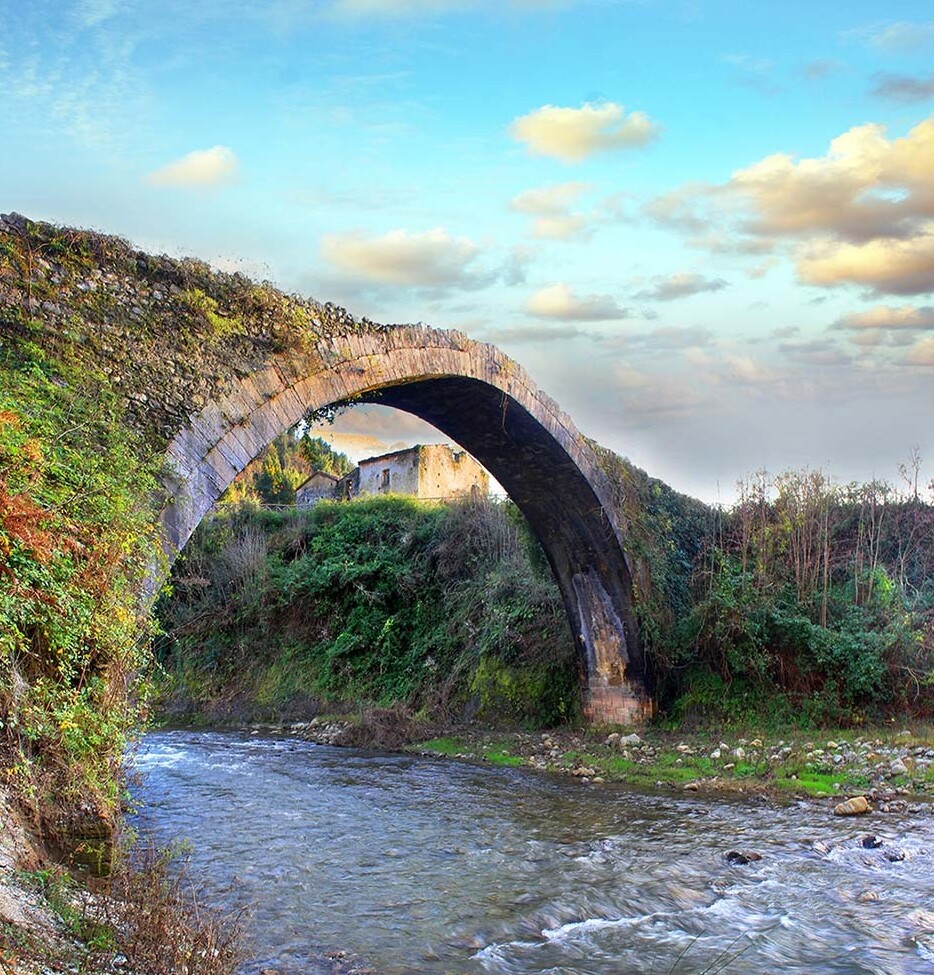
Built between 132 and 121 B.C. on the river Savuto, in Scigliano, it is one of the oldest bridges in Italy, together with the Fabricio bridge on the Tiber island (69 B.C.) and the Emilio bridge (179 B.C.). Although the origin of its name is doubtful - Ponte di Annibale or Ponte di Sant'Angelo, recalling in the first case a Carthaginian leader and in the second case the saint to whom a small local chapel was dedicated - what is certain is that the bridge represents the only work still accessible in the territory of the ancient "Brutium", thanks above all to the structural interventions carried out in 1961. The structure was built dry with red limestone tufa stone, coming from a nearby quarry, has a single vault with two concentric arches and a width of 3.45 meters, height of 11 meters and length of about 25 meters. The Roman bridge of Hannibal represents the still intact testimony of the ancient Via Popilia (or Capua - Rhegium), which led from Reggio Calabria to Capua and then joined the other roads leading to Rome. It was undoubtedly an imposing work for the times, but the least documented among the consular roads, so much so that the only information was found in the Elogium di Polla, a plaque written in archaic Latin, with which the builder, whose name is not evident, praised his work. The Via Popilia was used for centuries as a link with the extreme south of the Peninsula, but the lack of maintenance and the predilection of maritime routes for trade and commerce, reduced it to a mere country road.

🗺 AI Trip Planner 2026

Plan your visit to Scigliano

Suggested itinerary near Hannibal's Bridge : Among the oldest in Italy

MAJ+
500.000+ travelers worldwide
  1. 🌅
    Morning
    Hannibal's Bridge : Among the oldest in Italy
    📍 Scigliano
  2. ☀️
    Afternoon
    Secret Calabria | Convent of the Capuchin Friars
    📍 14.5 km · Scigliano
  3. 🌆
    Evening
    Monument to the Brothers Flag
    📍 17 km · Scigliano

Buy Unique Travel Experiences

Powered by Viator

See more on Viator.com

Explore nearby · Scigliano

Frequently Asked Questions

Hannibal's Bridge was constructed between 132 and 121 B.C. on the river Savuto in Scigliano, Calabria. It is one of the oldest bridges still standing in Italy, ranking among ancient Roman structures like the Fabricio bridge (69 B.C.) and the Emilio bridge (179 B.C.).
The bridge measures approximately 25 meters in length, 11 meters in height, and 3.45 meters in width. It features a single vault with two concentric arches and was built using dry-laid red limestone tufa stone sourced from a nearby quarry, showcasing remarkable Roman engineering techniques.
The bridge's name origin is disputed—it is called either Ponte di Annibale (referencing the Carthaginian leader Hannibal) or Ponte di Sant'Angelo (after a local saint with a dedicated chapel). Despite this uncertainty about nomenclature, the bridge remains an iconic historical landmark in the region.
The bridge was part of the ancient Via Popilia (Capua-Rhegium road), which connected Reggio Calabria to Capua and then to Rome, serving as a crucial link to the extreme south of the Italian Peninsula for centuries. It represents the only still-accessible Roman work from the ancient territory of 'Brutium,' making it an invaluable testimony to Roman infrastructure.
Yes, the bridge remains accessible to visitors thanks to significant structural restoration work completed in 1961. The bridge has maintained its integrity over nearly 2,200 years, allowing modern travelers to experience this remarkable example of ancient Roman engineering and the historical Via Popilia route.
Secret World Hidden places, real stories — plan your trip
Get the app
