
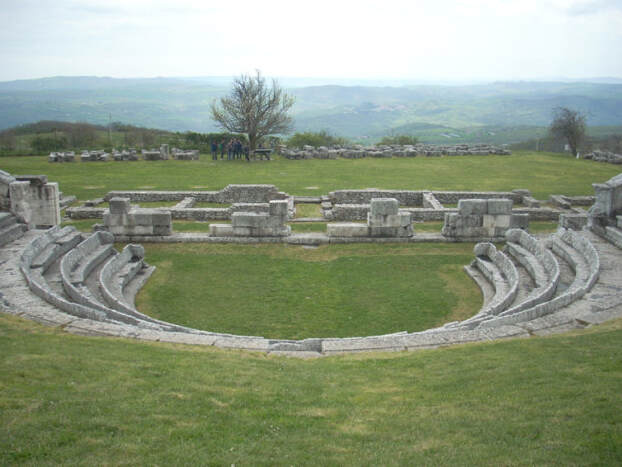

Nestled in the lush landscape of Sarno, Italy, the Hellenistic-Roman Theatre stands as a testament to the region's rich historical tapestry. This ancient structure, with its origins tracing back to 100 B.C., offers a fascinating glimpse into the cultural and artistic achievements of the time. The theatre was significantly transformed during the Augustan age, when a new proscenium was built, showcasing intricate masonry and vibrant paintings that celebrated the grandeur of Roman architecture.
The theatre's design is a striking example of ancient ingenuity, with its orchestra, or performance area, still visible today, alongside a portion of the cavea, the seating area that once held thousands of spectators. Among the remnants, the proedria seats—crafted from tuff—are particularly notable, reserved for dignitaries and local officials. Flanking these seats are exquisite sculptures of a sphinx and a winged lion, echoing the artistic influences of the time and symbolizing power and protection.
The Hellenistic-Roman Theatre was not merely a venue for entertainment; it played a vital role in the social and political life of Sarno. In ancient times, it hosted theatrical performances, gladiatorial contests, and public gatherings, becoming a focal point for community interaction. Understanding the theatre's significance offers insights into the daily lives of its ancient citizens and their cultural values.
Local customs and traditions are still deeply intertwined with Sarno's history. The town celebrates several festivals throughout the year that reflect its rich heritage, such as the Feast of San Giovanni, held every June. This vibrant event features processions, music, and traditional dances that honor the town's patron saint, attracting visitors and locals alike. The festival encapsulates the spirit of Sarno, bridging ancient traditions with contemporary celebrations.
Culinary experiences in Sarno are equally rich, with the local gastronomy showcasing flavors that have been cultivated over centuries. Dishes such as gnocchi alla Sorrentina and pizza napoletana are staples, often made with fresh ingredients sourced from the surrounding countryside. The area is known for its buffalo mozzarella, which is celebrated in various local dishes, and a glass of Lacryma Christi, a distinctive wine from the nearby slopes of Mount Vesuvius, pairs perfectly with the region's robust flavors.
Among the theatre's lesser-known curiosities is its connection to the ancient Roman poet Virgil, who is believed to have visited the site. This connection adds a layer of literary heritage to the theatre, attracting not only history enthusiasts but also literature lovers seeking to walk in the footsteps of one of Rome’s greatest poets. Additionally, the theatre's excavation in the 1960s unearthed numerous artifacts, including pottery and inscriptions, providing valuable insights into the daily lives of the people who once thrived in Sarno.
Visiting the Hellenistic-Roman Theatre of Sarno is an experience best undertaken during the spring or early autumn when the weather is pleasantly mild. Guided tours offer an enriching perspective, allowing visitors to appreciate the architectural marvels and historical context of the site. Look for the detailed carvings and inscriptions that adorn the theatre, as they tell stories of a bygone era and the artistry of ancient craftsmen.
For a truly immersive experience, consider using the Secret World app to craft a personalized itinerary that includes the theatre and other hidden gems within Sarno. The journey through history and culture awaits you in this charming Italian town.


