

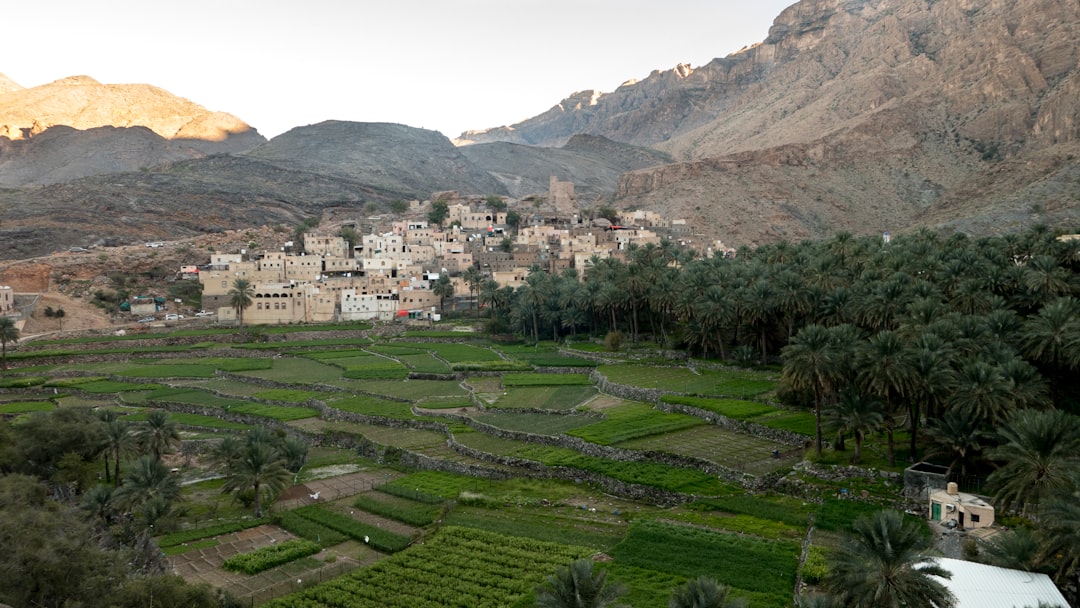
At a 3,009 meters above sea level, Jebel Shams is the highest peak in Oman, and the view that opens from its edge leaves no room for sufficient mental preparation. Before your eyes lies Wadi Ghul, a gorge about 1,000 meters deep carved into the ancient limestone of the Hajar mountains, so imposing that it is often compared to the American Grand Canyon. The rocky walls plunge vertically towards the valley floor, where the abandoned remains of an ancient village, Ghul, can be glimpsed, now deserted for decades.
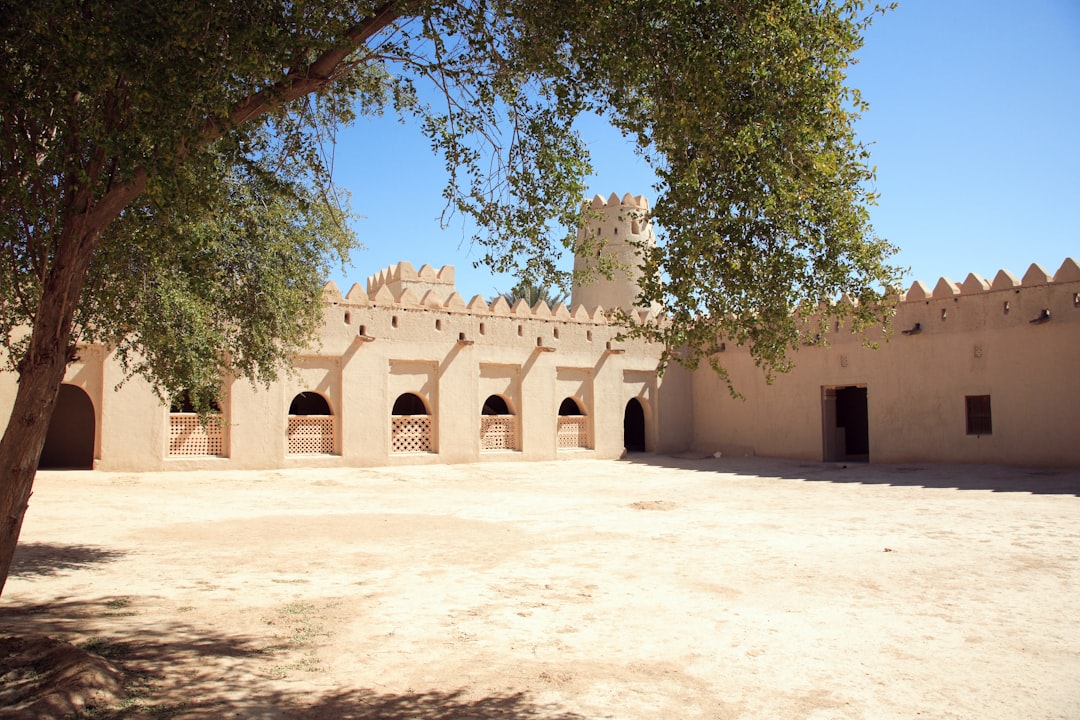
The name Jebel Shams literally means Mountain of the Sun in Arabic, a reference to its exposed position and the light that bathes it for almost the entire day. It is located in the Al Dakhiliyah region, accessible from the city of Al Hamra, one of the best-preserved historic villages in inland Oman, with its sun-dried mud houses that still withstand the passage of time.
The colors of the canyon at different times of the day
At dawn, when the light is still slanting and orange, the limestone walls of the canyon take on shades ranging from deep ochre to brick red. The shadows stretch across the valley floor creating a sharp contrast between the illuminated areas and those still dark, and the canyon appears deeper than it actually is. It is the moment when the rock seems almost alive, layered in bands of color that tell millions of years of geological deposits.
At noon, the direct light flattens the contrasts but reveals the details of the walls: the vertical fractures, the small shrubs clinging to the ledges, the traces of paths that descend below. At sunset, the phenomenon reverses compared to dawn: the western walls ignite in red and purple while the eastern ones slip into blue shadow, and for a few minutes the entire canyon seems suspended between two poles of light. The night sky, free from light pollution, is a separate and equally intense spectacle.

The W6 Trail and What You See While Walking
The most well-known route for exploring the edge of the canyon is the W6 trail, a path that runs along the rim of the gorge for several kilometers and does not require technical climbing equipment. Along the way, you can see the remains of the abandoned village of Ghul visible from above, some stone agricultural terraces built centuries ago by the local inhabitants to cultivate the slopes of the mountain, and several natural viewpoints where the edge overlooks the void directly.

The bottom of the gorge, visible but not easily reachable on foot from the main trail, shows the presence of vegetation along the seasonal watercourse that runs through it. At certain points along the trail, you can see wild goats — the Arabian ibex — moving gracefully on the almost vertical rock walls. The distance from the edge to the valley floor is such that the animals appear miniature even when they are relatively close.
How to get there and practical advice

To reach Jebel Shams, a 4x4 vehicle is necessary: the paved road goes up to a certain point, but the last stretch towards the summit plateau and the main viewpoints requires all-wheel drive, especially in the final stretch leading to the resort and the parking areas near the canyon. From Muscat, the drive takes about 3 hours, passing through Nizwa, the historic city with its 17th-century circular fortress.
The best time to visit is between October and March, when the temperatures at altitude remain between 5 and 20 degrees Celsius. In summer, the heat in the valleys below is extreme, but at altitude the temperatures remain more tolerable compared to the coast, although the sun is still intense. Bringing plenty of water is essential: the facilities along the trail are minimal. Arriving at dawn requires staying overnight in the area — there are some accommodations on the plateau — or leaving from Al Hamra or Nizwa in the darkest hours of the night.
The Plateau and the Geological Context
The Hajar Mountains, of which Jebel Shams is the highest point, are predominantly composed of limestone and ophiolite, rocks that testify to an ancient ocean floor uplifted by tectonic activity about 90 million years ago. This marine origin explains the presence of marine fossils at high altitudes and the horizontal stratifications visible on the canyon walls.
The summit plateau is relatively flat and barren, with sparse vegetation of shrubs adapted to aridity and wind. In winter, it is not uncommon to find temperatures below zero during the night hours, and occasional light snowfall is recorded, a rare phenomenon in the entire Arabian Peninsula. This combination of altitude, isolation, and lunar landscape makes Jebel Shams a place physically distant from any conventional tourist imagery of Oman.


