


The wind blows strong at the summit of Hallasan, the extinct volcano that dominates Jeju Island with its 1,950 meters of altitude, the highest point in all of South Korea. At the center of the summit crater lies Baengnokdam Lake, a volcanic origin body of water that appears and disappears depending on the seasons and rainfall. Jeju is not simply a beach island: it is a territory entirely built from volcanic activity, where every landscape — from the rugged coasts to the inland plains — tells millions of years of eruptions and cooling.

The island is located about 80 kilometers south of the Korean peninsula and administratively constitutes a special autonomous province. In 2007, UNESCO recognized Jeju as a World Natural Heritage site, including three distinct sites: Hallasan volcano with its nature reserves, the secondary volcanic cones called oreum, and the lava tube system of Geomunoreum. This triple recognition is rare on a global scale and reflects the extraordinary geological integrity of the island.
The lava tunnels of Manjanggul
Among the lava tunnels of the island, Manjanggul is the most accessible and one of the most spectacular in the world. It stretches for about 7.4 kilometers in total length, but only the first kilometer is open to the public. Inside, the temperature remains constant around 11-12 degrees Celsius all year round, regardless of the external season. The most visually impressive detail is the lava column at the end of the visitable section: about 7.6 meters high, it is considered one of the largest in the world of its kind.
The walls of the tunnel clearly show the different flows that have overlapped over time, with horizontal streaks of different colors that geologists call lava marks. The floor is uneven and damp, so it is essential to wear shoes with non-slip soles. The entrance fee is about 4,000 won for adults. The site is located in the northeastern part of the island, near the village of Gimnyeong, and can be easily reached by bus from the city of Jeju.
The black sand beaches and basalt coasts
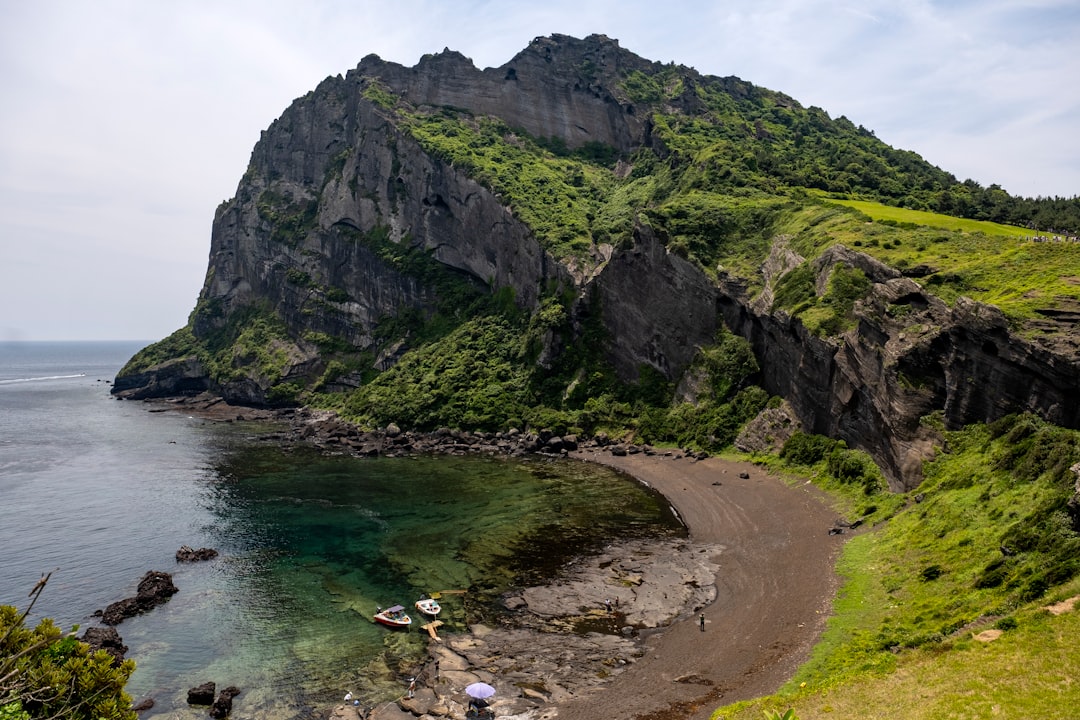
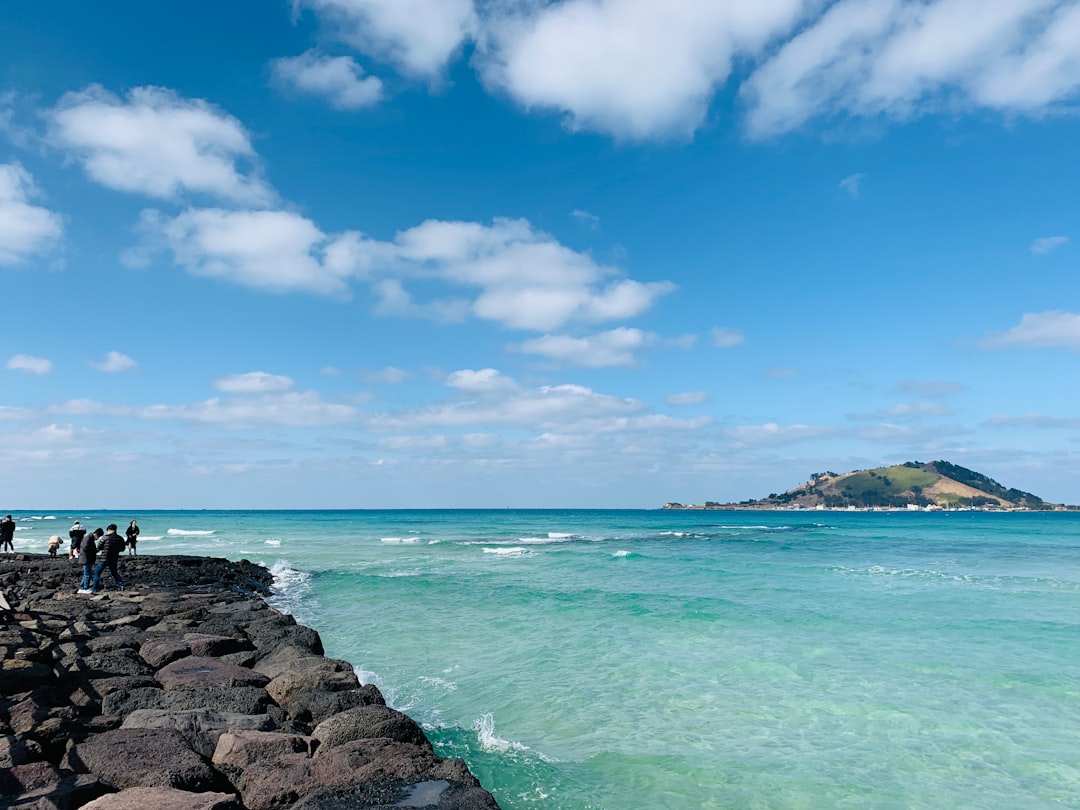
The beaches of Jeju do not resemble those of the Mediterranean. Dark volcanic sand characterizes many coastal stretches, while black basalt cliffs rise directly from the sea, creating jagged profiles. Hyeopjae Beach, on the western coast, is one of the few beaches with light sand and turquoise waters, very popular with Korean tourists during the summer. The southern coast, on the other hand, offers wilder landscapes, with rock formations like Jungmun Daepo Jusangjeolli, a cliff of hexagonal basalt columns that vaguely resembles the Giant's Causeway in Northern Ireland.

Along the coasts, one can still encounter the haenyeo, the traditional female divers of Jeju. This practice, passed down from generation to generation, was inscribed by UNESCO on the list of Intangible Cultural Heritage in 2016. The haenyeo dive without oxygen tanks to collect sea urchins, abalone, and other shellfish. Today, most of the practitioners are over fifty years old, and this tradition is considered at risk of extinction.
Hallasan: climbing to the roof of Korea

The Hallasan National Park offers several hiking trails of varying difficulty. The Seongpanak trail, about 9.6 kilometers uphill, is the main route to reach the summit crater and can be completed in about four hours of walking. The Eorimok trail, shorter and less demanding, leads to a scenic viewpoint without reaching the peak. The flora changes significantly with altitude: from subtropical forests at lower elevations to alpine meadows near the summit.
A crucial practical detail: the access gates to the trails leading to the summit close in the early afternoon (exact times vary by season and trail), and those who have not passed through the gate by the deadline cannot proceed. It is therefore essential to start early in the morning, ideally before 9:00 AM, to have enough time to ascend and descend safely. In winter, snow makes some trails slippery and access may be limited.
How to organize a visit to Jeju
Jeju City is the main hub of the island and hosts the international airport, connected with direct flights from Seoul (about an hour flight), but also from some Asian cities. Alternatively, there is a ferry from Mokpo and other ports on the southern coast of Korea. To get around the island, the most practical means is a rental car, available at the airport: public transport exists but the frequencies to the more remote sites are limited.
The best time to visit the island is in spring (March-April), when cherry blossoms and yellow canola flowers cover the fields, or in autumn (October-November), with mild temperatures and colorful leaves. Summer is hot and very crowded with Korean tourists. Winter is windy and cold at high altitudes, but allows for visiting the main sites with fewer crowds and lower accommodation prices.


