
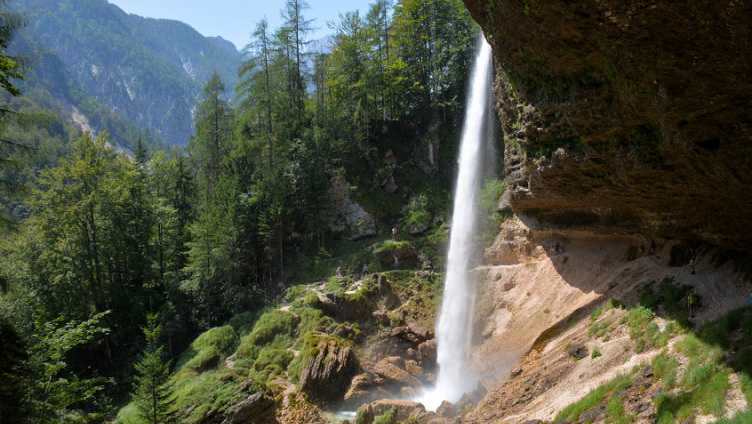

In the heart of Slovenia's Julian Alps, where rugged peaks meet lush green valleys, lies the enchanting Pericnik Waterfall. This breathtaking natural wonder captivates visitors with its two-tiered cascade, combining both beauty and adventure in a setting that feels almost otherworldly.

History and Origins
The story of Pericnik Waterfall is entwined with the natural history of the Julian Alps, a region named after Julius Caesar. The formation of these majestic mountains began over 150 million years ago during the Mesozoic era, when limestone deposits gradually evolved into the stunning karst landscapes we see today. The waterfall itself is believed to have been sculpted by the relentless flow of the Pericnik Stream, which has carved out the rock over millennia.

Historically, the nearby village of Mojstrana played a significant role in the development of alpine tourism. In the late 19th century, as the Alps began to attract adventurers and climbers, Mojstrana became a base for exploring the region’s natural wonders. Today, it serves as a gateway to the waterfall, which was first documented for its natural beauty in the early 20th century.
Art and Architecture
While Pericnik Waterfall is a natural marvel, the surrounding region also boasts significant architectural heritage. Traditional alpine architecture can be seen in the wooden houses and barns that dot the landscape, reflecting a blend of functionality and aesthetic beauty. The nearby Museum of Alpine Guides and Skiing in Mojstrana highlights the region’s rich mountaineering history, showcasing artifacts that tell the story of early climbers who ventured into these rugged terrains.
Artists have long been inspired by the Julian Alps, often capturing the dramatic contrasts of light and shadow within their landscapes. The region’s stunning vistas have become the backdrop for numerous paintings, photography, and literary works, emphasizing the profound connection between nature and artistic expression.
Local Culture and Traditions
The culture surrounding Pericnik Waterfall is steeped in Slovenian traditions. The region is known for its strong ties to nature, which is celebrated during various local festivals. One notable event is the Alpine Festival, held annually in Mojstrana, where visitors can experience traditional music, dance, and crafts that reflect the heritage of the area.
Local customs often revolve around the agricultural calendar, with seasonal festivals that celebrate the harvest. The importance of community can be felt during these events, where locals gather to share stories, music, and the unique flavors of their homeland.
Gastronomy
No visit to the Julian Alps would be complete without indulging in the local gastronomy. Traditional dishes reflect the region’s pastoral lifestyle, with hearty meals designed to nourish after a day of trekking. Štruklji, a rolled dumpling filled with various fillings, is a must-try, often served with sour cream. Another local favorite is jota, a savory stew made with sauerkraut, beans, and smoked meat, ideal for warming up after a hike.
For those with a sweet tooth, potica, a rolled cake filled with nuts or poppy seeds, is a staple at family gatherings and festive occasions. To wash it down, try the local cider or a glass of zlahtnina, a white wine produced from grapes grown in the nearby vineyards.
Lesser-known Curiosities
While many visitors flock to Pericnik Waterfall for its visual splendor, a few lesser-known facts add to its allure. One of the most intriguing aspects is the cave located behind the lower tier of the waterfall. This hidden gem allows adventurous visitors to walk behind the cascading water, offering a unique perspective that few experience. The phenomenon of the waterfall freezing in winter creates icicles that transform the scene into a winter wonderland, attracting photographers and nature lovers alike.
Additionally, the surrounding area is rich in biodiversity. The Triglav National Park, where Pericnik Waterfall is located, is home to rare plant species and wildlife, including the elusive chamois and majestic golden eagles. Birdwatchers will find plenty to marvel at, especially during migration seasons.
Practical Visitor Information
The best time to visit Pericnik Waterfall is during spring and early autumn when the flow of water is at its fullest and the surrounding foliage is vibrant. Summer months are popular for hiking, but be prepared for crowds. The scenic hike to the waterfall is approximately 1.5 kilometers (about 1 mile) from the parking area, making it accessible for families and casual walkers.
To fully appreciate the experience, arrive early in the morning or later in the day when the light creates a magical ambiance. Bring sturdy footwear, as some trails can be rocky and slippery. Don’t forget your camera to capture the stunning views and the chance to walk behind the falls for an unforgettable perspective.
As you plan your visit to this stunning natural wonder, consider using the Secret World app to create a personalized itinerary that enhances your journey.


