

Among the tree-lined avenues of the Kerepesi cemetery, leaves fall silently on the Art Nouveau mausoleums that rise like small forgotten temples. Founded in 1847, this monumental cemetery spans about 56 hectares in the heart of Budapest, along Fiumei Avenue, and houses some of the most extraordinary funerary architecture in Central Europe. It is not a place of melancholy: it is a park where Hungarian history is told through stone, wrought iron, and the well-tended greenery of gardens that change their appearance with each season.
Walking here means traversing centuries of Hungarian history in a completely unexpected way. The main avenues are lined with linden and plane trees that in summer create galleries of cool shade, while in autumn they tint the paths with ochre and red. It is not uncommon to find visitors sitting on benches between one mausoleum and another, simply reading or observing the landscape. The Kerepesi cemetery is, above all, a lived-in place.
The mausoleums: architecture to observe up close
The most photographed piece of the cemetery is undoubtedly the mausoleum of Lajos Kossuth, the leader of the Hungarian revolution of 1848-1849, completed in 1909 based on the design by the architect Kallós Ede. The structure is imposing: a neoclassical building with tall columns and a portico that resembles Greek temples, decorated with reliefs that celebrate the struggle for Hungarian independence. The tomb is still today a destination for civil pilgrimages and official ceremonies.
Not far away is the mausoleum dedicated to Ferenc Deák, the politician who negotiated the Austro-Hungarian Compromise of 1867, also surrounded by well-tended flowerbeds and geometric hedges that contrast with the solemnity of the marble. Even more surprising, for those who love Art Nouveau, is the family Blum funeral chapel, with its colorful ceramics and the sinuous lines typical of the Vienna Secession. It is worth getting closer to observe the decorative details in Zsolnay ceramics, a typically Hungarian production recognizable for its iridescent colors.
The gardens: a designed landscape
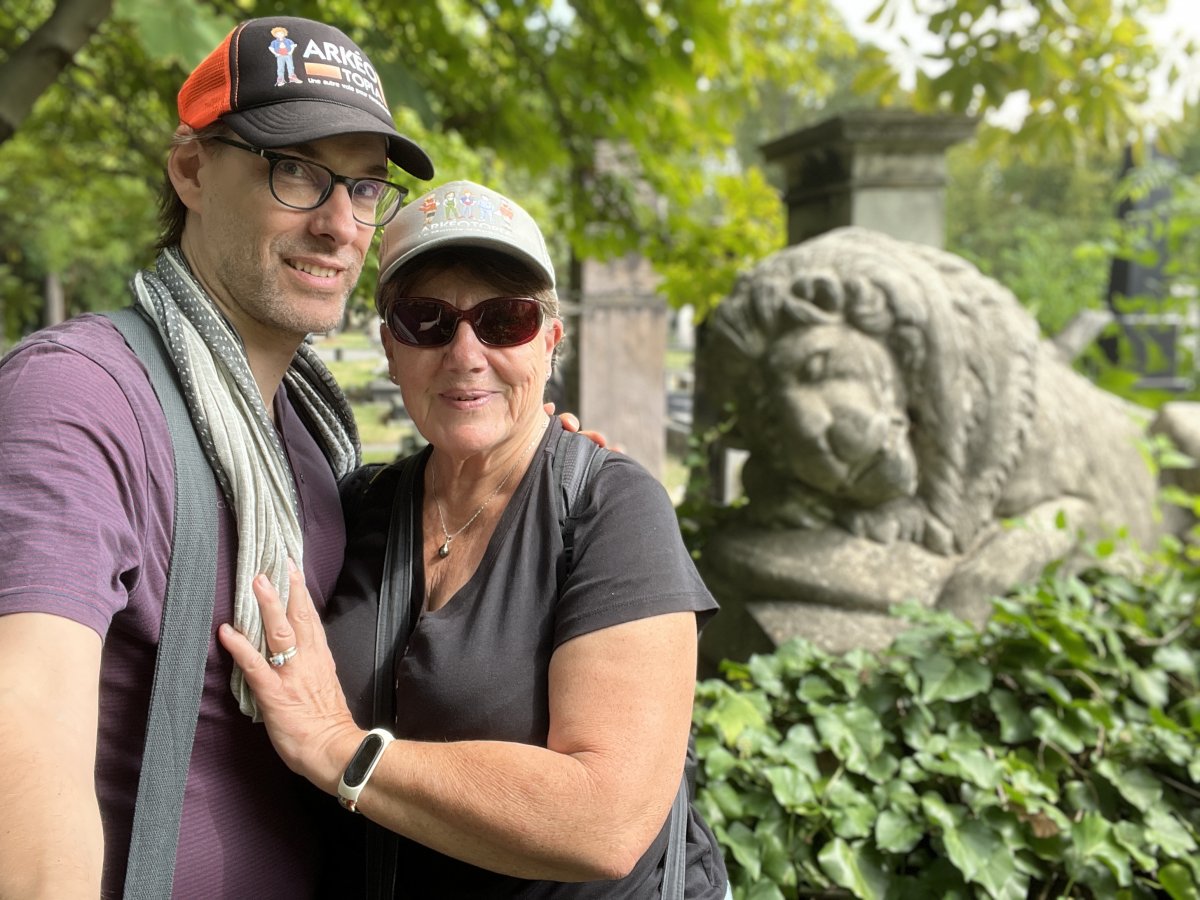
What makes Kerepesi different from many other historic European cemeteries is the care with which the greenery has been designed over the decades. The main avenues follow a regular grid, but among the oldest graves, the paths become irregular, almost wild, with ivy climbing the tombstones and rose bushes blooming in spring among the stone crosses. This coexistence of order and controlled abandonment creates a unique atmosphere, different from that of a formal garden.
In some areas of the cemetery, there are true seasonal flower beds, maintained by the Municipality of Budapest, which plant bulbs in autumn and annuals in spring. The tulips of April and May transform certain corners of the cemetery into almost picturesque scenes. Those visiting in summer can enjoy the shade of the large mature trees, some of which are over a hundred years old and constitute a small urban botanical heritage.
What to look for during the visit
In addition to the grand mausoleums, it is worth paying attention to the quieter sections of the cemetery, where Hungarian artists, writers, and scientists rest. The grave of the composer Ferenc Erkel, author of the Hungarian national anthem, is marked and relatively easy to find by following the maps available at the entrance. Many tombstones are decorated with bronze or ceramic portraits, a detail typical of the funerary tradition of Central Europe that is worth observing closely.
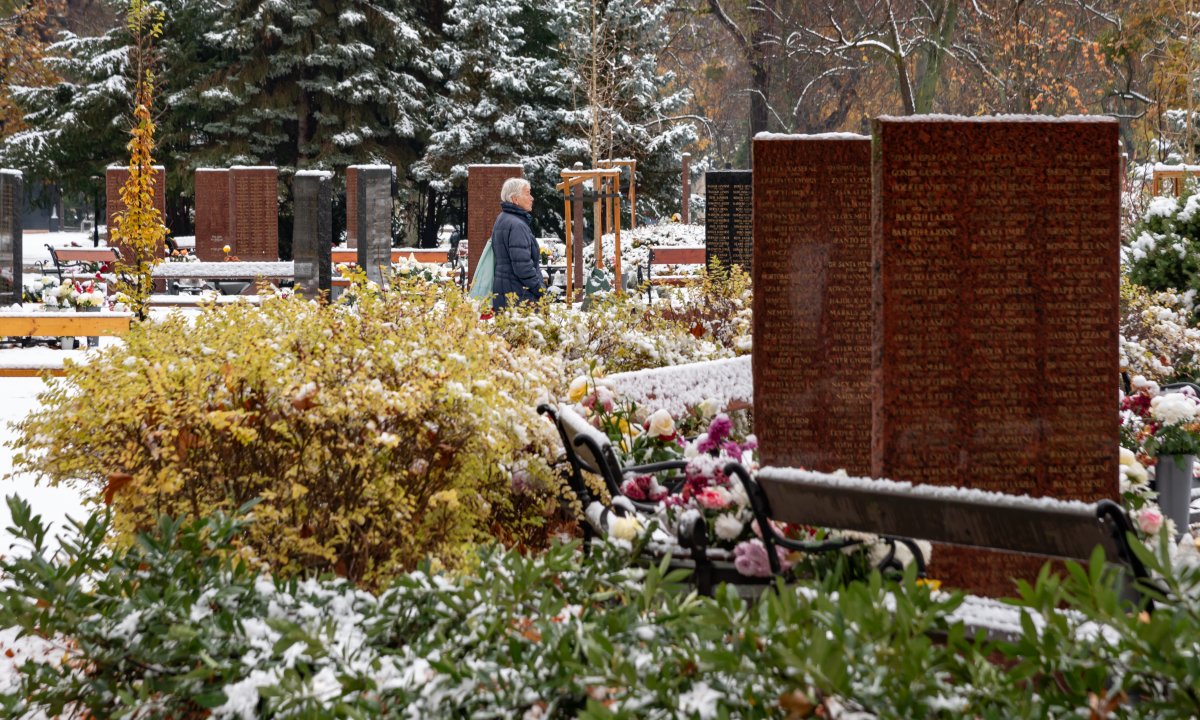
Along the secondary avenues, there are also sections dedicated to workers and trade unionists, with collective monuments dating back to the socialist period, architecturally very different from the nineteenth-century mausoleums but equally interesting as historical documents. The contrast between these austere stone blocks and the floral mausoleums of the dualist era visually narrates the political transformations of twentieth-century Hungary.
Practical Information for the Visit
The Kerepesi Cemetery is open every day, with hours that vary seasonally: in summer generally from 7:00 AM to 7:00 PM, in winter with early closing around 5:00 PM. Entrance is free. It is easily reached by tram number 24 or by subway M2 at Keleti station, followed by a short walk along Fiumei Avenue. The minimum recommended time for a satisfying visit is about two hours, but those who want to explore the peripheral sections can easily spend three.
The best time to visit is early in the morning on weekdays, when the cemetery is almost deserted and the slanting light enhances the architectural details of the graves. Bringing a printed map is useful, as the internal signage is present but not always intuitive for foreign visitors. Comfortable shoes are essential: the dirt paths in the older sections can be uneven.


