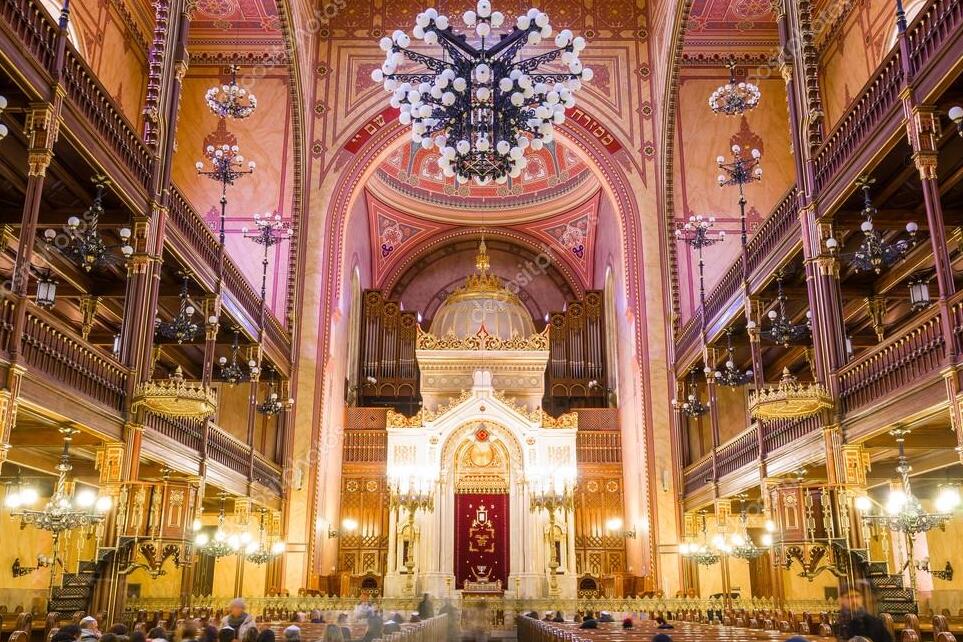

Nestled in the heart of Budapest, The Great Synagogue stands as a monumental testament to the city’s rich Jewish heritage. As Europe’s largest synagogue and the world’s second largest, it was constructed in the Moorish Revival style in 1859, designed by the architect Ludwig Förster. This architectural masterpiece is not only a place of worship but also a poignant symbol of resilience and cultural significance for the Jewish community that once thrived in Hungary.
### History and Origins The history of the Jewish community in Hungary dates back to Roman times, with Jews settling in the region around the 2nd century CE. However, it was not until the 19th century that the community truly flourished, reaching around 800,000 members by the early 20th century. The Great Synagogue was inaugurated on September 6, 1859, becoming a focal point for Jewish life in Budapest. Tragically, during World War II, the synagogue suffered significant damage and was misused by the Nazis. Restoration efforts began in the 1990s, allowing it to reclaim its status as a cultural and spiritual hub.
### Art and Architecture The synagogue's Moorish Revival architecture is a stunning blend of styles, characterized by its grand arches, intricate tile work, and vibrant colors. The interior is equally breathtaking, featuring a magnificent chandelier, which is one of the largest in Europe, and an impressive organ built by Auguste Hohmann. Notable artworks include the Torah ark, adorned with exquisite carvings and gold leaf, and the stained glass windows that bathe the interior in a kaleidoscope of colors. Each element reflects the artistic significance of Jewish culture, inviting visitors to ponder the depth of its history.
### Local Culture and Traditions The Great Synagogue is not just a building; it is a living embodiment of Jewish traditions and culture. Throughout the year, it hosts various festivals and events, including Yom Kippur and Hanukkah celebrations, where visitors can immerse themselves in local customs. The annual Budapest Jewish Festival, held in September, transforms the area into a vibrant celebration of Jewish arts, music, and food, attracting both locals and tourists alike. This festival showcases the resilience and rich heritage of the Jewish community in Budapest, making it an essential part of the city’s cultural fabric.
### Gastronomy No visit to the Great Synagogue would be complete without indulging in local gastronomy. Nearby, you can find traditional Jewish delicacies such as cholent, a slow-cooked stew typically made for the Sabbath, and flódni, a layered pastry filled with poppy seeds, apples, and walnuts. The local cafés are perfect for trying a slice of kugel, a baked pudding that comes in many variations, or sipping on a cup of Israeli coffee. These culinary delights not only satiate the palate but also tell the story of the Jewish influence on Budapest's dynamic food scene.
### Lesser-Known Curiosities While many visitors admire the grandeur of The Great Synagogue, few know about the Jewish Cemetery located within its complex. This cemetery is the final resting place for thousands of Holocaust victims and is a poignant reminder of the past. Additionally, the Raoul Wallenberg Memorial Park honors the Swedish diplomat who heroically saved thousands of Jews during the Nazi regime. Visitors can also discover the hidden synagogue located in the courtyard, which serves as a quiet space for reflection and remembrance.
### Practical Visitor Information The best time to visit The Great Synagogue is during the spring and autumn months, when the weather is mild and conducive to exploring the surrounding area. It’s wise to purchase tickets in advance, especially during peak tourist seasons. Don’t miss the opportunity to join a guided tour; knowledgeable guides offer invaluable insights into the history and significance of the site. Be sure to look for the Zsuzsanna Sárközi memorial plaque, which honors the contributions of women to the Jewish community.
As you plan your visit, consider using the Secret World app for a personalized AI itinerary that will enhance your experience in Budapest.
