

The ground beneath your feet emits a dull hiss. A few centimeters from the soles, the gray-blue mud bubbles slowly, raising dense bubbles that burst with a wet, muffled sound. You are inside the Krafla caldera, an active volcanic system in northeastern Iceland, in the Mývatn lake region, and nothing — no fence, no warning sign, no crowd — stands between you and the breathing earth.
Krafla is a shield volcano with a central caldera about 10 kilometers in diameter. Its last eruptive cycle, known as Kraflaeldar or "fires of Krafla," lasted from 1975 to 1984, producing lava flows that still cover the landscape with a jagged black mantle of obsidian and basalt. These flows, relatively recent in geological terms, are visible and walkable, offering one of the most physically tangible experiences that Icelandic volcanology can provide to an ordinary visitor.
The caldera and the boiling mud pools
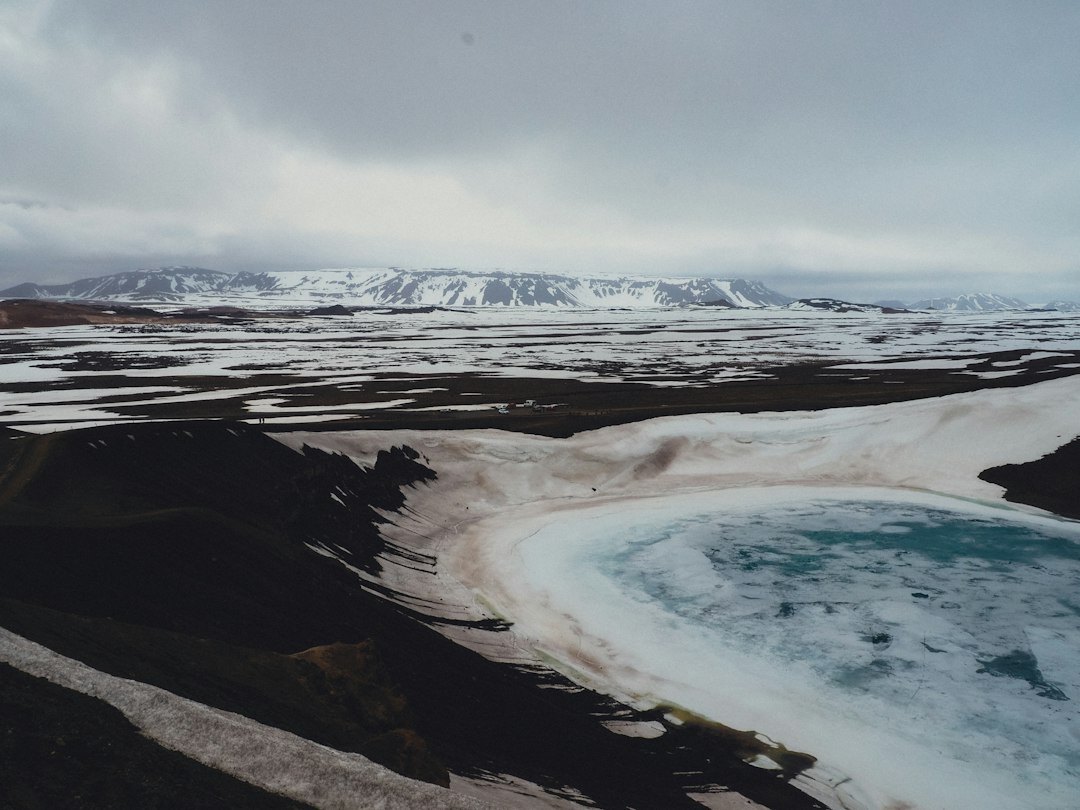
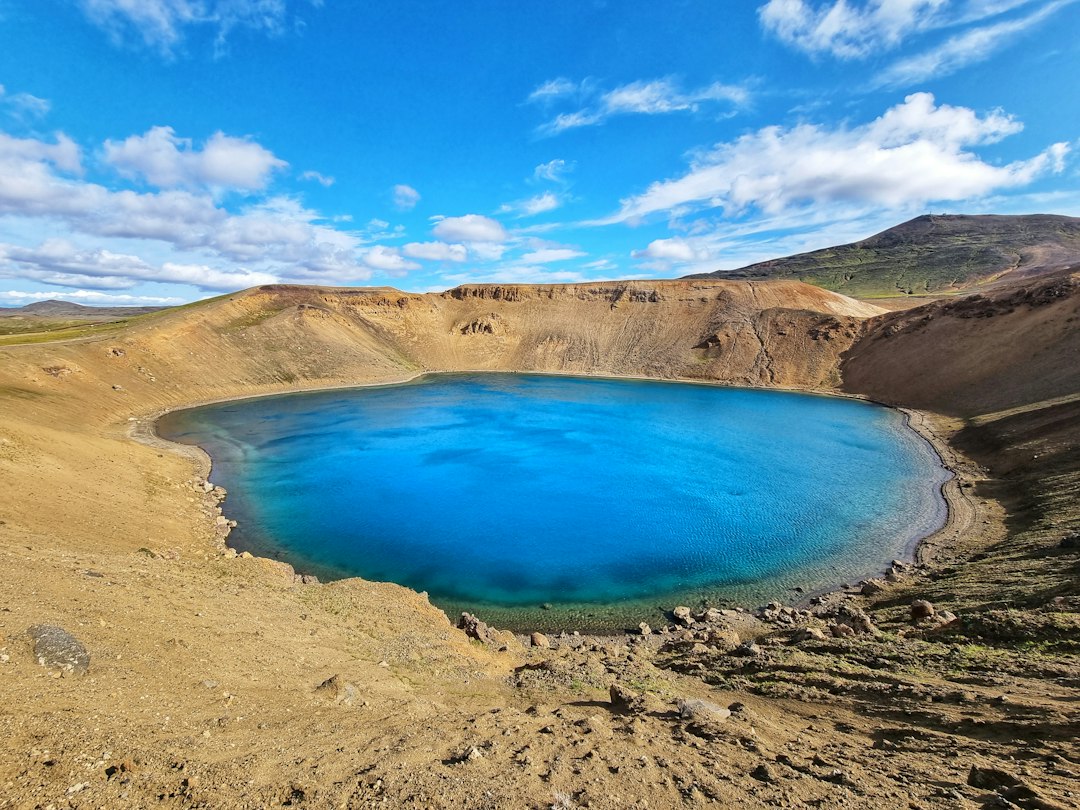
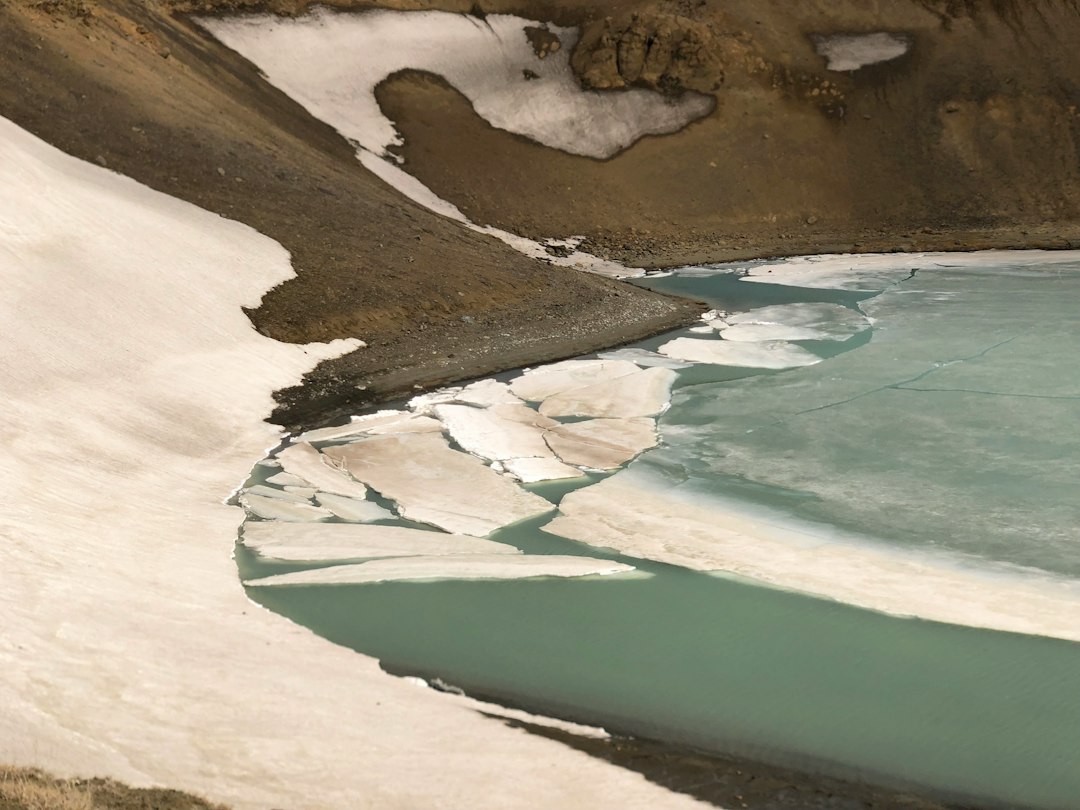
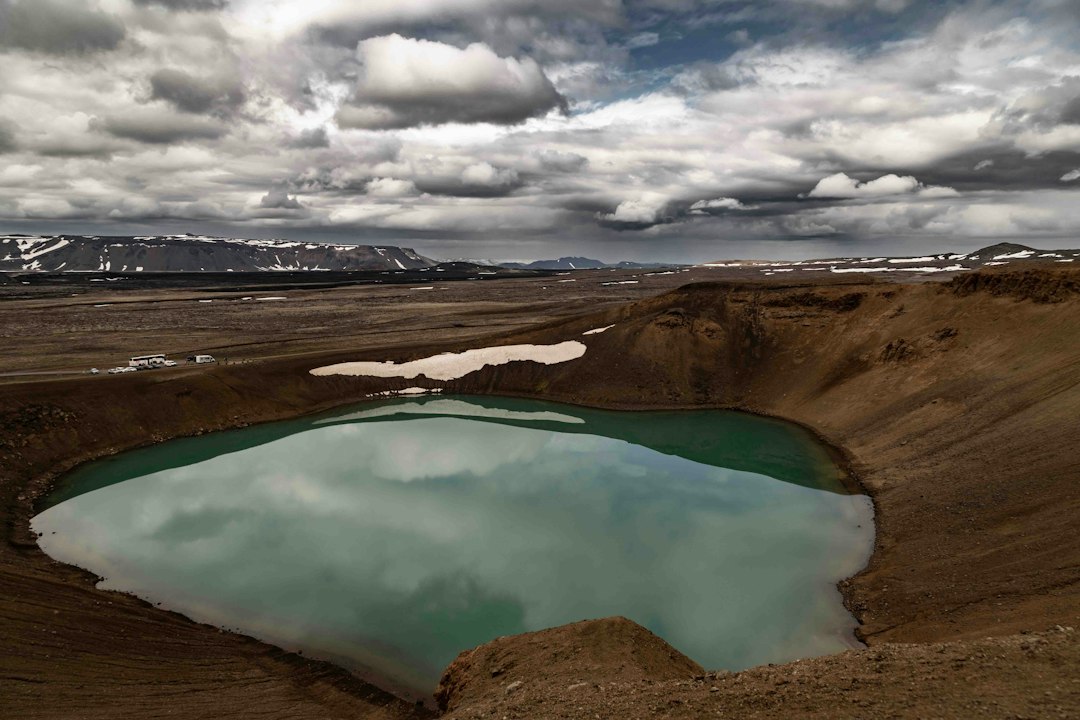
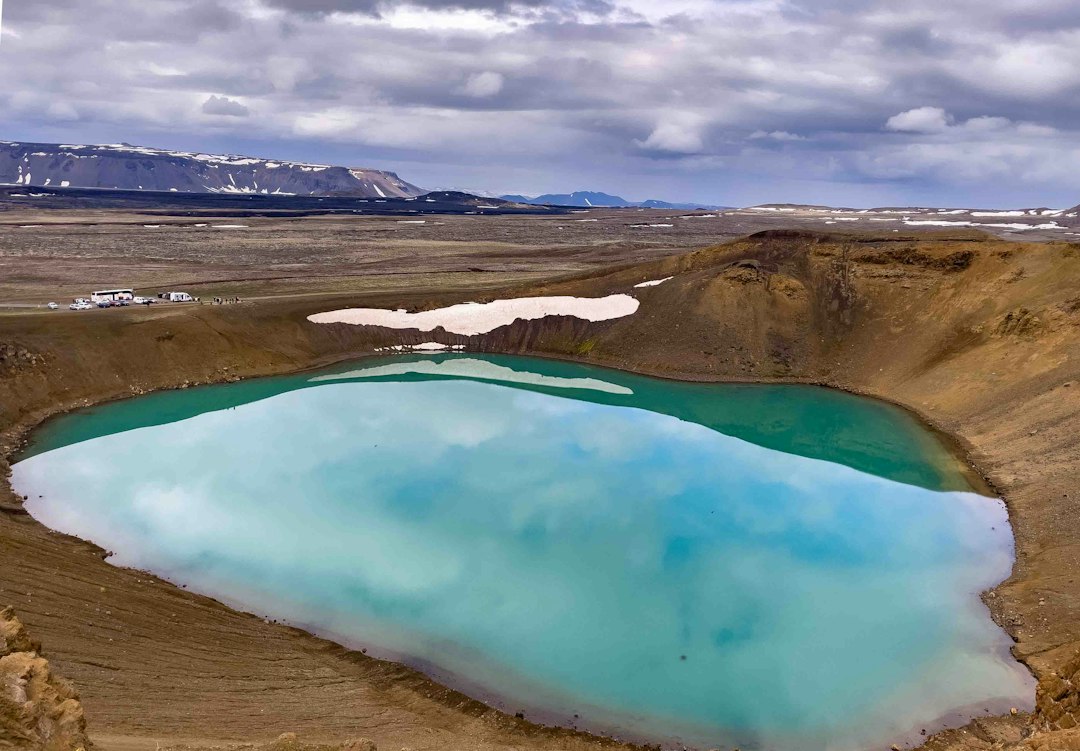
The most visited area of Krafla is that which surrounds the crater lake of Víti, a name that in Icelandic simply means "hell." The lake, formed after an eruption in 1724, occupies a crater of about 300 meters in diameter and has a turquoise-green color due to the presence of minerals and thermophilic bacteria. Reaching the edge of the crater requires a short walk of about 15-20 minutes from the main parking lot, along a dirt path that ascends the side of the cone.
Around Víti and along the volcanic fissures that scar the caldera are the fumaroles and the boiling mud pools, locally called hverir. The sulfurous steam is pungent and unmistakable. The mud changes color depending on the chemical composition of the soil — white, gray, ochre — and its temperature can exceed 100°C. There are no physical barriers preventing close access: the responsibility lies entirely with the visitor, which makes the experience both more authentic and more risky compared to many other Icelandic geothermal sites.
The lava fields of 1984
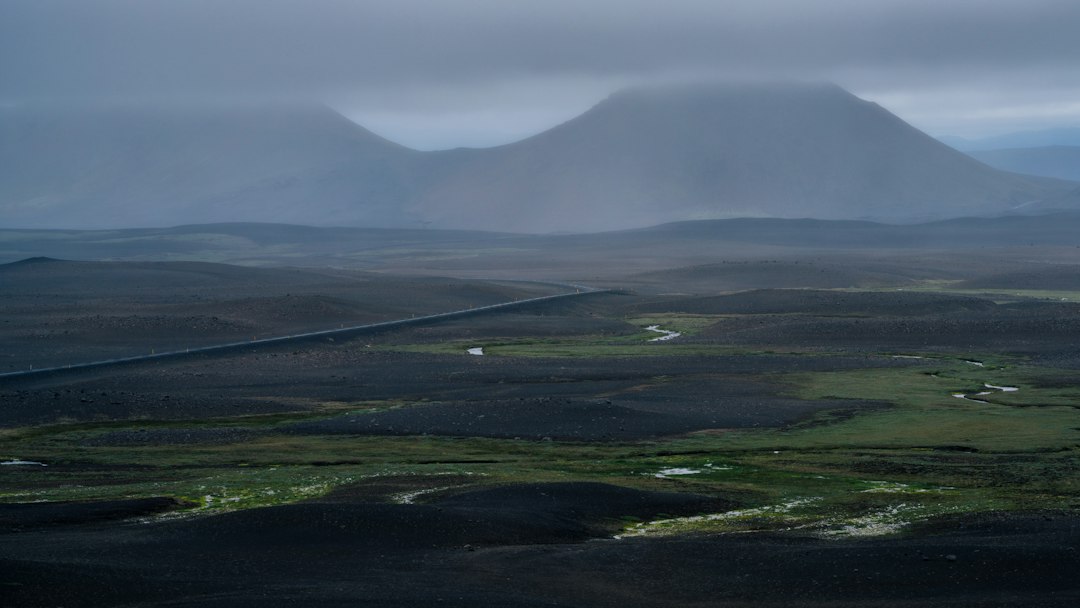
A few minutes' walk east from the caldera, the landscape changes radically. The lava flows produced by the eruption of September 1984 — the last of the Kraflaeldar cycle — form a field of black, sharp rock that extends for several square kilometers. The aa lava, with its chaotic and fragmented surface, contrasts with the more fluid areas of pahoehoe lava, where the rock has solidified into almost organic shapes, resembling twisted ropes.
Walking on these lava fields without marked trails is possible, but it requires sturdy shoes with a hard sole. Obsidian — natural volcanic glass — surfaces in many places, recognizable by its shiny black color and sharp edges like blades. It is forbidden to collect it, as well as any other geological material in Icelandic nature parks, but observing it up close is an essential part of the experience.
The geothermal power plant and the energy context
Krafla is not just a natural site: it is also home to one of the main geothermal power plants in Iceland, the Krafla Power Station, which started operating in 1977 and is still in operation today. The plant harnesses the heat from the underground to produce about 60 megawatts of electricity, powering the communities in the northeastern region. The industrial buildings of the plant are visible from the caldera area and, far from spoiling the landscape, they provide a powerful reminder of how Iceland uses its geology as a renewable energy resource.
In recent years, Krafla has also become the site of the experimental project IDDP (Iceland Deep Drilling Project), which has drilled wells to exceptional depths in search of shallow magma. In 2009, one of the wells accidentally reached a pocket of magma at about 2,100 meters deep — an unprecedented event in the history of geothermal drilling.
How to visit Krafla: practical tips
Krafla is located about 7 kilometers north of Reykjahlíð, the main settlement on the shores of Lake Mývatn, accessible via road 863. There is no entrance fee to access the caldera area: parking is free and the site is open year-round, although in winter road conditions can make access difficult. The best time to visit is between June and August, when daylight hours are at their maximum and the trails are safely passable.
Allow at least two hours to calmly explore the Víti caldera, the fumaroles, and part of the lava fields. Bring sturdy hiking shoes, a waterproof layer against the wind, and, above all, always maintain a safe distance from the boiling mud pools: the ground around them can be unstable and soft. The absence of barriers is a feature of Krafla, not an oversight.


