
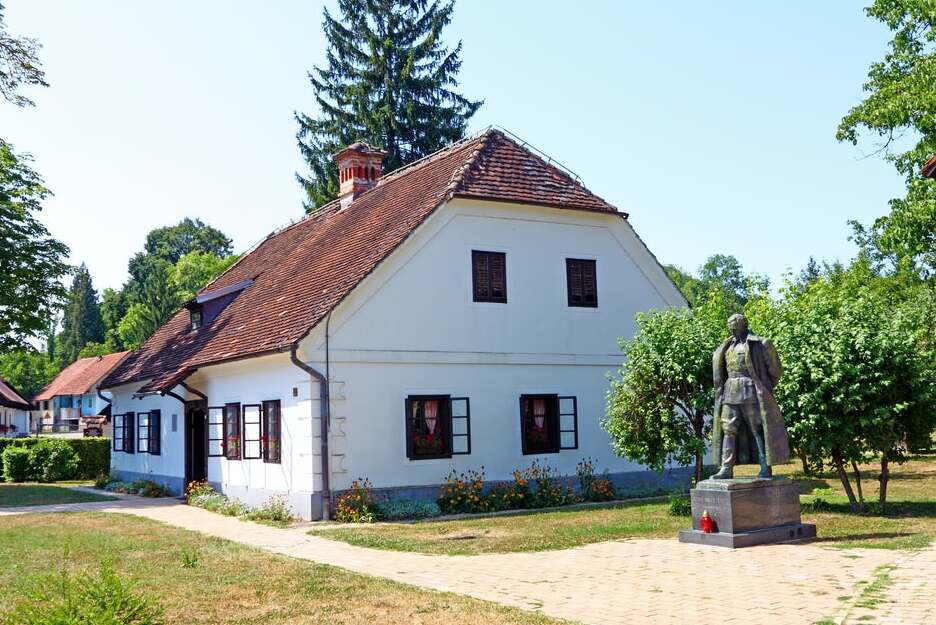

Nestled in the serene Zagorje region of northern Croatia, the small village of Kumrovec is steeped in history, culture, and tradition. Known primarily as the birthplace of Josip Broz Tito, who was born here in 1892, Kumrovec offers a unique glimpse into the past, showcasing the life and customs of the region at the turn of the 20th century.
History and Origins Kumrovec's history dates back to ancient times, but it gained prominence in the late 19th century when Tito was born. This small village became a pivotal location in the narrative of Yugoslav history, as Tito would later rise to become a significant figure in European politics, particularly during and after World War II. His leadership transformed Yugoslavia into a socialist federation, marked by a unique independent path that distinguished it from the Soviet influence. Despite the challenges, Tito's legacy left a profound impact on the region, making Kumrovec a site of historical importance.
Art and Architecture The architectural charm of Kumrovec is encapsulated in the Staro Selo, or Old Village, an open-air museum that replicates the life and architecture from the late 19th to early 20th centuries. Visitors can stroll through cobblestone streets lined with traditional wooden houses, each telling a story of the past. The houses feature thatched roofs and rustic wooden beams, embodying the ethno-architectural style of the region. Notable artworks, including local crafts and traditional clothing, adorn the interiors, providing a vivid portrayal of life in Zagorje. The house where Tito was born stands as a testament to his roots, marked by a plaque stating,


