
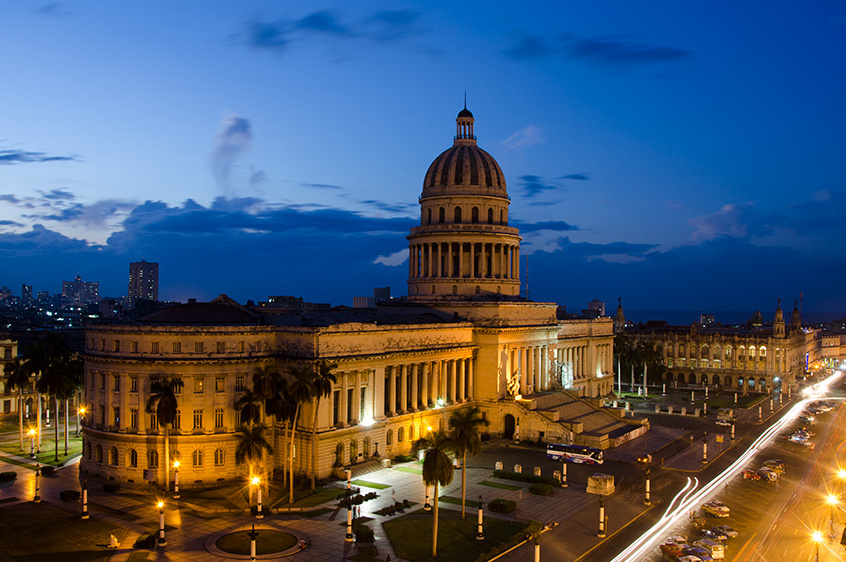

El Capitolio, the Cuban Capitol building, stands majestically on Prado Street, bridging the vibrant neighborhoods of Old Havana and Central Havana. This architectural marvel, reminiscent of the United States Capitol in Washington, D.C., was inaugurated in 1929 and has since become one of the most iconic symbols of Cuban heritage and resilience.
The origins of El Capitolio are deeply rooted in the early 20th century. Following Cuba's independence from Spain in 1898, the nation sought to establish a government that reflected its newfound sovereignty. The building was designed by the Cuban architect Rafael de Cárdenas, who took inspiration from neoclassical styles, incorporating elements that pay homage to ancient Roman and Greek architecture. The grand dome, soaring to a height of 92 meters, is topped with a statue of The Republic, a striking bronze figure that adds to the building's allure.
Inside, visitors can admire the Hall of Lost Steps, adorned with intricate mosaics and marble, which tells the story of Cuba’s journey to independence. The building once housed the Cuban Congress and is now home to the Cuban Academy of Sciences. Its artistic significance is magnified by the opulent decorations that reflect the richness of Cuban culture.
El Capitolio is not only an architectural gem but also a hub for local culture and traditions. The surrounding area, particularly the Parque Central, serves as a gathering place for locals and tourists alike. Here, you might catch a glimpse of a street performer showcasing traditional son cubano music or a danzón dance, both of which highlight the island's rich musical heritage.
Festivals such as the Havana Carnival, celebrated annually in July, breathe life into the streets around El Capitolio. The vibrant parades filled with music, dance, and colorful costumes draw participants from all corners of the island, celebrating the cultural mosaic that characterizes Cuban identity.
When it comes to gastronomy, the area around El Capitolio is a treasure trove of culinary delights. Be sure to try ropa vieja, a traditional dish of shredded beef in a savory tomato sauce, often accompanied by rice and black beans. For a sweet treat, indulge in flan, a creamy caramel custard that has become a staple in Cuban dining. Additionally, the famous mojito or an agua de panela (a refreshing drink made from sugarcane) can complement your meal perfectly.
For those seeking lesser-known curiosities, El Capitolio has a fascinating story of resilience. During the Cuban Revolution, the building was repurposed as a museum, showcasing the struggles and triumphs of the Cuban people. Furthermore, the original Cuban Constitution is enshrined in the building, symbolizing the enduring spirit of democracy on the island.
If you’re planning to visit, the best time to explore El Capitolio is between December and April, when the weather is pleasantly mild. Arriving early in the day allows for quieter moments to appreciate the building's grandeur and to enjoy a stroll through Parque Central. Look for the stunning statues and fountains that dot the park, each telling its own story.
Don’t forget to bring your camera, as the dome and façade of El Capitolio make for stunning photographs, especially in the golden light of the late afternoon.
As you wander through the vibrant streets of L'Avana, let El Capitolio guide you through the rich tapestry of Cuban history and culture. For a tailored experience that captures your personal interests, consider using the Secret World app to plan your itinerary around this remarkable city.


