
← Back

Lazaretto Cave

Via Nisida, 80124 Napoli, Italia ★★★★☆ 193 views
Anushka Mehta
Napoli
🏆 AI Trip Planner 2026

Get the free app

Discover the best of Napoli with Secret World — the AI trip planner with 1M+ destinations. Get personalized itineraries, hidden gems and local tips. Free on iOS & Android.

🧠 AI Itineraries 🎒 Trip Toolkit 🎮 KnowWhere Game 🎧 Audio Guides 📹 Videos
Scan to download iOS / Android
Scan for AppGallery Huawei users

About Lazaretto Cave

Lazaretto Cave - Napoli | Secret World Trip Planner

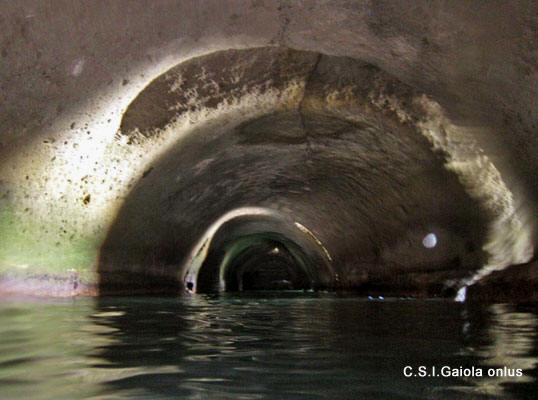
The Grotta del Lazzaretto, located parallel to the road that connects the island of Nisida to the mainland is known to the scientific community for the research of Filippo Cavolini, the first Neapolitan marine biologist who used the cavity in a pioneering way as a natural laboratory in the field. Probably excavated in Roman times inside a rock called "Chiuppino" as a communication tunnel between the island of Nisida and the mainland, it is about 130 meters long, 5 meters wide and has a maximum height of 4.5 meters; its function was linked to the port installations still little studied, located near the island of Nisida. Its average depth is 2.5 meters.\ Above this cave was located the ancient lazaretto of the viceregal age and hence the name of the cavity itself. The lazaretto was used as a place of quarantine for animals and plants; therefore the isolation and the proximity of a port were necessary.\nStudied by researchers until the 50s of the twentieth century has seen a slow decline. The main entrance has a SW exposure and along the entire tunnel there are glimpses of light from the SE, so the cave is not completely dark but allows a visit full of charm.\nThe cave in Roman times must have been more elevated and the real "floor" of the cave is currently covered with sand that has settled after the closure of the other entrance NE, which occurred as a result of the filling of concrete made for the construction of the current connection between Nisida and Coroglio. In the upper part nothing is left of the ancient Bourbon Lazaretto, and in its place stands a crumbling concrete building. Currently both the rock of Lazzaretto and the cavity below are in a state of abandonment and degradation. The ancient Roman tunnel is full of materials of trisulta largely from the neighboring plant breeding mussel. In particular there are huge quantities of mussel nets, rubber sleeves, piping cordage, tires, used batteries, etc. ....

🗺 AI Trip Planner 2026

Plan your visit to Napoli

Suggested itinerary near Lazaretto Cave

MAJ+
500.000+ travelers worldwide
  1. 🌅
    Morning
    Lazaretto Cave
    📍 Napoli
  2. ☀️
    Afternoon
    Napoli ed il nuovo Planetario di Città della Scienza
    📍 0.9 km · Napoli
  3. 🌆
    Evening
    Coronavirus: Travel with your mind to be happy
    📍 1.4 km · Napoli

Buy Unique Travel Experiences

Powered by Viator

See more on Viator.com

Explore nearby · Napoli

Frequently Asked Questions

Lazaretto Cave was likely excavated during Roman times as a communication tunnel between the island of Nisida and the mainland, connected to port installations. During the viceregal age, it served as a quarantine station for animals and plants, which is how it earned its name from the lazaretto (quarantine facility) that once stood above the cave.
Filippo Cavolini was Naples' first marine biologist who pioneered the use of Lazaretto Cave as a natural laboratory for marine research. His groundbreaking work in the cavity brought the cave to the attention of the scientific community and established it as an important site for biological studies.
The cave stretches approximately 130 meters long, is 5 meters wide, and has a maximum height of 4.5 meters, with an average depth of 2.5 meters. The main entrance faces southwest with glimpses of light from the southeast throughout the tunnel, making it accessible without complete darkness.
The cave is located parallel to the road connecting Nisida island to the mainland. Currently, the cave is in a state of abandonment and degradation, filled with debris from nearby mussel farming operations including nets, rubber sleeves, and other waste materials; above it stands only a crumbling concrete building where the Bourbon-era lazaretto once stood.
The cave's floor is currently covered with sand that settled after the northeastern entrance was sealed when concrete was poured for the modern Nisida-to-Coroglio connection, raising the water level. The cave was actively studied by researchers until the 1950s, after which it experienced a slow decline into its current neglected state.
Secret World Hidden places, real stories — plan your trip
Get the app
