
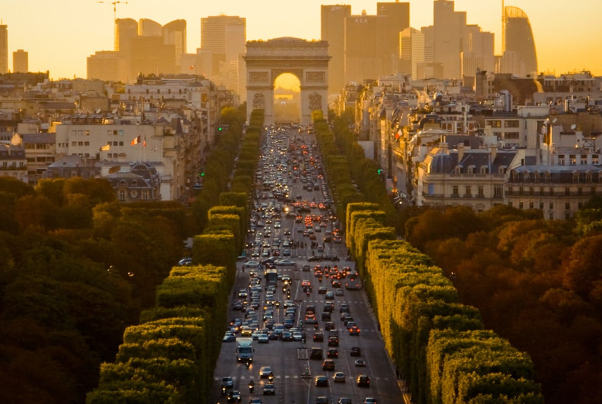

Les Champs Elysées, an emblem of Parisian elegance, stretches majestically with its tree-lined grandeur, offering a gateway to the heart of French culture and history. Its name, derived from the Greek mythology's Elysian Fields, hints at a paradise reserved for heroes—a fitting moniker for a boulevard that has witnessed the passage of time and countless pivotal moments in France's storied past.
The history and origins of Les Champs Elysées date back to 1667, when it was first designed by landscape architect André Le Nôtre as an extension of the Jardin des Tuileries. Over the centuries, it has evolved from a simple promenade into a symbol of luxury and prestige. The avenue was extended to its current length in 1724, and by the 19th century, it had become a fashionable center for Parisian society. During the French Revolution, it was a site of frequent gatherings and celebrations, and later, it became the scene of military parades and significant historical events, such as the liberation of Paris in 1944.
Art and architecture enthusiasts will find the avenue a feast for the senses. The architectural style of the buildings lining Les Champs Elysées ranges from the Neoclassical to the Art Deco, showcasing the evolution of French design through the ages. Notable landmarks include the Arc de Triomphe, commissioned by Napoleon in 1806 to honor the Grande Armée, and the Grand Palais, a magnificent example of Beaux-Arts architecture that hosts art exhibitions and cultural events.
The avenue is also a hub of local culture and traditions, often serving as the stage for the city's most important celebrations. The annual Bastille Day military parade on July 14th is a spectacle of national pride, while the Tour de France concludes here with a thrilling sprint finish. During the holiday season, the avenue transforms into a winter wonderland, with twinkling lights and festive markets bringing warmth to the chilly air.
No visit to Les Champs Elysées would be complete without indulging in its gastronomy. The avenue is home to a variety of dining options, from the iconic Ladurée, where you can savor delicate macarons, to Le Fouquet's, a historic brasserie that has hosted celebrities and politicians alike. For those seeking a taste of traditional French cuisine, dishes like coq au vin and ratatouille can be enjoyed at one of the many quaint bistros.
Among the lesser-known curiosities of Les Champs Elysées is its role in cinema and literature. The avenue has been immortalized in films such as Jean-Luc Godard's 'Breathless', and writers like Hemingway have captured its essence in their works. Another hidden gem is the Galerie des Champs, a shopping arcade that offers a quieter, more intimate experience amidst the bustling boulevard.
For practical visitor information, the best time to visit Les Champs Elysées is during the early morning or late evening to avoid crowds and enjoy a leisurely stroll. Spring and autumn offer the most pleasant weather, enhancing the experience with the vibrant colors of the seasons. Visitors should not miss the chance to explore the side streets and discover charming boutiques and cafes.
To plan your personalized itinerary and uncover more about Paris, consider using the Secret World app for a seamless travel experience.


