
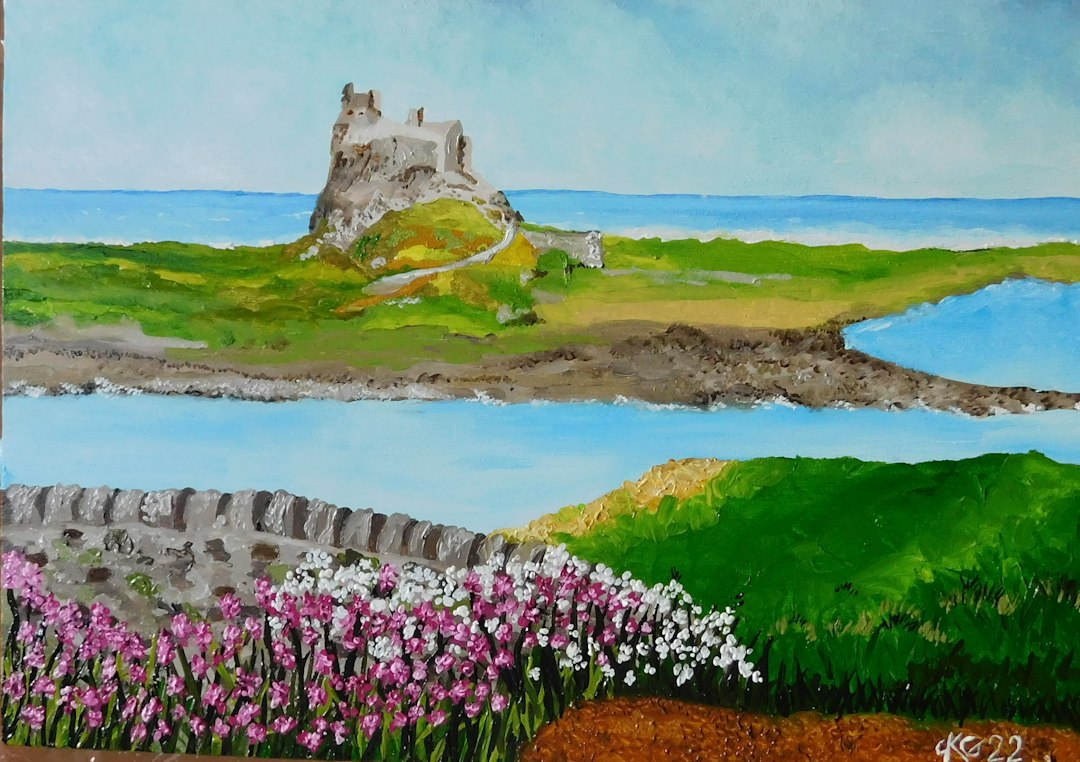

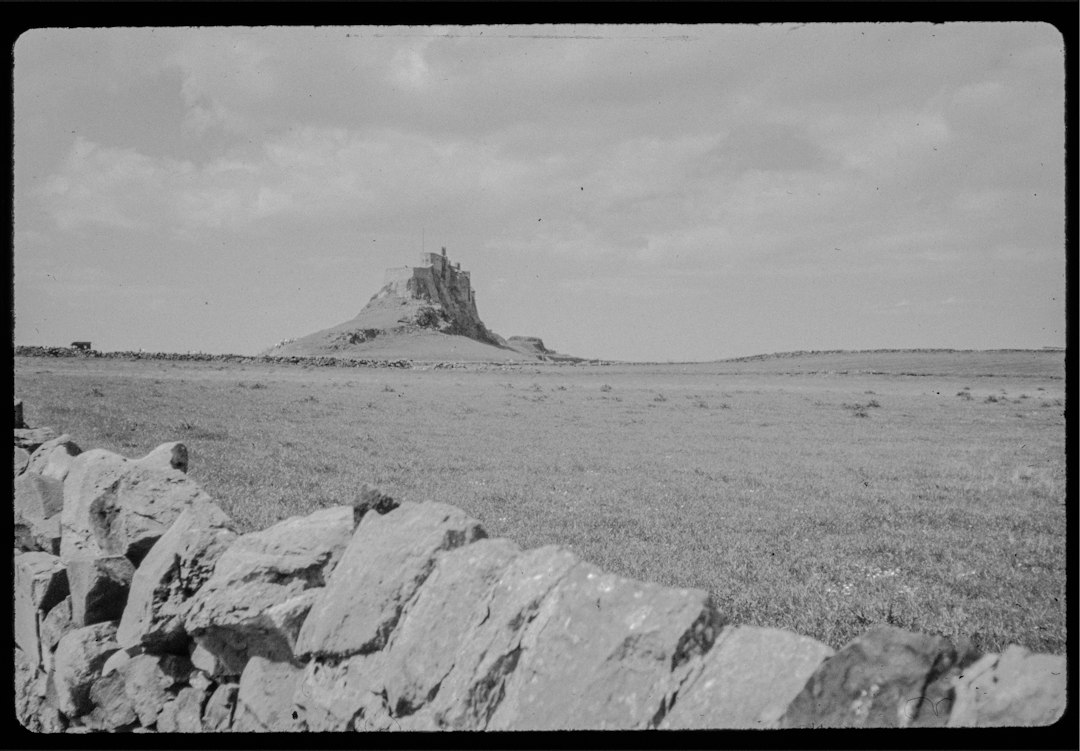
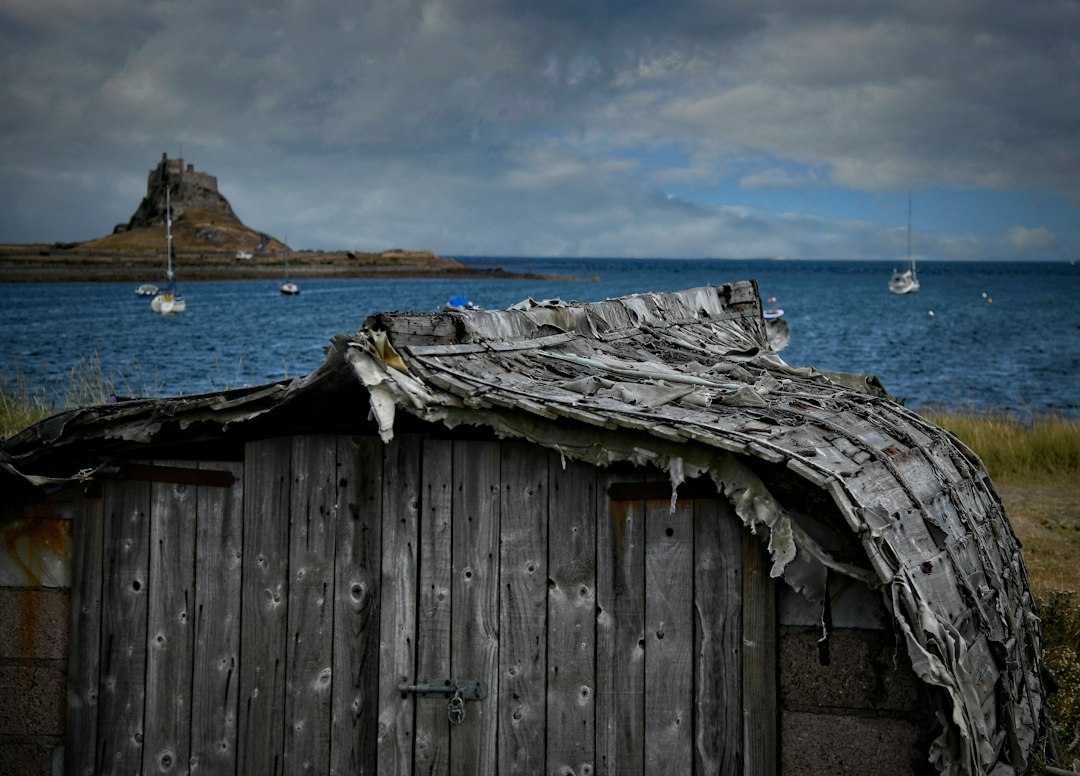
The road disappears under the water twice a day. To reach Holy Island, off the coast of Northumberland, one must consult the tide tables and cross the causeway — a strip of asphalt that the North Sea swallows with relentless punctuality. Those who arrive on the island at the right moments find before them a landscape that seems suspended between two worlds: the gray ruins of the medieval Priory founded by Irish monks in the 7th century, the low wind-swept dunes, and in the distance, perched on a volcanic basalt outcrop, the unmistakable silhouette of Lindisfarne Castle.
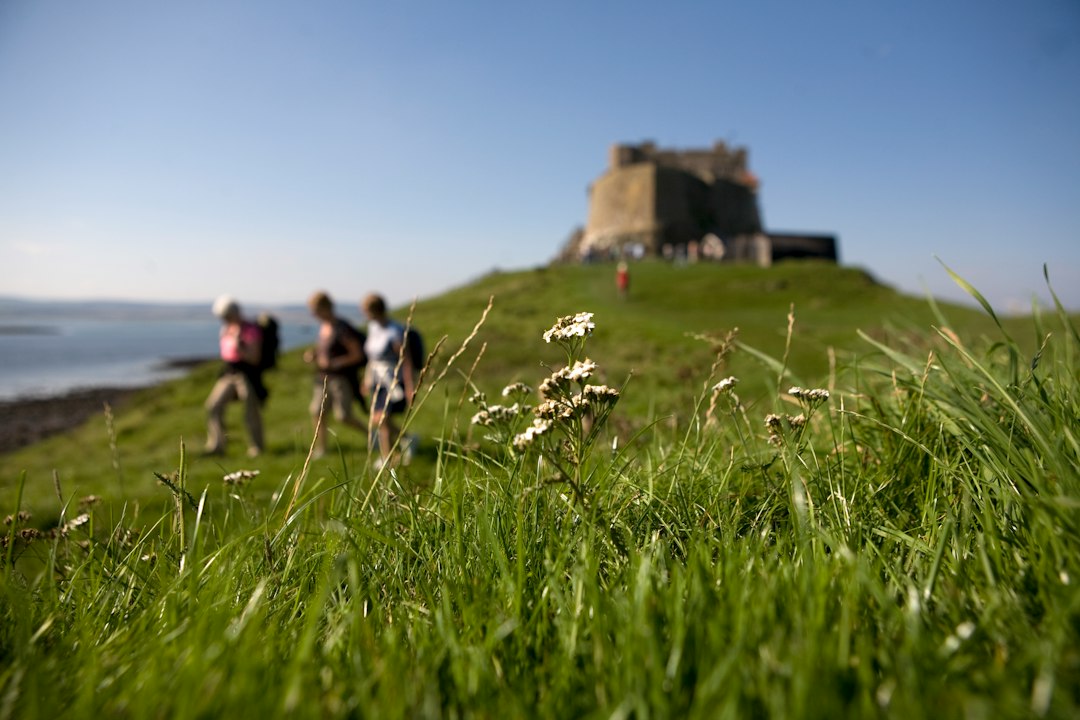
The castle is not a medieval fortress, despite its appearance suggesting otherwise. It was built around 1550 by the Tudors, using stones from the very priory that had just been dismantled during the Anglican Reformation — a material continuity between two eras that can literally be touched in the walls. But its most famous transformation occurred in 1902, when architect Edwin Lutyens converted it into a private residence for publishing magnate Edward Hudson, founder of the magazine Country Life. Lutyens redesigned the interiors with his characteristic blend of Arts and Crafts and classical geometry, leaving vaulted ceilings and stone niches that can still be admired during the visit today.
The lighthouse and the light on the tidal island
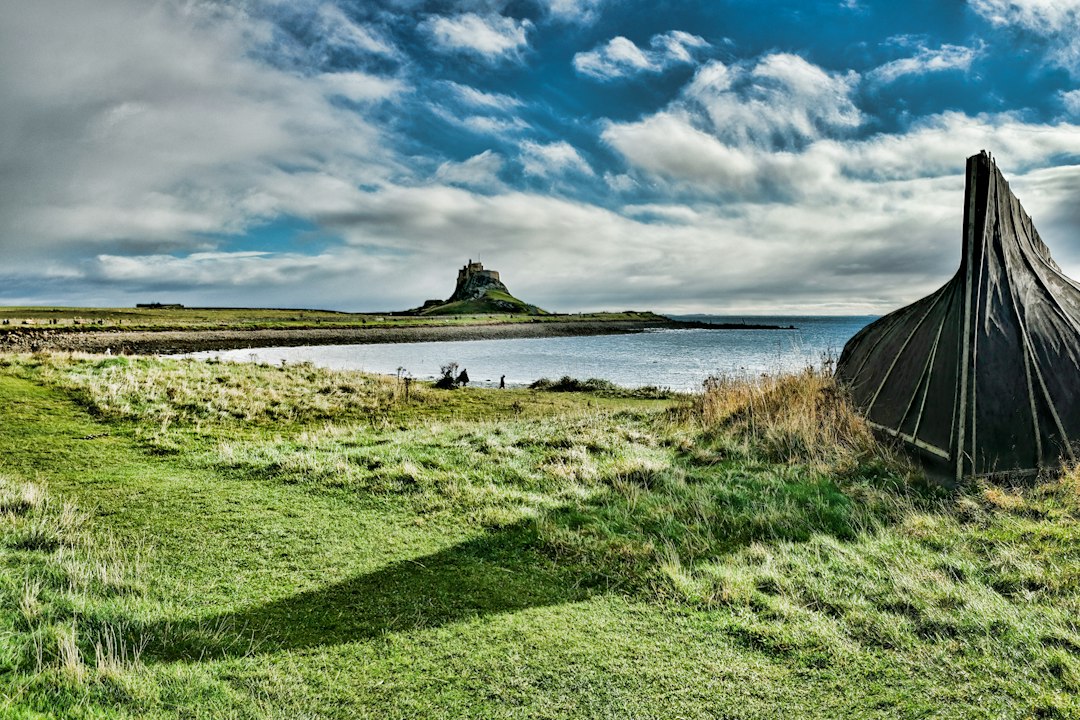
Not far from the castle, towards the northern tip of the island, stands the Victorian lighthouse of Lindisfarne, a slender white structure that contrasts with the dark stone of the surrounding landscape. Built in 1826 by the Corporation of Trinity House — the body responsible for English lighthouses — the lighthouse has guided vessels through the treacherous waters of the Farne Shelf for nearly two centuries. It is not open for interior visits, but its silhouette stands out perfectly against the northern sky and represents one of the most sought-after photographic subjects on the island.
The contrast between the lighthouse and the ruins of the priory, both visible in the same field of view, succinctly tells the historical layering of Holy Island: a place where medieval sacredness and Victorian technology coexist just a few hundred meters apart, both oriented towards the sea as if conversing with it.
The gray seals and wildlife
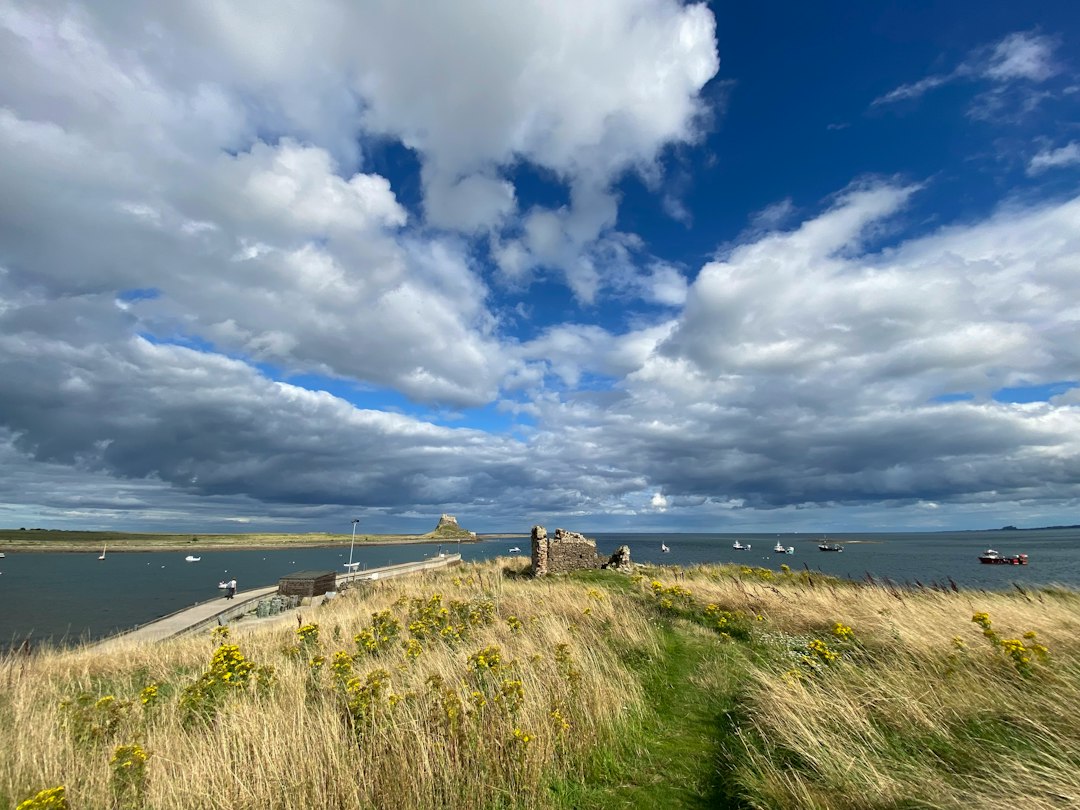
Along the eastern coast of the island, especially in the rocky areas towards the Farne Islands visible on the horizon, it is common to spot colonies of gray seals (Halichoerus grypus). The specimens gather on the rocks during low tide, often indifferent to visitors who approach with respect. In autumn, between October and November, the mating season takes place and the beaches come alive with white pups — a spectacle that attracts wildlife photographers from all over Europe.
The island is also a prime observation point for ornithology: the dunes host various species of migratory birds, and the National Nature Reserve that covers much of the territory protects dune and saltmarsh habitats of significant ecological value. Walking along the perimeter of the island takes about two hours at a leisurely pace and allows for the observation of all these environments in sequence.
How to Visit Lindisfarne: Practical Tips
The most important advice is simple but essential: check the tide times before you leave. The official tables are published by the Northumberland County Council website and accurately indicate the safe windows for crossing the causeway by car or on foot. Ignoring them means risking getting stuck — or worse, finding your car submerged. Every year, some vehicles are abandoned by reckless tourists.
The castle is managed by the National Trust and the entrance fee is around 10-12 pounds for adults (prices may vary, it is advisable to check the official website before your visit). The average time to explore the castle, the walled garden designed by Gertrude Jekyll in 1911, and the immediate surroundings is about an hour and a half. For those who want to include the lighthouse, the priory, and a coastal walk, half a day is the minimum required. Arriving early in the morning, especially in summer, allows you to enjoy the island before the tour buses arrive, and the morning light transforms the ruins of the priory into something almost unreal.


