
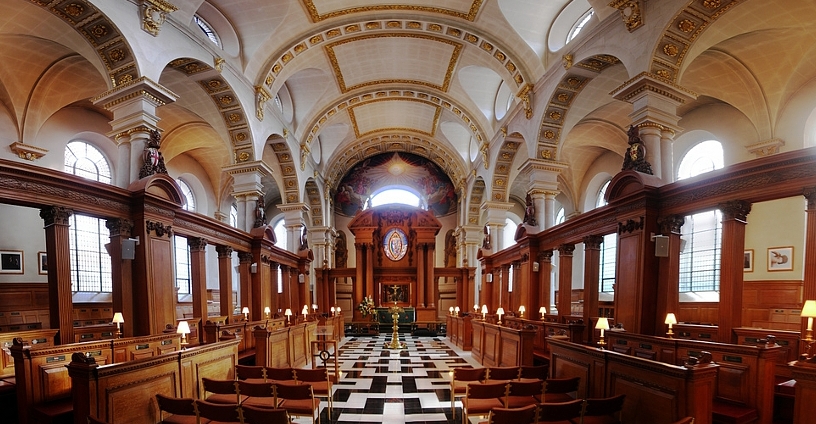

Nestled in the heart of London's bustling Fleet Street, St. Bride's Church stands as a testament to the city's rich tapestry of history, faith, and resilience. Often referred to as the “journalists’ church,” this architectural gem offers visitors a glimpse into London's past, much like the stories that echo through its stone walls.
The origins of St. Bride’s Church trace back to the early days of Londonium, when the Romans established their settlement around 43 CE. By the early 6th century, the first stone church was erected on this sacred site, believed to be founded by St. Bride (or Saint Brigid of Kildare) who played a pivotal role in early Celtic Christianity. The church’s strategic location on the route between London and Westminster made it a crucial gathering point for both pilgrims and locals, enhancing its significance through the ages.
One of the church's most notable historical events occurred in 1501, when the first printing press with movable type in England was established in its churchyard. This innovation marked a turning point for literature and literacy in the country, paving the way for the spread of ideas during the Renaissance. Unfortunately, the flames of the Great Fire of London in 1666 reduced the original structure to ashes, but from the embers, Sir Christopher Wren rose to the challenge, designing the current church which was completed in 1701. Today, St. Bride's Church is designated as a Grade I listed building, recognized for its architectural and historical significance.
Architecturally, St. Bride’s is a masterpiece of Wren’s Baroque style, characterized by its slender, tapering spire that rises elegantly to a height of 234 feet, making it a distinctive feature of the London skyline. The church's interior boasts stunning stained glass windows, intricate wood carvings, and a beautifully crafted organ, which together create an atmosphere of serenity and reflection. Notably, the floor features a unique design of interlocking circles, symbolizing the unity of the Christian faith.
Beyond its architectural beauty, St. Bride’s is woven into the fabric of local culture and tradition. The church holds regular services, but it also hosts special events such as weddings, baptisms, and memorials that reflect the community's deep connection to the site. The annual St. Bride’s Day celebrations, typically held in February, draw attention to the church’s namesake, celebrating the life and legacy of Saint Brigid and the enduring spirit of the local community.
When it comes to gastronomy, the area surrounding St. Bride’s is a haven for food lovers. Just a stone's throw away, you can find traditional British pubs where you can indulge in classic dishes like fish and chips, shepherd’s pie, or bangers and mash. For a sweet treat, don’t miss the chance to try a slice of St. Bride's famous wedding cake, inspired by the church’s long-standing history of matrimony. This rich, fruit-filled cake is often associated with British weddings and is a delightful way to experience the local culinary scene.
Among the myriad stories that St. Bride’s holds, one lesser-known curiosity is its connection to the world of journalism. The church has been a silent witness to London's media evolution, with many newspaper offices nearby. Journalists would often gather here for reflection and solace, which is why it earned its nickname. The church also houses a collection of memorials to notable journalists and writers, further cementing its role as a cultural landmark.
For those looking to visit, the best time to explore St. Bride’s Church is during spring and early autumn when the weather is mild, and the crowds are thinner. The church is open to the public, and visitors are encouraged to take a moment to admire the stunning spire and the peaceful churchyard. Be sure to check out the crypt, which contains a small exhibition detailing the church's history, as well as the gift shop that sells unique souvenirs and literature related to the church’s storied past.
In summary, St. Bride’s Church is more than just a place of worship; it is an embodiment of London’s history, artistry, and cultural heritage. Whether you're drawn to its architectural splendor, its rich history, or its role in the local community, this hidden gem in the heart of London promises a rewarding experience.
To fully immerse yourself in the stories and wonders of this historic site, consider using the Secret World app to craft a personalized itinerary for your visit.


