
← Back

Lucca | Cathedral of S. Martino

Piazza Antelminelli, 55100 Lucca LU, Italia ★★★★☆ 529 views
Halle Romanoff
Lucca
🏆 AI Trip Planner 2026

Get the free app

Discover the best of Lucca with Secret World — the AI trip planner with 1M+ destinations. Get personalized itineraries, hidden gems and local tips. Free on iOS & Android.

🧠 AI Itineraries 🎒 Trip Toolkit 🎮 KnowWhere Game 🎧 Audio Guides 📹 Videos
Download on the App Store Get it on Google Play
Scan to download Scan to download

About Lucca | Cathedral of S. Martino

Lucca | Cathedral of S. Martino - Lucca | Secret World Trip Planner

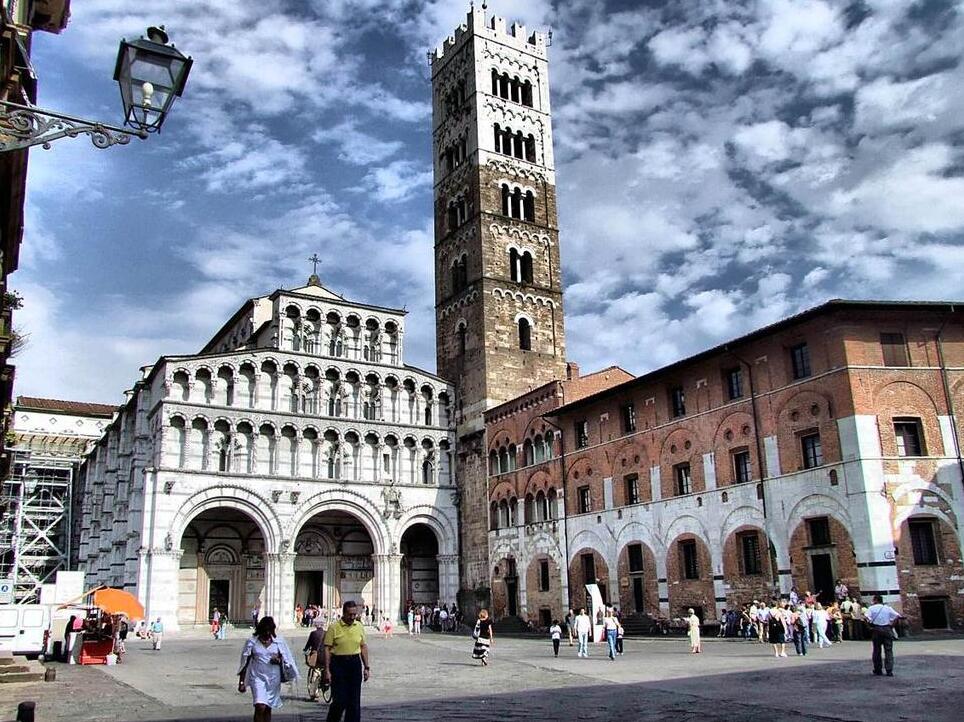
The church of S. Martino, centre of the spirituality of Lucca and fundamental stage of the Via Francigena, was founded in the 6th century by San Frediano, a bishop native of Ireland, and already in the 8th century it had become a cathedral in place of the very ancient SS. Giovanni e Reparata. Over the centuries it underwent various renovations: in 1070 the bishop of Lucca Anselmo da Baggio, already Pope Alexander II, inaugurated in the presence of Matilda of Canossa the new building, which was then enlarged in the fourteenth and fifteenth centuries and completed in the sixteenth and seventeenth centuries with the chapels of the Sacrament and the Sanctuary. The Romanesque façade is striking for its asymmetry: one arch of the portico, built in the 12th century, is smaller because of the pre-existing bell tower, 60m high and equipped with 7 bells. The superimposed loggias on sculpted and historiated small columns, made from 1204 onwards by Guidetto da Como, have two-colour marble inlays. The three portals are framed by rich sculptural decoration, including the Cycle of the Months, the Stories of St. Martin and two masterpieces by Nicola Pisano, the Deposition and the architrave with the Annunciation, Nativity and Adoration of the Magi. On the pillar behind the bell tower is the fascinating sculpture of the labyrinth, a symbol linked to the theme of pilgrimage and for this reason also present in other churches along the Via Francigena. The Latin cross interior with three naves and transept amazes for the gothic atmosphere of the high central nave that mixing historiated glass windows to false matronei to Romanesque elements, creates a particularly suggestive whole. The church houses some real masterpieces including the funeral monument of Ilaria del Carretto, the Sacred Conversation by Ghirlandaio, the Last Supper by Tintoretto and the altarpiece by Fra' Bartolomeo. The true "treasure" of the cathedral, however, remains the Volto Santo (Holy Face), the wooden crucifix that legend has it was carved by Nicodemus and the angels and that through the centuries continues to convey a strong sense of spirituality.
Lucca | Cathedral of S. Martino - Lucca | Secret World Trip Planner
🗺 AI Trip Planner

Plan your visit to Lucca

Suggested itinerary near Lucca | Cathedral of S. Martino

MAJ+
500.000+ travelers worldwide
  1. 🌅
    Morning
    Lucca | Cathedral of S. Martino
    📍 Lucca
  2. ☀️
    Afternoon
    The Holy Face of Lucca
    📍 0 km · Lucca
  3. 🌆
    Evening
    Lucca | Palazzo Bernardini and the Devil's Stone
    📍 0.2 km · Lucca

Buy Unique Travel Experiences

Powered by Viator

See more on Viator.com

Explore nearby · Lucca

Frequently Asked Questions

The church was founded in the 6th century by San Frediano, a bishop native of Ireland. It became a cathedral in the 8th century, replacing the much older church of SS. Giovanni e Reparata as the spiritual center of Lucca.
The Romanesque facade is striking for its asymmetry, with one arch of the portico being smaller due to the pre-existing 60-meter-high bell tower equipped with 7 bells. The facade features elaborate two-colour marble inlays, superimposed loggias with sculpted columns, and rich sculptural decoration including works by the renowned sculptor Nicola Pisano.
The Volto Santo is a wooden crucifix that serves as the true 'treasure' of the Cathedral of S. Martino and is central to the spirituality of Lucca. This masterpiece makes the cathedral a significant pilgrimage destination along the Via Francigena.
The cathedral houses exceptional masterpieces including the funeral monument of Ilaria del Carretto, Ghirlandaio's Sacred Conversation, Tintoretto's Last Supper, and Fra' Bartolomeo's altarpiece. The interior also features beautiful historiated glass windows and combines Gothic, Romanesque, and other architectural elements in its three-nave Latin cross design.
The cathedral is a fundamental stage of the Via Francigena pilgrimage route and features a symbolic labyrinth sculpture on the pillar behind the bell tower, representing the spiritual journey of pilgrims. It has been a major center of spirituality in Lucca since its foundation and continues to draw religious pilgrims from across Europe.
