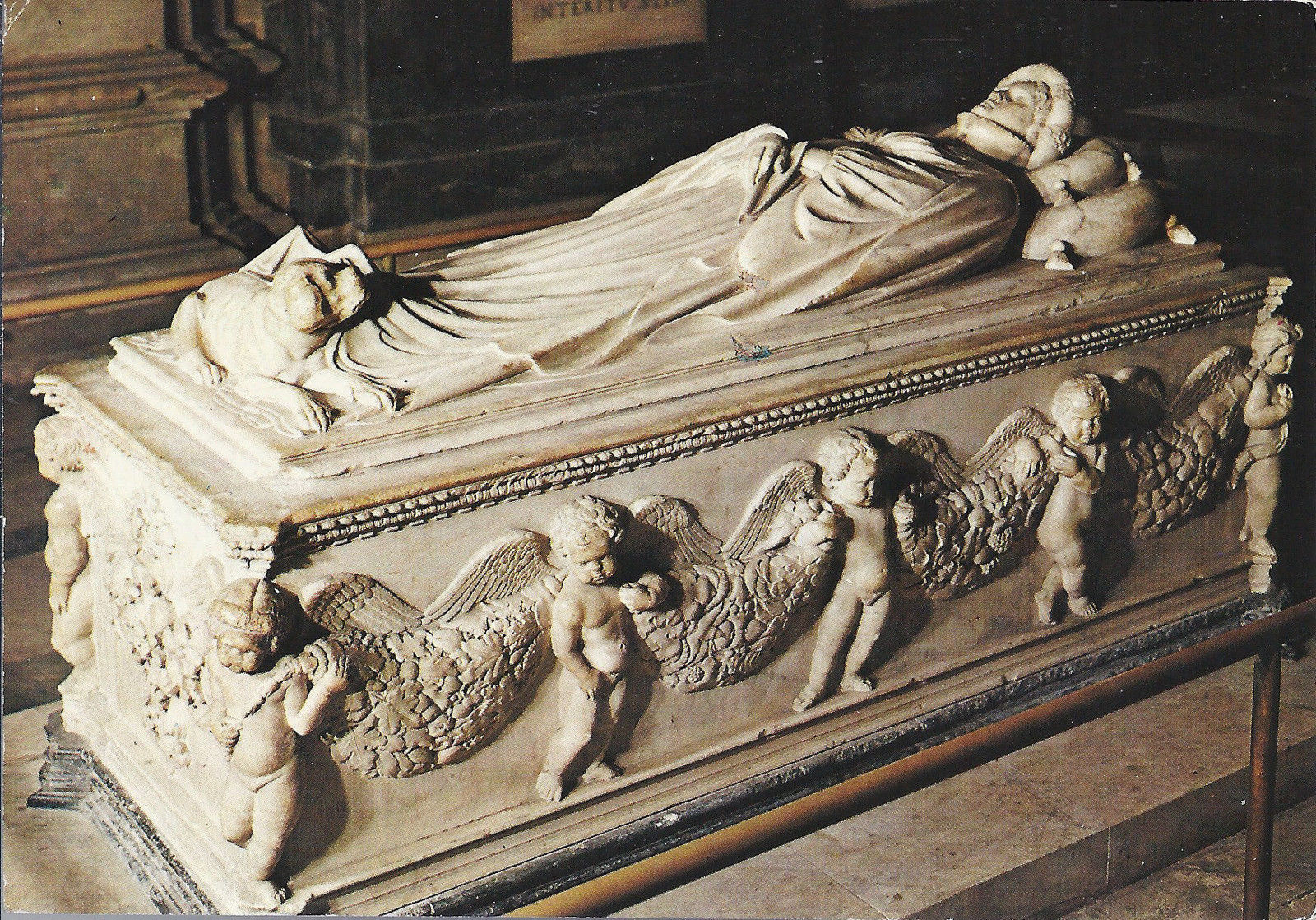

Nestled within the serene confines of the Cathedral of San Martino in Lucca, the funeral monument to Ilaria del Carretto stands as a poignant testament to love, loss, and artistic mastery. Created by the renowned sculptor Jacopo della Quercia in the early 15th century, this exquisite piece is not merely a tribute to a deceased noblewoman; it is a celebration of beauty, grace, and the rich tapestry of Lucca’s history.
### A Glimpse into History
The story of Ilaria del Carretto begins in the year 1400, when she became the beloved wife of Paolo Guinigi, the lord of Lucca during a time of political intrigue and cultural flourishing. Lucca, a city known for its well-preserved Renaissance walls and vibrant medieval past, was a pivotal hub in Tuscany. Founded by the Etruscans around the 3rd century BC, it blossomed under Roman rule and later experienced significant growth during the Middle Ages.
The Guinigi family, known for their political acumen and wealth, commissioned the monument in memory of Ilaria after her untimely death at a young age. Although her remains are not interred here, the monument captures her essence beautifully, making it a significant cultural artifact in Lucca’s rich historical narrative.
### Artistic Mastery and Architectural Significance
The monument itself is a stunning example of Gothic and Renaissance influences, showcasing Jacopo della Quercia’s remarkable skill. Ilaria is portrayed reclining on a sumptuous sarcophagus, draped in elegant attire, with a serene expression that evokes both tranquility and melancholy. At her feet lies a faithful little dog, symbolizing loyalty and companionship.
The intricate details of the monument illustrate not just Ilaria’s physical beauty but also the craftsmanship of the era. From the delicate folds of her garments to the lifelike representation of her canine companion, every aspect is meticulously crafted. This work stands out in Lucca for its emotional depth and artistic significance, making it a must-see for art lovers and history enthusiasts alike.
### Local Culture and Traditions
Lucca is steeped in traditions that echo through the ages. The Festa di Santa Croce, celebrated on September 14th, is one of the city’s most cherished events, where the locals honor the Holy Cross with processions and festivities. Visitors can immerse themselves in the vibrant atmosphere, experiencing local music, dance, and culinary delights that reflect the region’s rich heritage.
Another tradition tied to Ilaria’s monument is the custom of young girls kissing her nose for good luck in love and childbirth. While touching is now prohibited to preserve the monument, the legend still endears Ilaria to many, making her a symbol of hope and aspiration for women in the community.
### Gastronomy: A Taste of Lucca
No visit to Lucca would be complete without indulging in its culinary offerings. The city is famed for its tortelli lucchese, a pasta filled with seasoned potatoes and served with a rich meat sauce. Another local favorite is farro soup, made from ancient grains that have been cultivated in the region for centuries.
Pair your meal with a glass of Vernaccia di San Gimignano, a white wine that hails from the nearby vineyards. The blend of flavors reflects the region’s agricultural wealth and dedication to quality produce, making dining in Lucca a delightful experience.
### Lesser-Known Curiosities
While the monument to Ilaria del Carretto is undoubtedly a highlight, Lucca holds many hidden gems. For instance, the Guinigi Tower, adorned with towering oak trees at its summit, offers panoramic views of the city and surrounding countryside. Furthermore, the city’s ancient walls, which date back to the Renaissance, are not just fortifications but also serve as a pedestrian promenade, providing a unique perspective of the cityscape.
Another lesser-known fact is that Lucca is home to the only Farnese Theatre, an open-air theater built in the 17th century, which hosts performances and events that capture the cultural vibrancy of the area.
### Practical Visitor Information
The best time to visit Lucca is during the spring (April to June) and early autumn (September to October) when the weather is mild, and the city is less crowded. When visiting the Cathedral of San Martino, it’s advisable to check the opening hours and any potential restrictions regarding photography or access to the sacristy.
As you explore the city, take time to wander through its charming streets, stopping at local cafes to savor the atmosphere and perhaps try a slice of buccellato, a traditional sweet bread.
In conclusion, Lucca is a city that seamlessly blends history, art, and local culture, with the monument to Ilaria del Carretto standing as a poignant reminder of its rich past. To make the most of your visit, consider using the Secret World app to plan a personalized AI itinerary tailored to your interests.
