



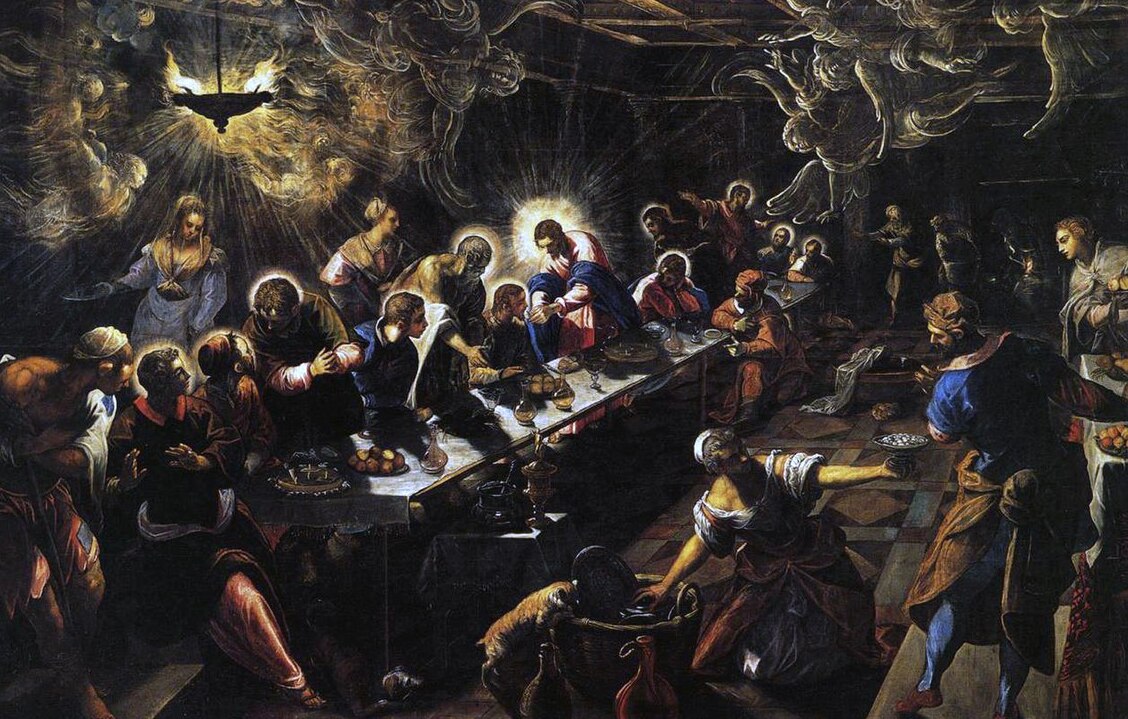
Nestled within the charming city of Lucca, Italy, the Last Supper by Jacopo Robusti, more commonly known as Tintoretto, stands as a testament to the artist's extraordinary talent and innovative vision. Completed in 1594 with the assistance of his son, Domenico Robusti, this remarkable canvas is one of Tintoretto's final masterpieces, and it encapsulates the very essence of his artistic prowess.
### History and Origins The city of Lucca, steeped in history, dates back to the Etruscan and Roman periods. Founded as Lua, it evolved into a significant center during the Middle Ages and played a pivotal role in Tuscan history. Notably, it became a free city-state in the 12th century, fostering a unique blend of cultural influences. As a result, Lucca boasts a wealth of historical architecture, including the impressive Walls of Lucca and the Duomo di San Martino, which provide a stunning backdrop for Tintoretto's work.
### Art and Architecture The Last Supper is not only a religious depiction but also an artful narrative infused with dynamism and emotion. The innovative angle of the table creates a sense of depth, inviting viewers into the scene. Tintoretto's unique approach places the Eucharistic celebration in a tavern setting, reflecting a modern interpretation of the biblical event. Central to the composition is Christ, whose radiance illuminates the surrounding figures, while the apostles, adorned in vivid garments, express a range of emotions in response to the shocking revelation of Judas' betrayal. The unexpected presence of a woman breastfeeding in the background serves as a poignant reminder of human nourishment, contrasting the spiritual aspect of the Eucharist. This work exemplifies Mannerism, a style characterized by its emotional intensity and dramatic poses.
### Local Culture and Traditions In Lucca, tradition runs deep, with a vibrant cultural scene that includes numerous festivals throughout the year. The Lucca Summer Festival, held every July, attracts international music acts and celebrates the city's rich artistic heritage. The Festa di Santa Croce, observed in September, showcases local customs and historical reenactments that honor the city's patron saint. Additionally, the annual Lucca Comics & Games, one of the largest comic book conventions in Europe, highlights the city's contemporary cultural relevance.
### Gastronomy A visit to Lucca is incomplete without indulging in its culinary delights. The region is famous for its tortelli lucchese, handmade pasta filled with seasoned potatoes, and often served with rich meat sauces. Another local specialty is zuccotto, a delectable dessert made with sponge cake and filled with ricotta cheese and chocolate. Pair these dishes with a glass of Lucchese wine, particularly the Rosso di Lucca, to fully savor the flavors of this enchanting city.
### Lesser-known Curiosities While many flock to see the Last Supper, there are hidden gems within Lucca that often go unnoticed. For instance, the Torre Guinigi, a medieval tower adorned with oak trees at its summit, offers breathtaking panoramic views of the city. Additionally, the Via Fillungo, Lucca’s main shopping street, is lined with charming boutiques and artisan shops that reflect the city’s craftsmanship. Did you know that Lucca was once the birthplace of Giuseppe Giordano, an influential composer? His legacy adds to the city's rich artistic tapestry, making it a hub for creativity and inspiration.
### Practical Visitor Information The best time to visit Lucca is during the spring (April to June) and fall (September to October) when the weather is mild, and the city is less crowded. To fully appreciate Tintoretto's Last Supper, plan your visit to Chiesa di San Francesco, where the painting is housed. Take time to explore the surrounding area, and don’t forget to stroll along the city walls for a unique perspective of this historic city.
Whether you’re an art lover, a history enthusiast, or a culinary explorer, Lucca offers a rich tapestry of experiences. The Last Supper by Tintoretto is a focal point, but the city’s charm extends far beyond this masterpiece. With its deep-rooted traditions, vibrant culture, and exquisite gastronomy, Lucca promises an unforgettable journey.
For a tailored experience in this magnificent city, consider using the Secret World app to create your personalized itinerary.
