
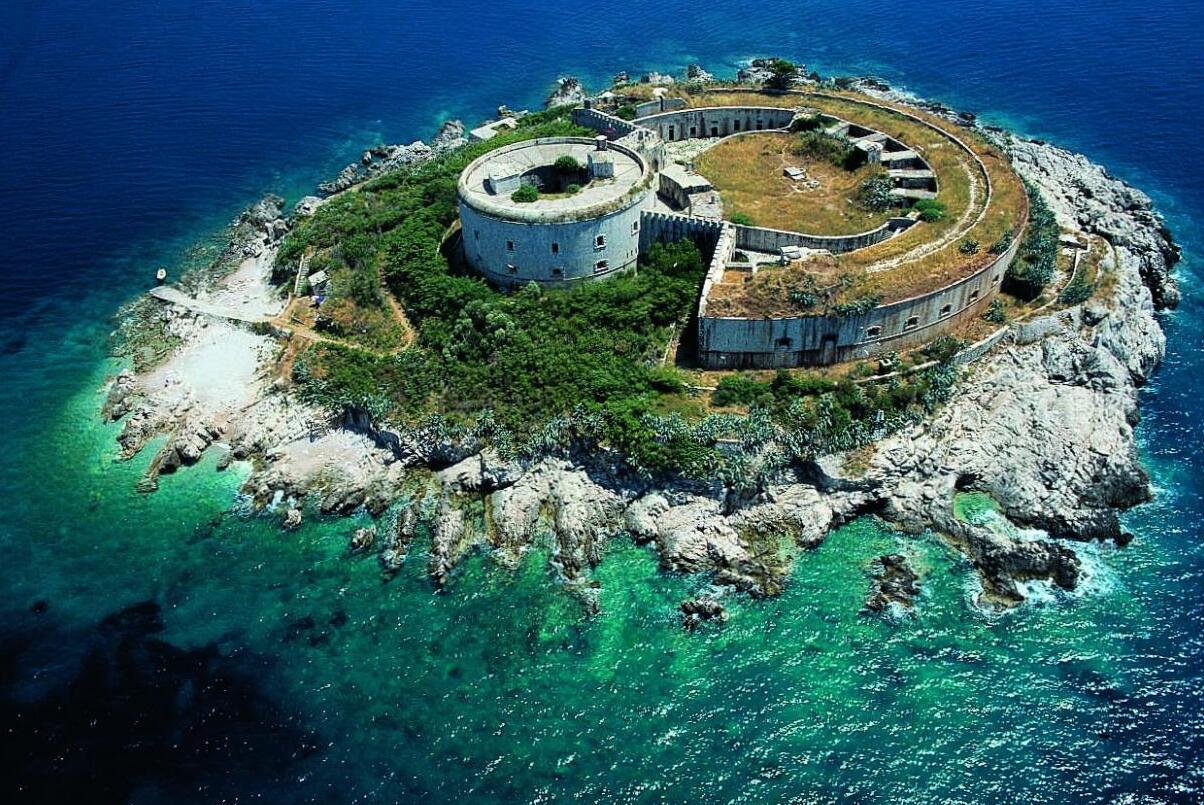

Nestled in the shimmering waters of the Adriatic Sea, Mamula Island stands as a testament to Montenegro's rich historical tapestry. Known by various names such as Lastavica—derived from the Slavic word for sparrow—and Rondina, the Venetian counterpart, the island has captured the imagination of many with its intriguing past and architectural marvels. The island is most famously recognized as Mamula, after the Austro-Hungarian general Lazar Mamula, who oversaw the construction of the island's fortress, completed in 1853. This imposing structure, which occupies about 90% of the island's surface area, was strategically built to protect the entrance to Boka Bay from enemy ships, marking its significance in the region's military history.
The island's history stretches beyond military purposes. It has witnessed various transformations, including its use during World War II when it served as a prison for political dissidents. Such events have woven a complex narrative that makes Mamula a site of both historical interest and somber remembrance. Visitors can explore these layers of history while walking through the fortress’s thick walls, which echo tales of resilience and struggle.
Architecturally, the Mamula Fortress showcases the Neoclassical style that was prominent in the mid-19th century. Its circular design is not just aesthetically pleasing but also functional, allowing for a 360-degree view of the surrounding waters, crucial for spotting approaching vessels. The fortress is built from local limestone, blending harmoniously with the natural landscape of the Adriatic. Inside, remnants of the past can be found in the form of old cells and military apparatus, offering a glimpse into the life of those who once inhabited the fortress.

The local culture surrounding Mamula is intrinsically tied to its maritime heritage. Fishing and seafaring have always been vital to the communities along the Montenegrin coast, and local customs reflect this deep connection. Festivals such as St. Vitus Day (Vidovdan), celebrated in June, mark significant events in the local calendar, often featuring traditional music and dance that evoke the island's historical significance. Local artisans continue to craft works inspired by the beauty and mystery of the island, from intricate jewelry to paintings that capture the stunning vistas.
When it comes to gastronomy, Mamula boasts a rich array of flavors influenced by Mediterranean cuisine. The island’s proximity to the sea means that fresh seafood takes center stage, with dishes like grilled sardines and octopus salad being local favorites. Pair these delights with a glass of Vranac, a robust red wine native to Montenegro, for a true taste of the region. While dining, the views of the Adriatic provide a picturesque backdrop, enhancing the culinary experience.
Despite its historical prominence, many visitors overlook the intriguing subtleties of Mamula. For instance, the fortress once housed a prison for political prisoners during the Communist era, a fact that adds a layer of depth to its narrative. Additionally, the island is often shrouded in myths and local legends, including tales of hidden treasures and ghostly apparitions that evoke curiosity among those who hear them. The unique circular shape of the island also leads to speculation about its connections to ancient civilizations, though no definitive evidence has surfaced.
For those planning a visit, the best time to explore Mamula is during the spring and early autumn months when the weather is pleasantly warm and the sea is inviting for swimming. While it is possible to reach Mamula by boat from the nearby town of Herceg Novi, travelers should be mindful of the limited ferry schedules, especially in the off-peak season. It is advisable to bring along water, snacks, and a camera, as the panoramic views and historical sites are truly breathtaking. Look out for the remnants of old cannons and the distinctive architecture that tells the story of this unique island.
In conclusion, Mamula Island is more than just a picturesque spot in the Adriatic; it is a layered narrative of history, culture, and natural beauty that deserves to be explored. Whether you're wandering through the fortress's stone corridors or savoring local delicacies, the island offers a captivating experience that resonates long after your visit.
For a seamless travel experience, consider using the Secret World app to create a personalized itinerary for your exploration of Mamula.


