
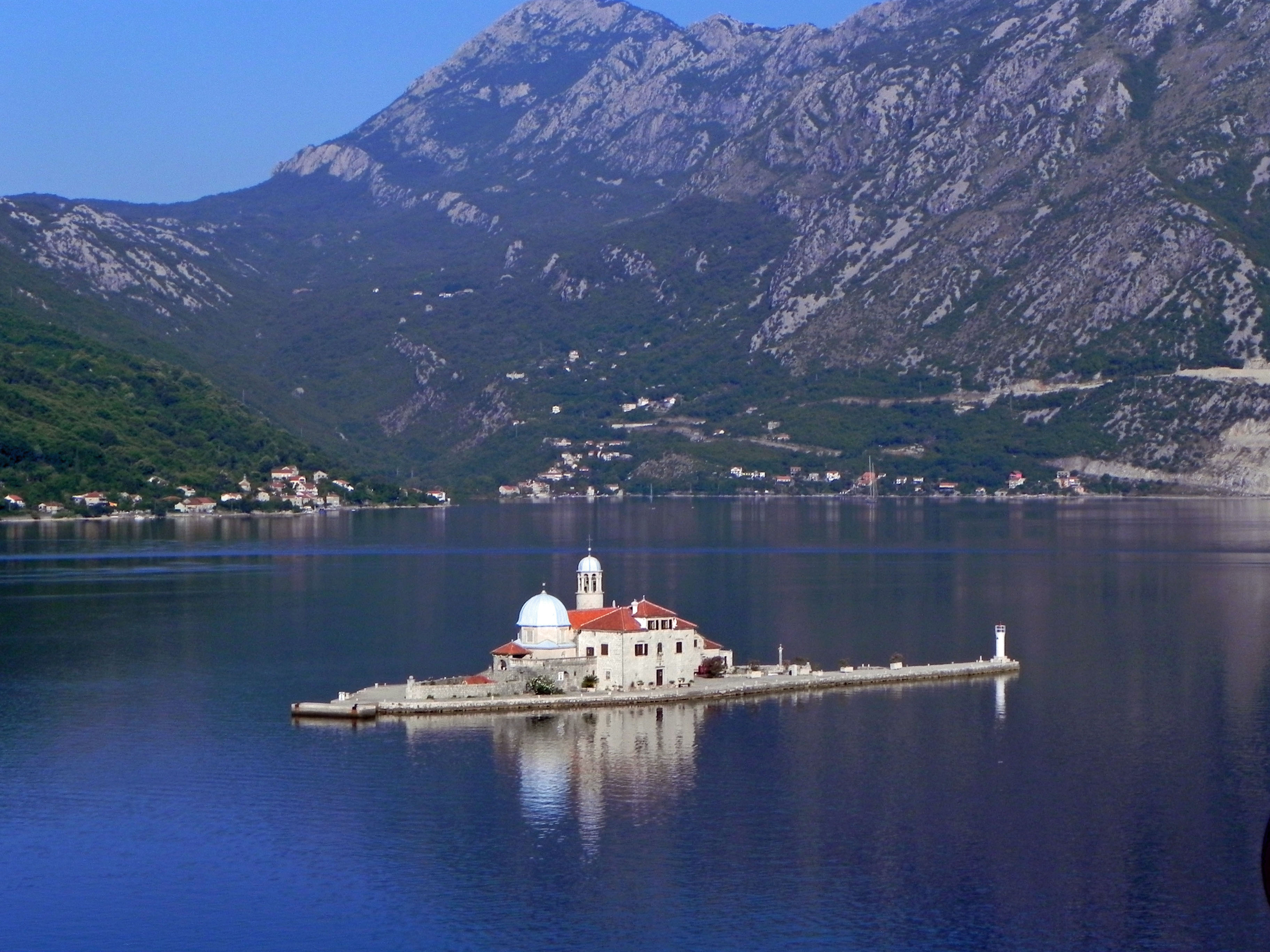

Nestled in the scenic Bay of Boka Kotorska, Our Lady of the Rocks offers an enchanting glimpse into Montenegro's rich tapestry of history, art, and culture. The island, known locally as Gospa od Škrpjela, is a man-made marvel with roots tracing back to a unique legend and community effort.
History and Origins: The origins of Our Lady of the Rocks are steeped in local lore. According to legend, the island was built over centuries by seamen who found a painting of the Virgin Mary and Christ Child on a rock in the bay on July 22, 1452. In gratitude for safe voyages, sailors began the tradition of throwing rocks at the site, gradually creating the island. This custom continues today with the annual event known as Fašinada, held every July 22, where locals sail out and throw rocks into the sea.
Art and Architecture: The island is dominated by the eponymous church, which stands as a testament to Baroque architecture. Constructed in 1632 and expanded in 1722, the church houses a stunning collection of Venetian art, including works by Tripo Kokolja, a 17th-century painter from Perast. His masterpiece, a 10-meter-long painting depicting the Assumption of Mary, adorns the church ceiling. Visitors can also admire over 2,500 votive tablets, each telling stories of peril and salvation at sea.
Local Culture and Traditions: The traditions of Our Lady of the Rocks are deeply intertwined with those of the nearby town of Perast. The annual Fašinada festival is a vibrant celebration of community and maritime heritage. During this event, a flotilla of boats filled with locals and visitors alike sail to the island, singing and celebrating as they continue the age-old custom of reinforcing its foundations.
Gastronomy: While the island itself is not known for its culinary offerings, the nearby region of Kotor is a treasure trove of Montenegrin flavors. Don't miss sampling Njeguški pršut, a type of smoked ham, or Kacamak, a hearty dish made from potatoes and cornmeal. The local wines, notably the reds from the Vranac grape, offer a perfect complement to the rustic Montenegrin fare.
Lesser-Known Curiosities: One fascinating aspect of Our Lady of the Rocks is the embroidered icon created by Jacinta Kunić-Mijović, a sailor’s wife who waited for her husband’s return for 25 years. The icon, crafted using her own hair, is a poignant symbol of love and patience, and it can be seen in the church’s small museum.
Practical Visitor Information: The best time to visit the island is during the mild months of spring and early autumn when the weather is pleasant and the crowds are thinner. Boat tours depart regularly from Perast, offering a scenic 10-minute ride across the bay. Make sure to wear comfortable shoes for exploring and bring a hat to shield from the sun.
Discover unique itineraries and hidden gems in Risan by planning your journey with the Secret World app.


