


Under the island of Jeju, in South Korea, one of the longest and best-preserved lava tube systems on the planet opens up. The Manjanggul cave extends for over 13 kilometers in total length, carved millennia ago by the flow of basaltic lava that once coursed through the interior of the island. Of these 13 kilometers, about one kilometer is open to the public, and this stretch alone is enough to understand the extraordinary scale of what nature has built here, slowly, silently, in the dark.

The entrance to the cave is already a sign of what will be found inside: a dark mouth that swallows the daylight and returns fresh air even in summer. The walls show layers of solidified lava from different eras, with colors ranging from black to rusty red to ash gray. The floor is uneven, marked by ancient channels where molten magma once flowed. Walking here means moving through the geological history of the island, which has been a UNESCO heritage site since 2007, recognized as part of the Jeju Volcanic Island and Lava Tubes.
The lava column: the natural monument at the end of the path

The highlight of the visit is the lava column about 7 meters high located at the end of the accessible section. It is one of the tallest lava columns in the world visible within a lava tube. It formed when the lava flowing in the tunnel cooled in a differentiated manner: the lava falling from above created a stalactite, that accumulated from below a stalagmite, and the two fused into a unique, imposing, almost sculptural structure. The artificial light installed along the path illuminates this formation with an effect that leaves even the most skeptical visitors speechless.
Along the path, other characteristic formations of lava tubes can also be observed: the so-called lava shelves, shelves of solidified rock that indicate the different levels reached by the magma flow at distinct moments, and the lava bridges, natural bridges that cross the ceiling of the tunnel. The walls exhibit, in some places, an almost vitrified surface, a result of the rapid cooling of basalt. Every detail tells a precise phase of the volcanic activity that shaped Jeju.

How to visit Manjanggul: practical information
The cave is located in the northeastern area of Jeju Island, in the Gujwa-eup district. The site can be reached by car or taxi from Jeju International Airport in about 40-50 minutes. There is no frequent direct bus line, so for those without their own transportation, a taxi remains the most convenient option. The entrance ticket costs a modest amount, around 2,000-4,000 Korean won, equivalent to less than 3 euros, making the visit accessible to any budget.

The most useful advice for those planning the visit is to bring an extra layer of clothing: inside the cave, the temperature remains constant around 11-12 degrees Celsius all year round, regardless of the season. In summer, when Jeju can be hot and humid, this temperature difference is particularly sharp. Non-slip shoes are essential because the floor can be wet and uneven. The path typically takes 40-60 minutes to complete at a leisurely pace, with stops to observe the most significant formations.
The geological context: why Jeju is unique
Manjanggul is not an isolated phenomenon. The island of Jeju was entirely formed by volcanic activity, and its subsoil is traversed by a network of lava tubes formed during various eruptions. The system of which Manjanggul is a part also includes the nearby Gimnyeonggul cave, and together they constitute one of the most significant lava tube complexes in East Asia. The formation of these tunnels occurs when the outer surface of the lava flow cools and solidifies while magma continues to flow inside, progressively emptying the structure.
The UNESCO recognition has helped protect the area and regulate access, preventing the deterioration that affects many over-visited caves around the world. Visitors are required to stay on marked paths and touching the rock formations is not allowed. These measures, sometimes perceived as restrictive, are actually what allows Manjanggul to preserve its extraordinary nature for those who will come to visit in the coming decades.
When to go and how to integrate the visit
Manjanggul is open all year round, but the spring months (April-May) and autumn months (September-October) offer the best conditions to visit Jeju in general: mild temperatures, less humidity compared to summer, and particularly picturesque landscapes. The cave itself is not affected by the external seasons, but combining the visit with a walk in the surroundings, where the subtropical vegetation of the island is lush, makes the experience more complete.
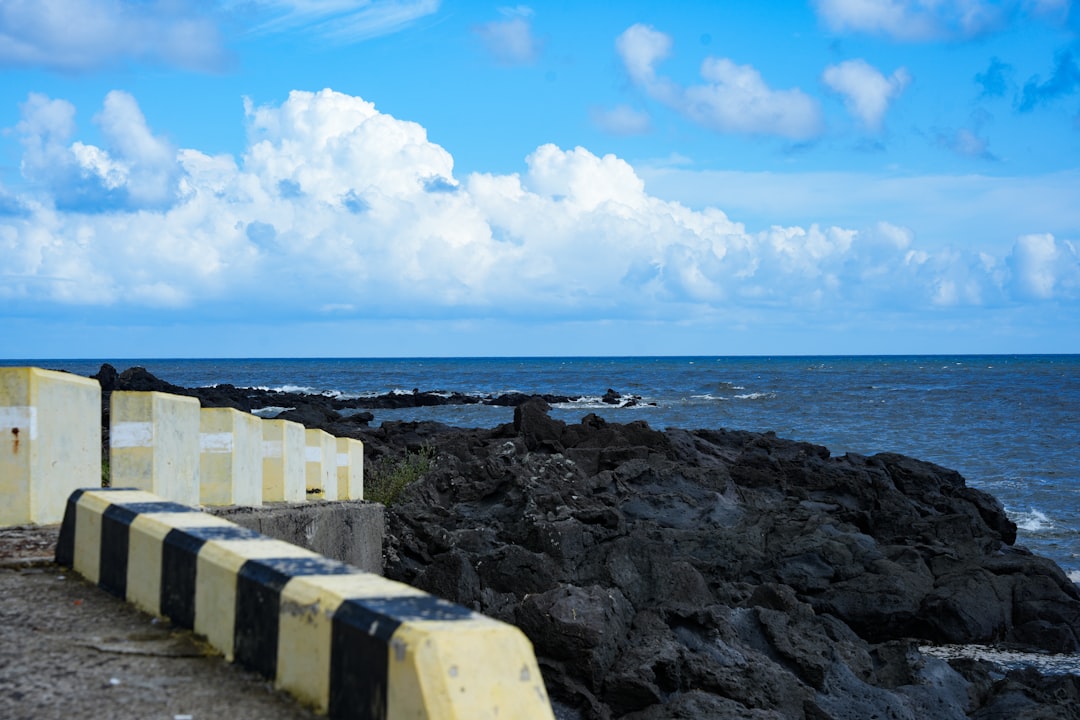
Those arriving in Jeju with the intention of visiting Manjanggul can easily combine the stop with the nearby northeastern coast of the island, with its basalt rock formations towering over the sea. The contrast between the underground landscape of the cave and the open and bright coastal scenery is one of the reasons why this area of Jeju deserves a whole day of exploration.


