
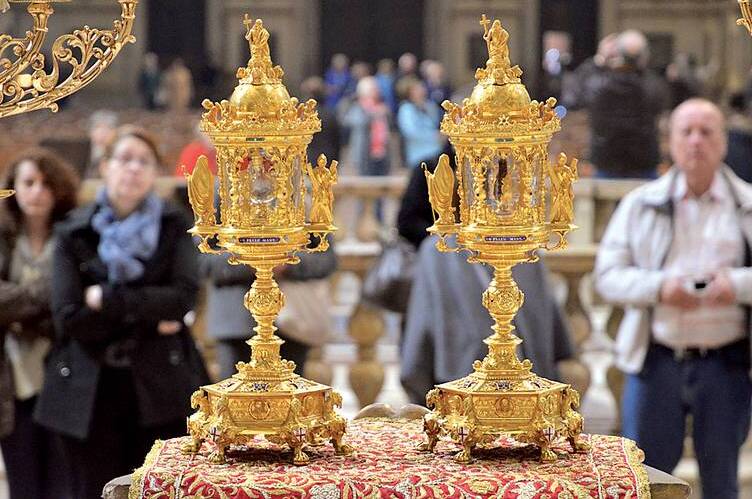

Nestled in the heart of Lombardy, Mantua (or Mantova) is a city steeped in history, art, and legend. Once a thriving center of the Gonzaga dynasty during the Renaissance, it stands as a testament to Italy’s rich tapestry of culture. Among its many treasures, the Basilica of St. Andrew holds a profound significance: a relic believed to contain the blood of Christ, collected by St. Longinus, the soldier who pierced Jesus' side during the crucifixion. This sacred artifact is enshrined within two exquisite golden chalices, drawing pilgrims and curious visitors alike into the depths of its spiritual narrative.
History and Origins Mantua’s origins date back to ancient times, with its founding linked to the myth of Manto, the daughter of the blind seer Tiresias, who is said to have established the city after fleeing Thebes. Over the centuries, it blossomed under the rule of the Gonzaga family, who transformed it into a cultural and artistic hub from the 14th to the 17th centuries. Notable historical events include the Council of Mantua in 1459, which sought to address the issues of the time, and the city’s role in the Italian Wars, where it faced numerous sieges and changes in governance.
Art and Architecture The architectural marvel of Basilica of St. Andrew is a striking example of Renaissance ingenuity, designed by the brilliant Leon Battista Alberti. Its construction began in 1472 and was completed in the 17th century, showcasing elements of Gothic and Renaissance styles. The façade is a harmonious blend of white stone and intricate carvings, inviting visitors to explore the magnificent interior. The Basilica’s vaulted ceilings, adorned with frescoes, and the soaring altars contribute to its ethereal atmosphere. Notably, Andrea Mantegna's influence is palpable throughout the city, as his works remain celebrated in various locations, including the Palazzo Ducale.
Local Culture and Traditions Mantua is alive with traditions that celebrate its rich heritage. One of the most exciting events is the Festival of the Gonzaga, held every September, where the city comes alive with historical reenactments, parades, and medieval markets. Local customs often reflect the city’s religious fervor, especially during Holy Week, when processions fill the streets, culminating in a vibrant Easter celebration. Visitors may also encounter the tradition of “Baccalà alla Mantovana”, a local dish prepared with salt cod, often served during festive occasions.
Gastronomy The culinary landscape of Mantua is as rich as its history, steeped in flavors that reflect its agricultural roots. A must-try is the Tortelli di Ricotta e Spinaci, pasta stuffed with ricotta cheese and spinach, often served with a sage and butter sauce. Another local specialty is Risotto alla Pilota, a creamy rice dish prepared with pork and flavored with local wines. For those with a sweet tooth, the Sbrisolona, a crumbly almond cake, is a delightful end to any meal, traditionally enjoyed with a glass of Lambrusco, a sparkling red wine from the region.
Lesser-known Curiosities Beyond its renowned sites, Mantua hides fascinating stories waiting to be uncovered. One such tale involves St. Longinus, who is said to have fled to Mantua after the crucifixion, eventually becoming a martyr. Additionally, the city boasts a unique “Grail” connection; while many cities claim possession of the Holy Grail, Mantua’s relic is particularly revered. Visitors might also be intrigued to learn about the Teatro Bibiena, an intimate theater that was revolutionary in its design, showcasing the splendor of baroque architecture while offering an impressive acoustic experience.
Practical Visitor Information The best time to visit Mantua is during spring (April to June) and early autumn (September to October), when the weather is mild, and the city hosts various cultural events. Visitors should not miss the opportunity to explore the Palazzo Ducale, where the Gonzaga family once lived, and the Basilica of St. Andrew, where the Holy Grail relic is housed. To navigate the city’s winding streets and hidden gems, consider taking a guided tour or utilizing local resources. A leisurely stroll along the Lago di Mezzo offers a picturesque view of the historical architecture while providing a serene escape from the bustling city life.
Explore Mantua’s spiritual and historical depths for an unforgettable experience in Italy. To make the most of your visit, consider using the Secret World app to craft a personalized itinerary that highlights the best of this enchanting city.


