
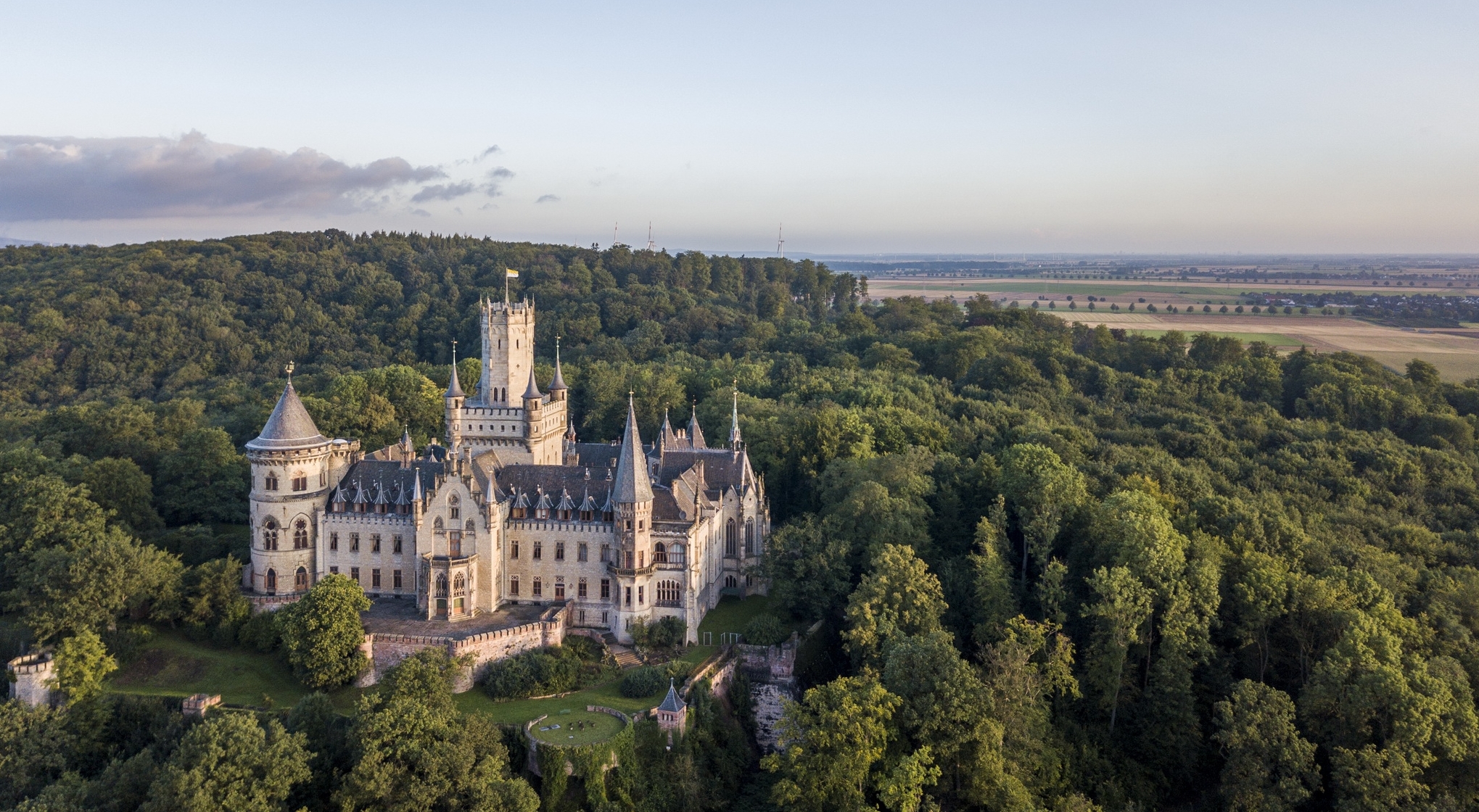

Nestled in the verdant hills of Lower Saxony, the Marienburg Castle stands as a testament to the grandeur of the Gothic revival era. This enchanting castle, located just 15 kilometers northwest of Hildesheim, is more than a lavish architectural marvel; it is steeped in a rich tapestry of history and cultural significance.
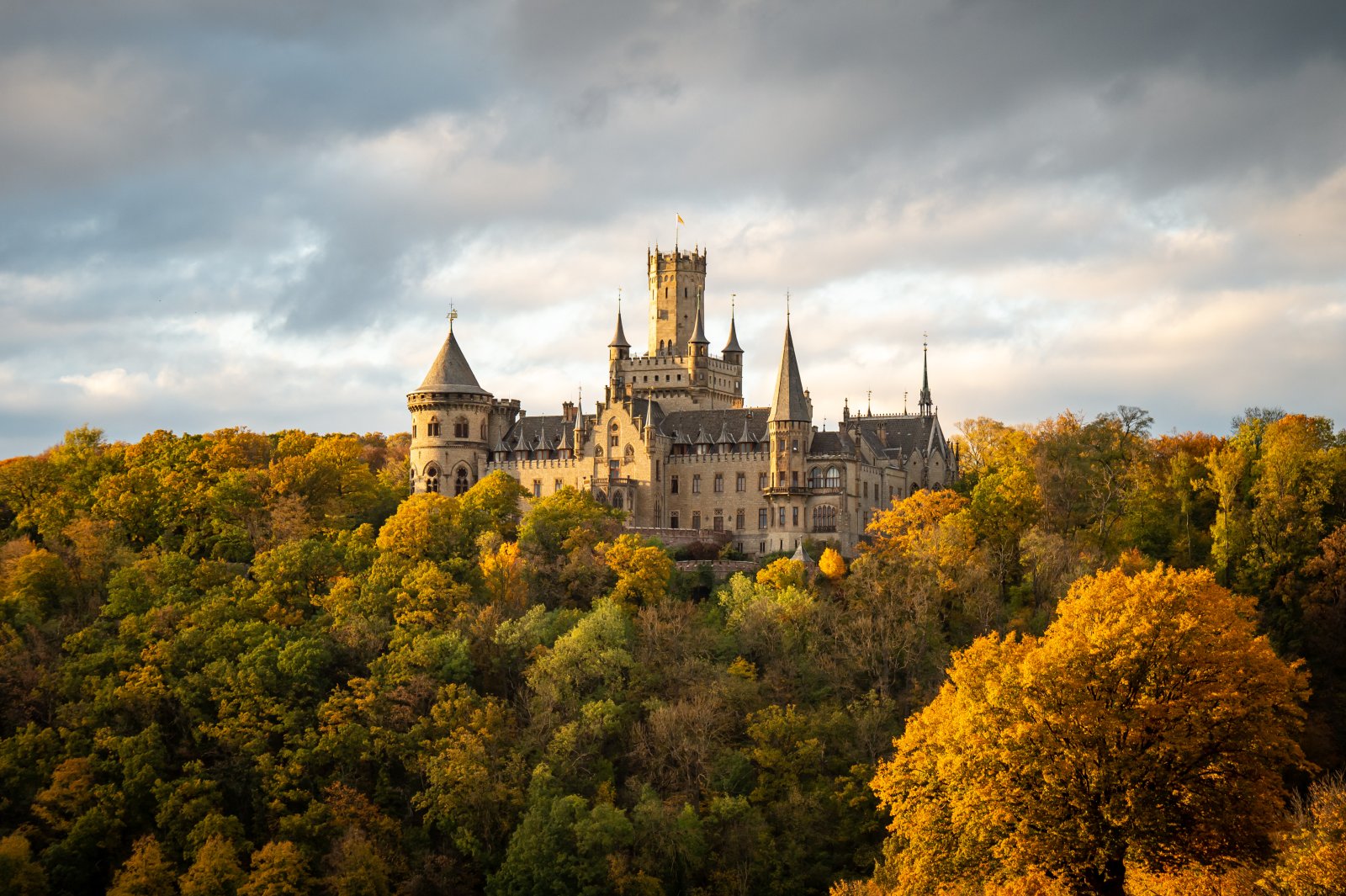
The origins of Marienburg Castle can be traced back to the mid-19th century when King George V of Hanover commissioned its construction as a birthday gift for his beloved wife, Marie of Saxe-Altenburg. Built between 1858 and 1867, the castle was intended as a summer residence for the royal family, serving as an alternative to their primary residences in Hannover. The architectural vision was brought to life by the renowned architect Conrad Wilhelm Hase, whose work reflects the romanticized aesthetics of the Gothic revival movement. This style, characterized by pointed arches, intricate stonework, and soaring towers, is evident in Marienburg's impressive façade and grand interiors.
Historically, the castle holds a unique place in the narrative of the House of Hannover. Following the personal union that united the kingdoms of Hannover and Britain from 1714 to 1837, the royal court had largely shifted focus, leaving a gap in royal representation in Hannover. Marienburg Castle was intended to fill this void, allowing the monarchy to reconnect with its German roots. However, the political landscape shifted dramatically when Hannover was annexed by Prussia in 1866. As a result, the royal family went into exile, leaving the castle uninhabited for nearly 80 years. This period of dormancy allowed the castle to remain remarkably well-preserved, untouched by the renovations that often plague historical sites.
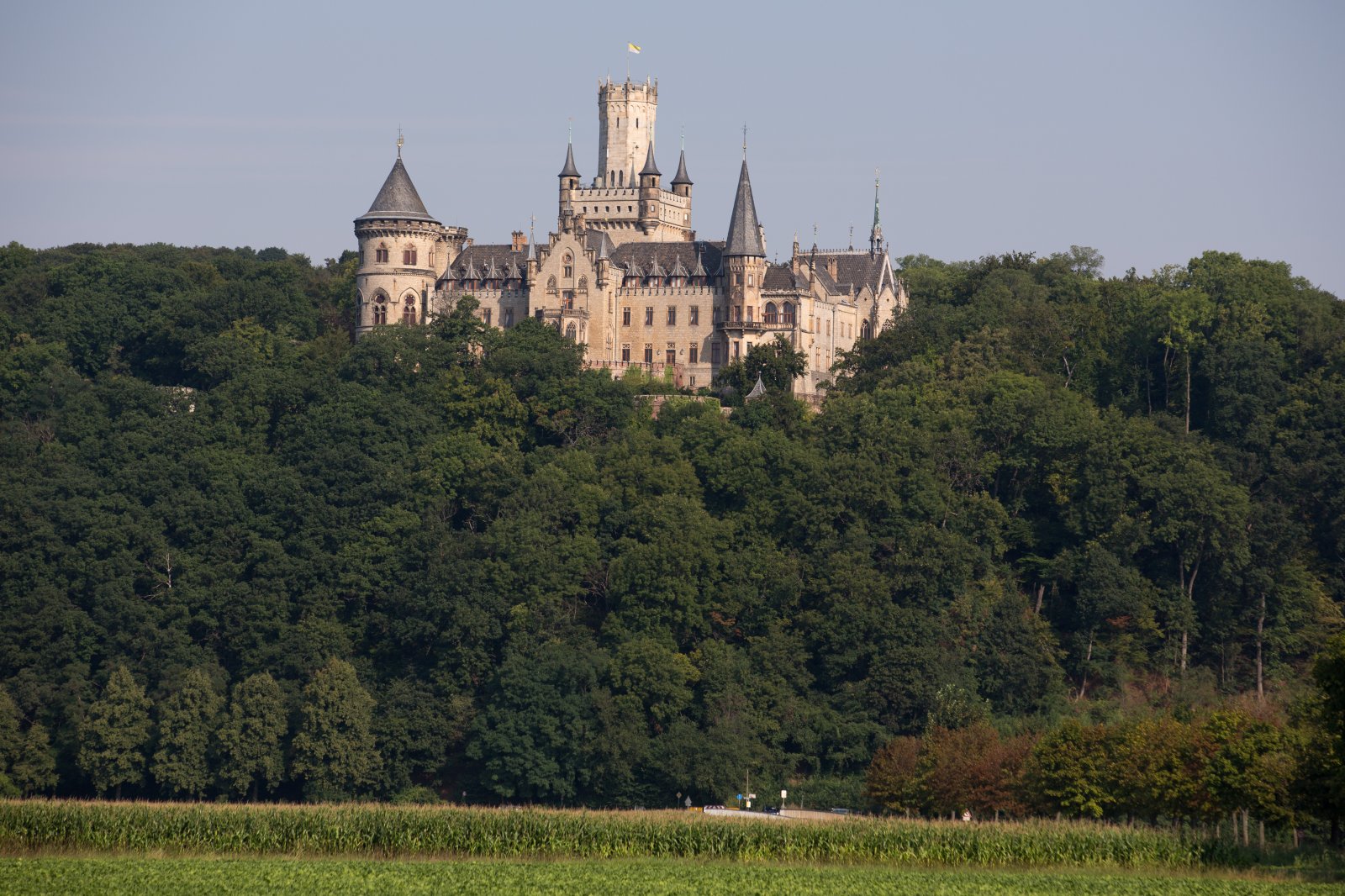
In 1945, the castle saw a return to royal occupancy when Ernest Augustus, Duke of Brunswick, and his wife, Princess Viktoria Luise of Prussia, relocated there from Blankenburg Castle. Their son, Prince Ernest Augustus IV, opened the castle to the public in 1954, transforming it into a museum that showcases the rich history of the House of Hannover and its royal legacy.
The artistic significance of Marienburg Castle extends beyond its architecture. Inside, visitors can find an array of stunning artworks and period furnishings that reflect the opulence of royal life. The grand halls are adorned with elaborate tapestries, intricate woodwork, and period paintings, all of which offer a glimpse into the tastes and lifestyles of the 19th-century nobility. The castle's chapel, with its beautiful stained glass and serene ambiance, serves as a reminder of the spiritual and cultural importance that such spaces held for the royal family.
Local culture in the vicinity of Marienburg is vibrant, celebrating traditions that have evolved over centuries. The nearby town of Pattensen hosts various festivals throughout the year, including seasonal markets that showcase local crafts and culinary delights. One of the most cherished traditions is the Easter market, where visitors can experience the festive spirit while enjoying traditional German pastries and handmade goods. Additionally, the region is known for its jazz festivals, which celebrate the local music scene and attract talent from across the country.
Speaking of culinary delights, the gastronomy of Lower Saxony is a feast for the senses. Local dishes often feature hearty ingredients, with specialties such as Spargel (white asparagus) taking center stage in spring. Visitors should not miss the chance to try Bauernbrot, a rustic bread often served with Wurst (sausage) and locally produced cheeses. Pair these flavors with a glass of Hannoverian beer, crafted by local breweries, to truly immerse yourself in the region's culinary heritage.
Despite its grandeur, Marienburg Castle harbors lesser-known curiosities that captivate those who take the time to explore. One intriguing fact is that the castle's design incorporates elements meant to symbolize the love between King George V and Queen Marie, with the double-headed eagle motif appearing throughout the structure. Additionally, hidden corridors and secret chambers, once used by the royal family, whisper tales of intrigue and privacy, adding an air of mystery to the castle's history.
For those planning a visit, the best time to explore Marienburg Castle is during the summer months, from June to August, when the gardens are in full bloom and various cultural events take place. Guided tours are available and offer insightful narratives about the castle's history and architecture. Don't forget to take a leisurely stroll through the castle grounds, where the panoramic views of the surrounding countryside are simply breathtaking.
Marienburg Castle is not just a beautiful structure; it is a portal into the past, offering a glimpse of royal life and the cultural heritage of Lower Saxony. To enhance your visit, consider using the Secret World app to create a personalized itinerary that includes all the hidden gems of Pattensen.


