


Nestled in the heart of Basilicata, the ancient city of Matera captivates visitors with its stunning landscapes and rich cultural tapestry. Recognized as a UNESCO World Heritage Site, Matera is renowned for its Sassi, a network of cave dwellings that date back thousands of years. Walking through its winding alleys feels like stepping back in time, where each corner reveals the city’s layered history and the resilience of its people.

History and Origins
The origins of Matera can be traced back to the Paleolithic era, making it one of the oldest continuously inhabited cities in the world. Archaeological evidence suggests that humans have lived in the limestone caves of Matera since at least 10,000 BC. The city's most significant period began during the Roman Empire, where it became a vital trading post.
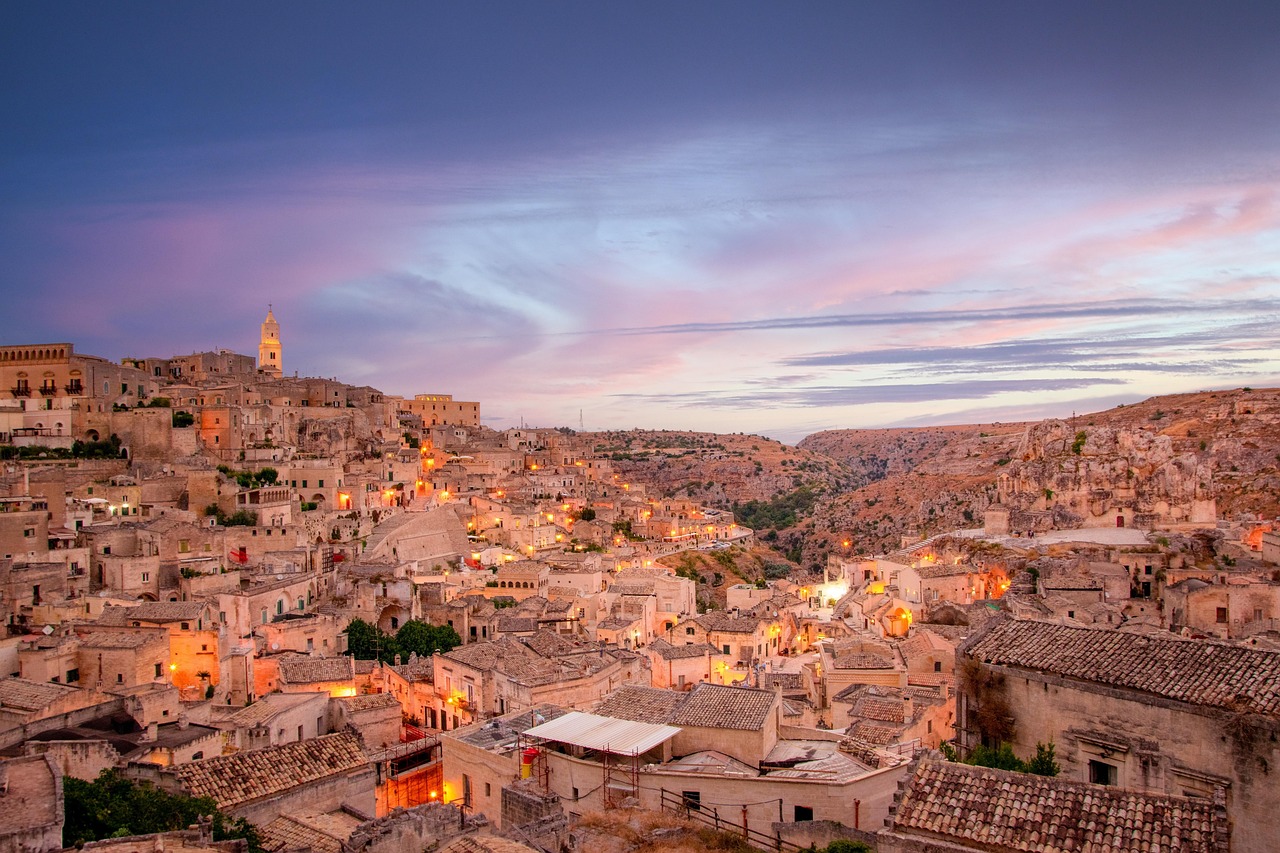
However, it was during the Middle Ages that Matera truly flourished. The Sassi di Matera, with their intricate cave systems, provided shelter and homes for many. The city's unique architecture is a testament to its adaptability, as residents carved their homes directly into the rock. During the 20th century, Matera faced significant challenges, particularly in the 1950s when many inhabitants were relocated due to poor living conditions. This prompted a revival initiative in the late 20th century, leading to a renaissance that has positioned Matera as a cultural beacon in Italy today.
Art and Architecture
Matera's architectural style is a stunning blend of Romanesque, Gothic, and Baroque influences. The cave dwellings, known as “I Sassi,” are characterized by their soft, rounded shapes and muted earthy tones, seamlessly integrating into the surrounding landscape. Notable sites include the Cathedral of Matera, which boasts a majestic façade and a stunning bell tower, and the rock-hewn churches, such as Santa Maria di Idris and San Pietro Barisano, that showcase intricate frescoes and religious art.
The artistic significance of Matera lies not only in its architecture but also in its vibrant traditions. The city has served as a backdrop for numerous films, including Mel Gibson’s “The Passion of the Christ” and “No Time to Die”, further solidifying its status as a cinematic treasure.
Local Culture and Traditions
Matera is a city steeped in tradition. Its festivals reflect the rich cultural life of its residents. The Festa della Bruna, held on July 2nd, is one of the most important local celebrations. This lively event features a colorful procession, fireworks, and the symbolic destruction of a float, representing the community's spirit and devotion.
Another tradition is the “Volo dell’Angelo”, or the Flight of the Angel, where a performer dressed as an angel descends from the bell tower to symbolize the arrival of the Virgin Mary. This event captivates both locals and visitors alike, showcasing the city's deep-rooted religious and cultural heritage.
Gastronomy
No visit to Matera is complete without indulging in its culinary delights, notably the cialledda. This rustic dish, made from stale Matera bread, tomatoes, onions, and oregano, reflects the city’s agrarian roots. Originally a breakfast for field workers, it embodies the essence of local cuisine—simple yet flavorful.
In summer, cialledda is often enjoyed cold, enhanced with seasonal vegetables like caroselli (a type of cucumber), olives, and celery. In contrast, the winter version is served warm, incorporating seasonal greens such as turnip tops. This dish not only nourishes the body but also tells the story of Matera’s people, their connection to the land, and the importance of sustainability.
Beyond cialledda, Matera is also famous for its bread, known as pane di Matera, which has been recognized with PGI (Protected Geographical Indication) status, ensuring that only bread made in the traditional way can bear its name. Pair it with local wines such as Aglianico for a true taste of the region.
Lesser-known Curiosities
While many tourists flock to Matera for its stunning views and historical significance, there are hidden gems that often go unnoticed. For example, the Casa Grotta di Vico Solitario allows visitors to step inside a traditional cave home, offering a glimpse into the daily lives of past residents.
Additionally, the Palombaro Lungo, a vast underground cistern carved from the rock, is a marvel of ancient engineering. This hidden water reservoir once provided the city with its vital water supply and remains a fascinating site worth exploring.
Practical Visitor Information
The best time to visit Matera is in the spring (April to June) and fall (September to October) when the weather is mild, and the crowds are smaller. Be sure to wear comfortable shoes, as the cobblestone streets can be uneven.
Don't miss visiting the Belvedere viewpoint for breathtaking panoramic views of the Sassi, especially at sunset. For those looking to delve deeper into Matera’s history, guided tours are available that explore both its architectural wonders and culinary delights.
With its rich history, stunning architecture, and delicious cuisine, Matera is a destination that beckons travelers to explore its depths. Consider using the Secret World app to craft a personalized itinerary that uncovers the hidden treasures of this extraordinary city.


