
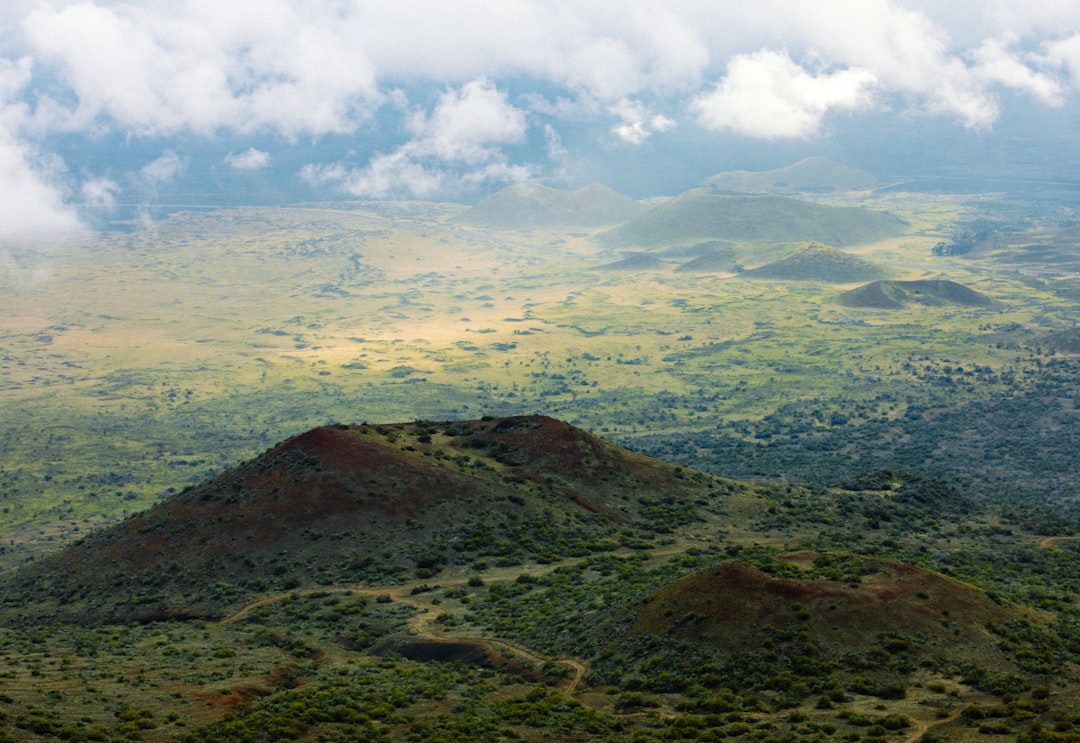

Immersed in the heart of Hawaii, the Mauna Loa Observatory is much more than just a vantage point. It is a symbol of the fight against climate change, a place where science and nature meet to reveal the truth about our planet. Located on the imposing Mauna Loa volcano, at over 3,000 meters above sea level, this observatory has given rise to fundamental research that has changed our approach to environmental issues.

Built in 1956, the observatory is known for its long data series on atmospheric carbon dioxide, starting in 1958 with measurements by Charles David Keeling. The information collected here has provided the foundation for understanding human impact on climate and our environment.
A Journey into the Heart of Environmental Science

Arriving at the Mauna Loa Observatory, one feels catapulted into a different world. The thin, fresh air is punctuated by the scent of volcanic vegetation, while the backdrop is dominated by the majestic peaks of Hawaii. The observatory itself, with its simple yet functional architecture, is surrounded by unspoiled natural beauty. Here, every day, researchers carefully monitor the fluctuations of greenhouse gases and study the Earth's atmosphere.
Research missions at the observatory are conducted not only by Hawaiian scientists but also by experts from around the world. This international meeting point is a vibrant hub of ideas and innovations, where vital discoveries regarding climate change are made. High temperatures and carbon dioxide emissions may seem like abstractions, but here they become tangible, measurable data and, above all, understandable.
An Important Atmospheric Monitoring Lighthouse
One of the main objectives of the Mauna Loa Observatory is to monitor CO2 levels. The analyses conducted here not only show us the trend of greenhouse gases but also highlight their consequences on the climate. The data reveals that, since measurements began, carbon dioxide levels have increased dramatically, rising from about 315 parts per million in 1958 to over 400 parts per million in 2023.

Every year, the observatory organizes public visits and educational workshops, with the intent of raising visitors' awareness about the importance of atmospheric monitoring. Education is one of the fundamental pillars of its work. Through interactive meetings and presentations, researchers inspire a new generation of scientists and activists, showing them not only the data but also the stories behind these numbers.
The Beauty of Research and Nature

Beyond its scientific meanings, the Mauna Loa Observatory offers an extraordinary visual experience. The panoramic view that opens from its grounds is breathtaking: the vast blue ocean stretches to the horizon, while the clouds drape like a cloak over the mountain peaks. Here, nature presents itself in all its power and beauty, serving as a reminder of the fragility of our environment.
Every day, scientists face the daunting task of translating atmospheric changes into a language understandable to the public. The mission of the observatory is clear: not only to collect data but also to communicate the crucial message that our climate is changing and that the actions we take today will have repercussions on our future.
A Call to Action
Visit the Mauna Loa Observatory and let yourself be inspired. Here, you will not only have the opportunity to explore a world-renowned research site, but you will also discover a deeply human message: the necessity to take care of our planet. Every step we take towards sustainability can begin with a visit to this incredible observatory, where the future of our climate is studied and, hopefully, protected.
At a time when climate change is one of the most urgent and discussed issues globally, the Mauna Loa Observatory represents a guiding light. Its discoveries are not just numbers, but stories of hope, commitment, and responsibility towards the Earth. The fight for our climate begins here, in this remote and fascinating place, where science meets action and inspiration.


