

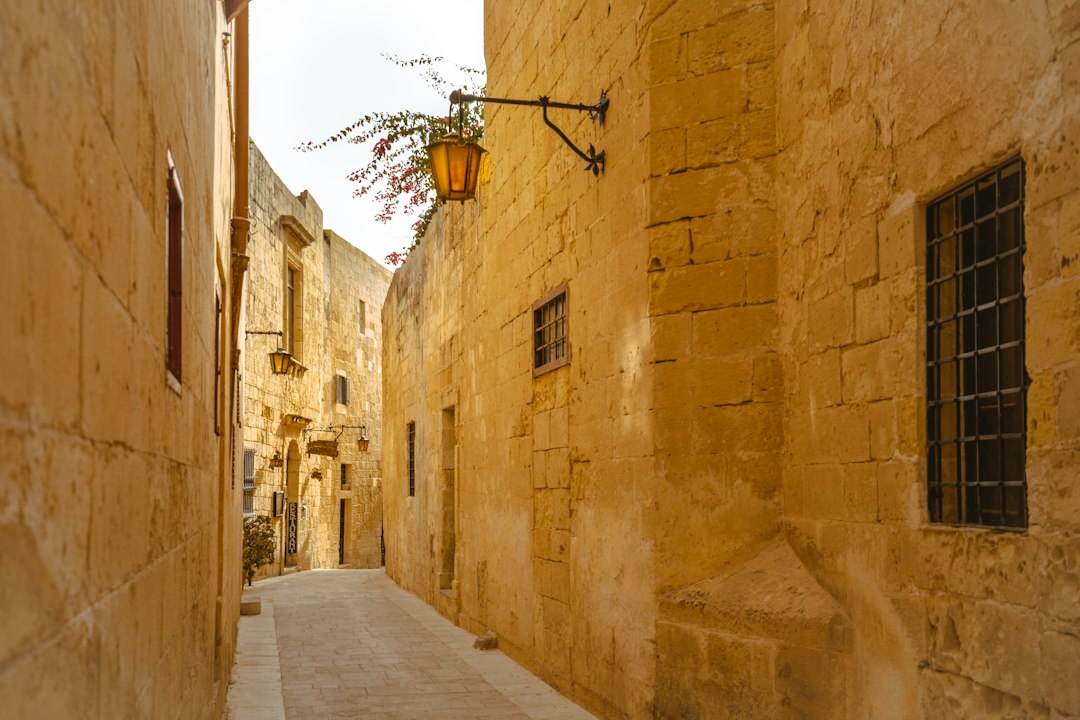
The streets of Mdina have no sidewalks because they do not need them: they are so narrow that two people walk almost shoulder to shoulder between honey-colored limestone walls. This medieval walled city in the Maltese interior permanently hosts around 300 residents, and it is precisely this almost absent density that makes it so different from any other urban center in the Mediterranean. No traffic, no honking, no crowd of commuters: just the sound of one's footsteps on the cobblestones and, at times, the sound of the cathedral bells.
Mdina was the capital of Malta for centuries, before the Knights of St. John moved the center of power to the Grand Harbour in the sixteenth century, founding Valletta. From that moment, the medieval city remained almost unchanged, preserving its Arab-Norman urban structure and later enriching itself, between the seventeenth and eighteenth centuries, with a series of baroque palaces that still overlook the same silent streets today. It is this layering of eras — medieval, Aragonese rule, baroque architecture — that makes every corner a visible and tangible lesson in history.
The Cathedral of St. Paul and its museum
The most important monument in Mdina is the Cathedral of St. Paul, rebuilt after the earthquake of 1693 based on the design of the Maltese architect Lorenzo Gafà, who also worked on the cathedral of Gozo. The facade made of local limestone features a baroque portal topped by two asymmetric bell towers, and the interior houses a floor entirely made of polychrome marble tomb slabs belonging to Maltese nobles and prelates. Looking up means encountering the frescoed vaults by Mattia Preti, the Calabrian painter who spent much of his life in Malta and left here some of his most significant works.
Next to the cathedral, the Cathedral Museum collects a collection of engravings by Albrecht Dürer — one of the few complete series still in existence — as well as sacred vestments, silverware, and medieval manuscripts. The entrance ticket to the museum is around 5 euros and includes access to rooms that many visitors hurriedly skip, missing out on works of notable quality.

The noble palaces: stone and coats of arms
Along the main streets of Mdina — particularly Villegaignon Street — there are facades of noble palaces that still bear the coats of arms of the families that inhabited them. The Falson Palace, also known as Norman House, is one of the best-preserved medieval buildings in Malta: it dates back to the 14th century and has an internal courtyard with a loggia that testifies to the Norman architectural influence on the island. Today it is a private museum that displays collections of art, ancient weapons, jewelry, and antiques accumulated by the collector Olof Gollcher throughout the 20th century.
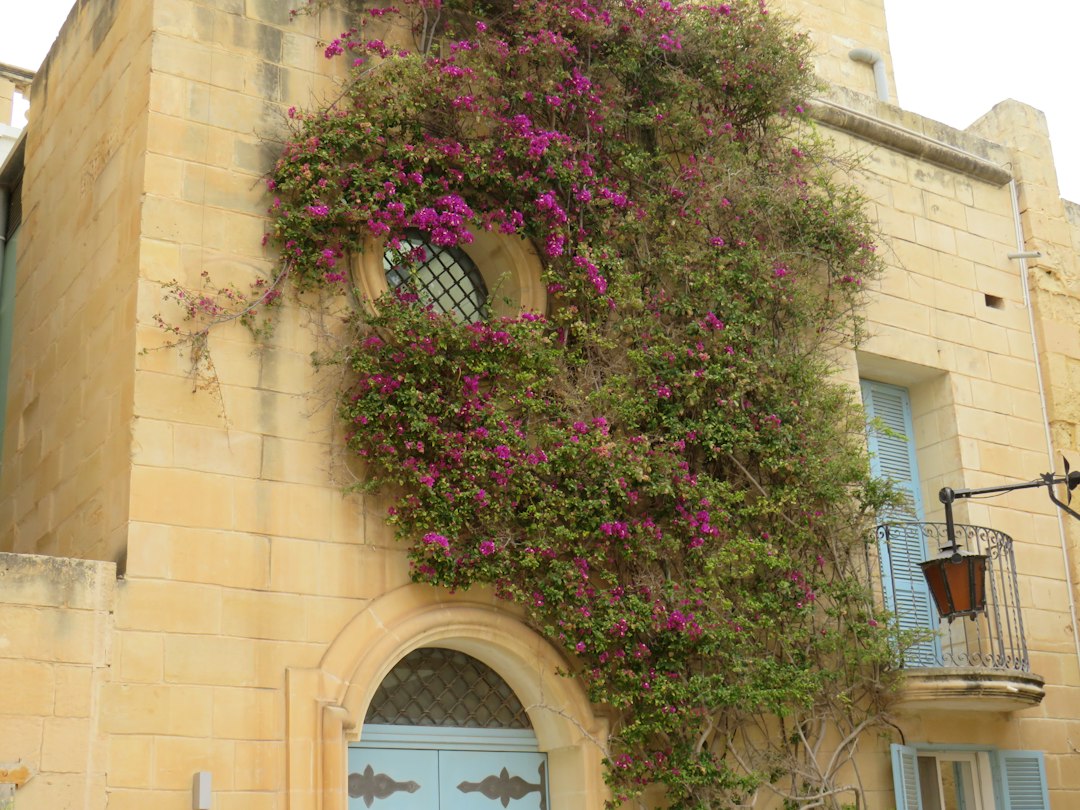
Observing the facades of the baroque palaces, one notices precise architectural details: windows with carved stone balconies, brackets decorated with plant motifs, dark wooden doors framed by pilasters. Some of these buildings are still private residences, and the boundary between museum and home is often invisible. This is one of the most unusual aspects of Mdina: the city is neither a reconstruction nor a theme park, but a place where people truly live.
The Bastions at Sunset
The walls of Mdina run for about 900 meters around the perimeter of the city, and the bastions facing north offer one of the widest views of the entire Malta. At dusk, when the slanting light colors the limestone orange, the agricultural plain in the center of the island, the bell towers of various villages, and, on clear days, the northern coast up to the sea can be clearly distinguished. It is not a spectacular view in the dramatic sense of the term, but it is precise and orderly like a relief map.
The Main Gate, which is the only vehicular access to the city, is flanked by a bridge that crosses a dry moat. Crossing it, one literally passes from one era to another: the noise of the main road connecting Mdina to nearby Rabat almost immediately disappears, replaced by the silence that has given the city its nickname, Il-Belt Skiet, the Silent City in Maltese.
How to visit Mdina
The best time to visit Mdina is early in the morning, preferably on weekdays: between 8 and 10, before the arrival of organized groups from Valletta and the tourist areas along the coast, the streets are almost deserted and the light is ideal for photographing the facades of the buildings. Two or three hours are enough to walk the entire perimeter of the city and visit the cathedral with its museum.
Mdina is easily reachable by bus from Valletta — the stop is just outside the Main Gate — or by taxi or rental car, keeping in mind that vehicles cannot enter the walled city except for those of residents. The town of Rabat, immediately adjacent to the walls, deserves a complementary visit: it hosts the paleochristian catacombs of St. Paul and St. Agatha, carved into the limestone and visitable with a separate ticket.


