
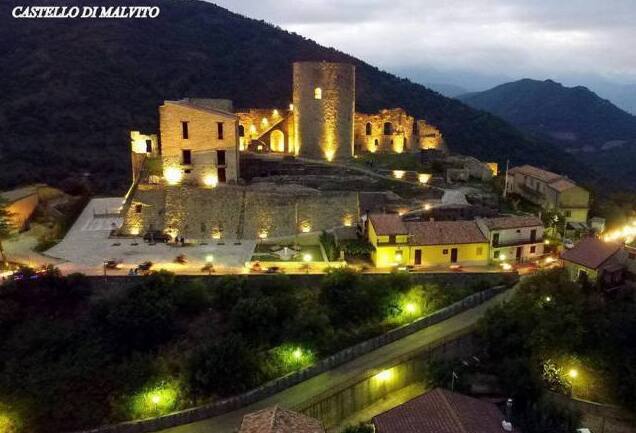

Nestled amid the rugged hills of Calabria, the Medieval Castle of Malvito stands as a testament to the region’s rich tapestry of history. With its origins steeped in the Longobard and Byzantine eras, this ancient fortification invites exploration and discovery, revealing layers of stories etched into its stones.
The history of Malvito’s fortifications is complex and intriguing. Archaeological evidence suggests that the castrum has roots tracing back to the Longobard period when it served as a bishopric and a seat of gastaldato. While a precise founding date remains elusive, it is widely accepted that the site became significant during the Byzantine period. Its prominence grew under the rule of Robert Guiscard, the Norman Duke, who is credited with fortifying the original structure in the 11th century. Known as "Lo Scalone," Robert's influence marked a pivotal moment in Malvito’s history, as he expanded the fortifications to include two curtain walls—one encircling the acropolis and another designed to protect the surrounding town.
As you wander through the remnants of this medieval stronghold, the impressive curtain walls come into view, with a thickness of 120 cm that speaks to the structure's defensive prowess. Among the most striking features is the square tower, thought to date back to the 9th or 10th century, which stands sentinel over the landscape. Inside the castle grounds, visitors can glimpse the remains of a fortified gate and a rectangular building believed to be a Byzantine tower, possibly the central keep. The architectural style reflects a blend of influences, showcasing the transition from Byzantine to Norman styles, with sturdy lines and functional design that have withstood the test of time.
The local culture of Malvito is as rich as its history. The town is known for its vibrant customs and annual festivals, which often draw both locals and visitors eager to experience the traditions of the area. One of the most anticipated events is the Feast of St. Nicholas, celebrated every December, where the community gathers for a lively procession and a series of religious activities honoring the patron saint. This festival is a perfect opportunity to witness traditional Calabrian music and dance, as well as indulge in local delicacies that embody the heart of Malvito’s culinary heritage.
Speaking of gastronomy, the flavors of Malvito are deeply rooted in its agricultural landscape. Expect to find dishes that highlight local ingredients, such as 'nduja, a spicy spreadable salami, and pecorino cheese, which pairs beautifully with local wines. The region is also known for its rich olive oil, which is often drizzled over dishes or served with fresh bread as a staple at any gathering. When visiting, be sure to try the pasta alla Norma, a classic Calabrian dish featuring eggplant and tomato sauce, which showcases the simplicity and depth of Italian cuisine.
For those intrigued by lesser-known curiosities, the Medieval Castle of Malvito has its share of secrets. One fascinating detail often overlooked by tourists is the existence of hidden tunnels that are rumored to connect the castle to other local sites, allowing for discreet movement during times of conflict. Additionally, the castle's strategic position offers breathtaking views of the surrounding landscape, making it an ideal spot for photography enthusiasts.
The best time to visit Malvito is during the spring and early autumn months, when the weather is mild, and the surrounding countryside bursts into bloom. Planning your visit around local festivals can enhance your experience, providing a unique glimpse into the community's vibrant culture. When exploring the castle, take your time to absorb the atmosphere—don’t rush through the ruins, as each stone has a story to tell.
As you prepare for your journey to Malvito, consider downloading the Secret World app to craft a personalized itinerary that will help you uncover the hidden gems of this enchanting location.


