
← Back

Michelangelo's Pieta Rondanini

Piazza Castello, 20121 Milano, Italia ★★★★☆ 148 views
Francesca Sandrelli
Milano
🏆 AI Trip Planner 2026

Get the free app

Discover the best of Milano with Secret World — the AI trip planner with 1M+ destinations. Get personalized itineraries, hidden gems and local tips. Free on iOS & Android.

🧠 AI Itineraries 🎒 Trip Toolkit 🎮 KnowWhere Game 🎧 Audio Guides 📹 Videos
Scan to download iOS / Android
Scan for AppGallery Huawei users

About Michelangelo's Pieta Rondanini

Michelangelo's Pieta Rondanini - Milano | Secret World Trip Planner

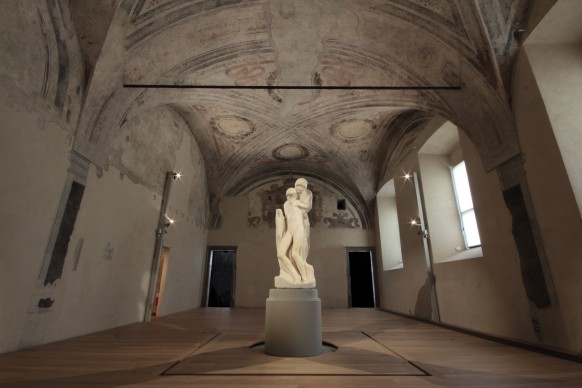
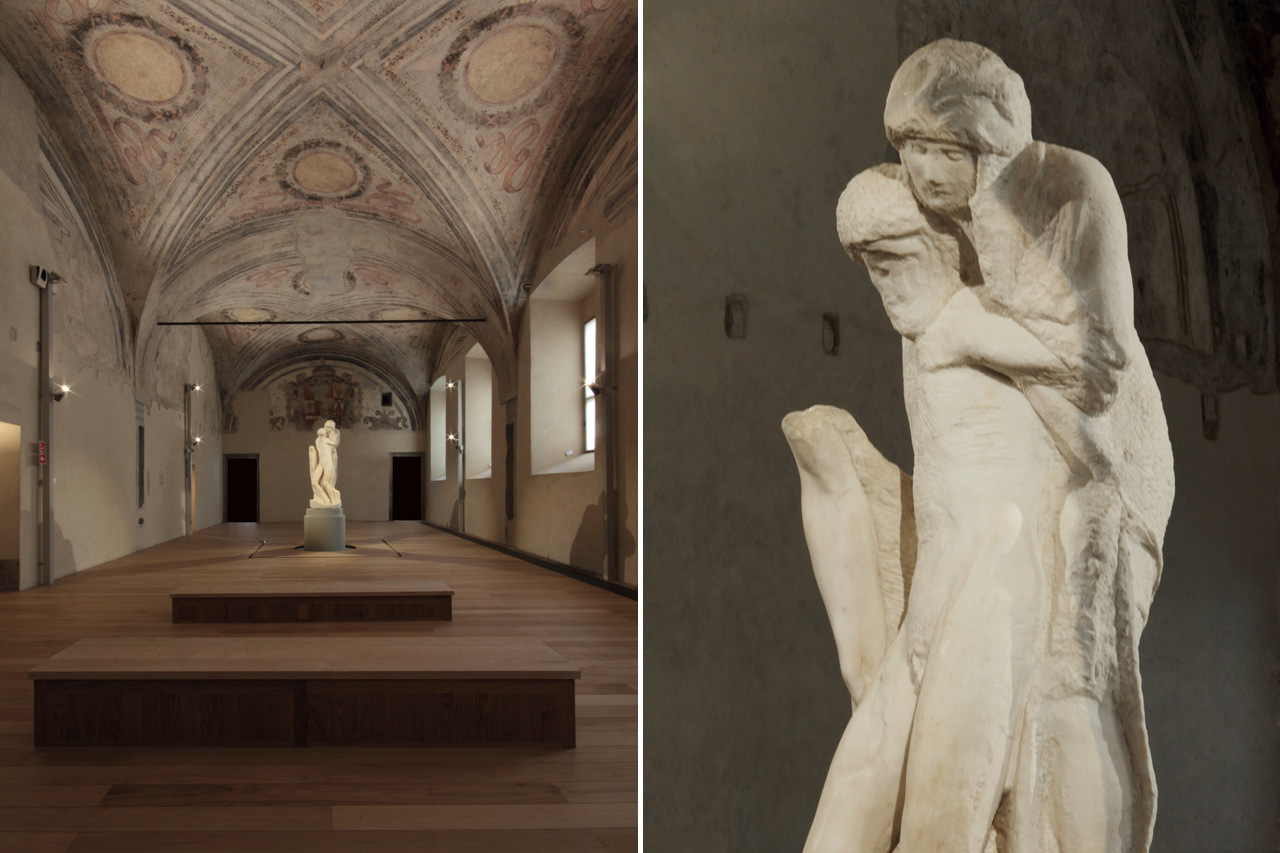
Unfinished, it is undoubtedly the sculptor's most heartbreaking work. It is the last one he put his hand to until a few days before he died at the age of 89. Michelangelo had begun it 12 years earlier, around 1552, and then abandoned it. When he resumed it in 1563, he broke the first body of Christ--of this first version we are still left with an arm detached from the main block--to carve it, with sublime insight, into the very body of the Virgin, as if she were to beget him anew to give him his spiritual death. Hence the total and moving fusion of mother and son, in which it seems almost impossible to tell which of the two bears the other. The Rondanini Pietà, in addition to its boldness of conception, is especially striking for its total break with the strictly Renaissance aesthetic of the Pietà of Rome. More than half a century apart and at the two extremes of the artist's life, the two works recall and complement each other. From one to the other, from the luminous serenity of the former to the pathetic dispossession of the latter, we are offered, with rare density, the arc of an existence, the fascinating journey of an out-of-the-ordinary genius, who radically transformed the man of deep faith and the visionary artist. The work is on display in Milan's Castello Sforzesco
Michelangelo's Pieta Rondanini - Milano | Secret World Trip Planner
🗺 AI Trip Planner 2026

Plan your visit to Milano

Suggested itinerary near Michelangelo's Pieta Rondanini

MAJ+
500.000+ travelers worldwide
  1. 🌅
    Morning
    Michelangelo's Pieta Rondanini
    📍 Milano
  2. ☀️
    Afternoon
    Michelangelo | The Rondanini Pietà
    📍 0.1 km · Milano
  3. 🌆
    Evening
    Museum of Musical Instruments in Milan
    📍 0.1 km · Milano

Buy Unique Travel Experiences

Powered by Viator

See more on Viator.com

Explore nearby · Milano

Frequently Asked Questions

The Pieta Rondanini is Michelangelo's last sculpture, worked on until just days before his death at 89, and remains deliberately unfinished. It is considered his most heartbreaking work because of its radical departure from Renaissance aesthetics, featuring a profound fusion of mother and son where Christ's body is carved into the Virgin Mary's form, suggesting spiritual rebirth rather than mourning.
Michelangelo began the Pieta Rondanini around 1552 but abandoned it, only resuming work in 1563. When he returned to it, he deliberately broke the first body of Christ from the marble block—leaving only a detached arm as evidence—to recarve it into the Virgin Mary's body with sublime artistic insight. This bold reconstruction allowed him to create the moving and ambiguous intertwining of mother and son.
Created more than half a century apart at opposite ends of Michelangelo's life, the two Pietàs represent a dramatic artistic evolution from the luminous serenity and Renaissance perfection of the Roman version to the pathetic dispossession and spiritual complexity of the Rondanini. Together, these works capture the extraordinary arc of his genius and his transformation as both a man of faith and visionary artist.
The Pieta Rondanini is permanently displayed in Milan's Castello Sforzesco, one of Italy's most important art museums. The castle is located in Milan's city center and is easily accessible by public transportation; plan to spend time exploring the museum's extensive Renaissance collections while viewing this masterpiece.
The sculpture's unfinished state and emotional intensity make it a profoundly moving experience, quite different from Michelangelo's more polished works. Arrive early to avoid crowds and spend time contemplating the intricate details of the intertwined figures; the marble's visible chisel marks and the incomplete surfaces reveal the artist's final creative vision in his later years.
