
← Back

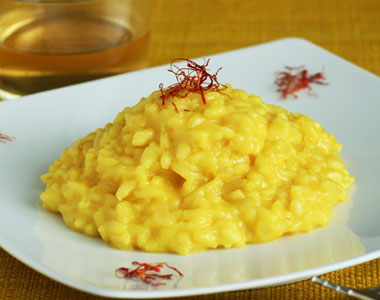
Milanese risotto

Milano, Italia ★★★★☆ 243 views
Mia Rossi
Milano
🏆 AI Trip Planner 2026

Get the free app

Discover the best of Milano with Secret World — the AI trip planner with 1M+ destinations. Get personalized itineraries, hidden gems and local tips. Free on iOS & Android.

🧠 AI Itineraries 🎒 Trip Toolkit 🎮 KnowWhere Game 🎧 Audio Guides 📹 Videos
Scan to download iOS / Android
Scan for AppGallery Huawei users

About Milanese risotto

Milanese risotto - Milano | Secret World Trip Planner

According to several authors (Claudia Roden, Clifford Wright), risotto alla Milanese is directly descended from "riso col zafran" a kind of rice pilaff with saffron, a medieval recipe known to both Jews and Arabs.But its official birth occurred on September 8, 1574 as stated in the De.Co. Recognition Resolution. "For that day the Belgian master glassmaker Valerius of Flanders had fixed the wedding of his daughter. That date evidently had special value for him who worked on the stained glass windows of the cathedral.... A plate of rice colored with saffron, a material that the team of Belgian glassmakers in master Valerius' retinue used to add to many colors to create special chromatic effects, appeared during the wedding meal. The rice thus prepared, perhaps as a joke, appealed to everyone, both for flavor and color, at a time when gold, or in its absence yellow substances, was also attributed pharmacological importance. Immediately this new way of preparing rice spread throughout the city.... The current technique of slowly cooking rice by adding gradually the broth slowly established itself, each recipe began invariably with the preparation of boiled rice.... In 1809 the work entitled "Modern Cook," whose author is unknown (except for the acronym L.O.G.) describes it in its final form: "yellow rice in a pan." It describes the cooking of rice, sautéed previously in a sauté of butter, brains, marrow, and onion, to which is added progressively hot broth in which saffron has been dissolved. In 1829 Felice Luraschi, a famous Milanese cook, had his "Nuovo cuoco milanese economico" printed. Here the old yellow rice becomes "risotto alla milanese giallo," complete with ox fat and marrow, saffron and nutmeg nutmeg, doused with broth, flavored with that cervellata of medieval memory and with grated cheese. In modern days Gualtiero Marchesi perfects the recipe and on some occasions adds a gold foil to it to match the intense yellow of the saffron."

Milanese risotto - Milano | Secret World Trip Planner
🗺 AI Trip Planner 2026

Plan your visit to Milano

Suggested itinerary near Milanese risotto

MAJ+
500.000+ travelers worldwide
  1. 🌅
    Morning
    Milanese risotto
    📍 Milano
  2. ☀️
    Afternoon
    Milano: città Europea
    📍 0 km · Milano
  3. 🌆
    Evening
    Milan | The Pinacoteca Ambrosiana
    📍 0.2 km · Milano

Buy Unique Travel Experiences

Powered by Viator

See more on Viator.com

Explore nearby · Milano

Frequently Asked Questions

Milanese risotto has medieval roots in 'riso col zafran,' a saffron rice pilaff known to both Jews and Arabs, but its official birth is dated to September 8, 1574. The dish was created during the wedding celebration of Valerius of Flanders' daughter, a Belgian master glassmaker working on the cathedral's stained glass windows, who used saffron-colored rice as a joke that delighted all the guests.
Saffron was incorporated into the rice dish because the Belgian glassmakers in master Valerius' team used this precious material to create special chromatic effects in their work. At that time in 1574, yellow substances like saffron held both culinary and pharmacological importance, as gold and its substitutes were believed to have medicinal properties.
The modern technique of slowly cooking rice by gradually adding broth became established over centuries, replacing the initial method of cooking boiled rice. By 1809, the recipe was fully perfected as described in 'Modern Cook,' with rice sautéed in butter, brains, and marrow, then cooked with progressively added hot saffron-infused broth.
In 1829, famous Milanese cook Felice Luraschi elevated the recipe in his 'Nuovo cuoco milanese economico,' adding ox fat, marrow, nutmeg, and grated cheese to the traditional saffron rice. The dish also included cervellata, a reference to medieval traditions that persisted in the recipe's evolution.
In modern times, renowned chef Gualtiero Marchesi perfected the classic recipe and occasionally added actual gold foil to the dish, enhancing its visual appeal to complement the intense yellow color of the saffron. This luxurious addition pays homage to the historical significance of gold in the dish's origins.
