



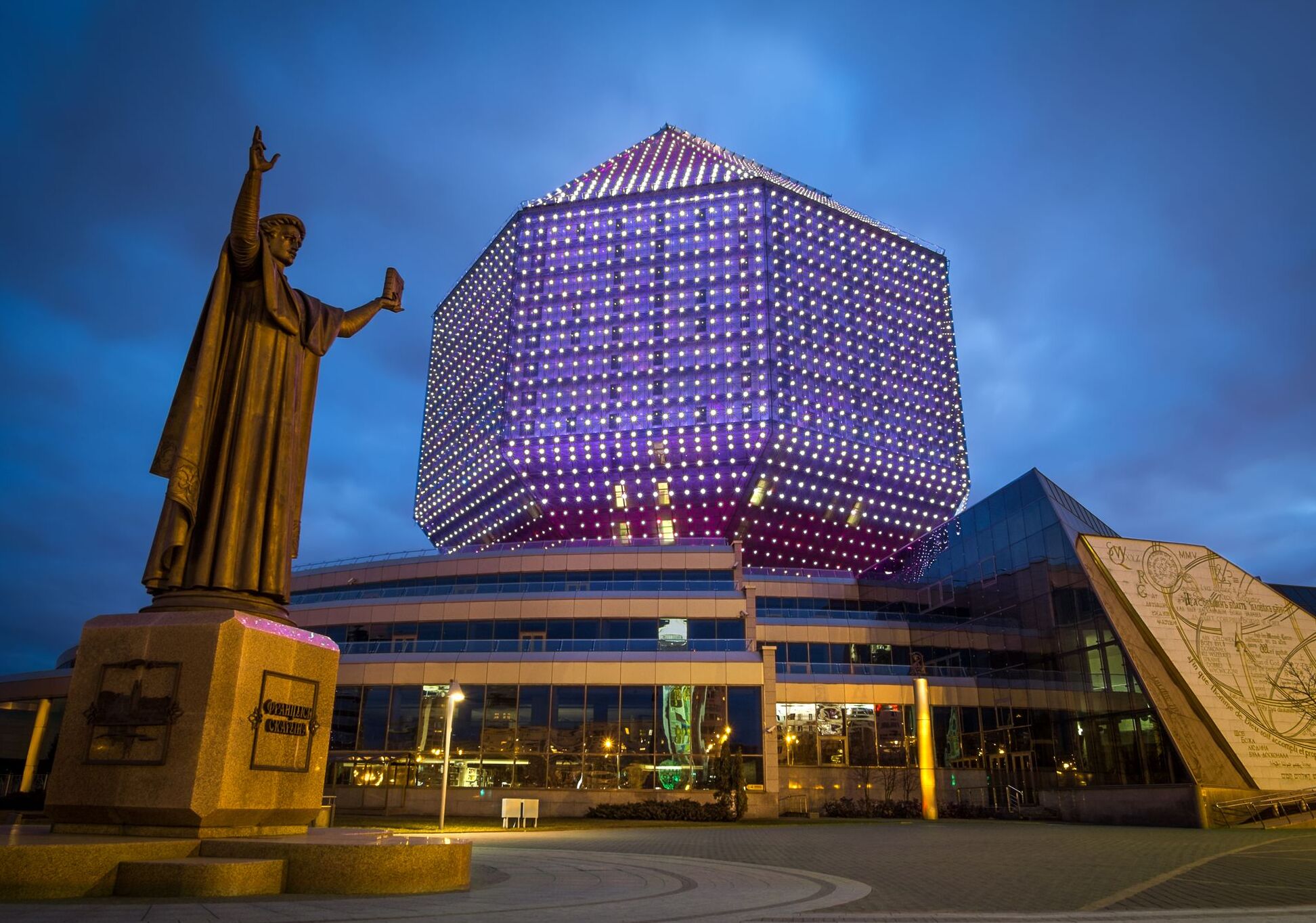
In the heart of Minsk, the capital of Belarus, stands an architectural marvel that transcends mere functionality: the National Library of Belarus. With its striking diamond-shaped structure, the library not only serves as a repository of knowledge but also as a symbol of national identity and cultural pride.
The roots of this impressive institution trace back to the late 1990s, a period marked by Belarus’s quest for cultural renaissance following the collapse of the Soviet Union. In 1998, the Council of Ministers of the Republic of Belarus initiated the project, which culminated in the library's opening on June 16, 2006. The design, conceived by architect Vladimir Grigoryev, embodies a modern interpretation of a book, with its glass and steel façade reflecting the sunlight and the vibrant life of the city.
One cannot help but be captivated by the library’s architectural style, which merges postmodern and high-tech elements. The building boasts 22 floors and an impressive height of 75 meters, making it one of the tallest libraries in the world. Its unique shape is a nod to the cultural significance of books, while the surrounding park offers a serene backdrop for visitors. Inside, the library houses over 8 million items, including books, manuscripts, and multimedia resources, all aimed at fostering a love for knowledge.
Upon entering, visitors are greeted by the words of 2 Timothy 3:17, inscribed in multiple languages on a series of pentagonal panels that resemble an open book. This biblical quote serves as a reminder of the library's mission to equip individuals with wisdom and understanding. Additionally, a statue of Francisk Skorina, the Belarusian humanist and early printer, stands proudly at the entrance, symbolizing the nation's literary heritage.
The cultural significance of the National Library extends beyond its collection. It serves as a vital hub for local customs and traditions. Throughout the year, the library hosts various festivals, workshops, and exhibitions that celebrate Belarusian literature, art, and history. Events such as the Day of the Belarusian Language and literary forums attract scholars, writers, and enthusiasts eager to engage with the rich tapestry of Belarusian culture.
As you explore Minsk, don’t miss the opportunity to indulge in its gastronomy. The city is famous for dishes like draniki, potato pancakes often served with sour cream, and kalduny, stuffed dumplings that reflect the country's culinary roots. Pair your meal with a glass of kvass, a fermented beverage made from rye bread, or try a local fruit compote for a refreshing taste of Belarusian tradition.
For those seeking lesser-known curiosities, the library holds secrets beyond its books. The panoramic observation deck on the 23rd floor offers breathtaking views of Minsk, providing a unique perspective on the city’s blend of modernity and history. Additionally, the library’s interactive exhibits and digital archives invite visitors to engage with the material in innovative ways, making it a dynamic space for discovery.
When planning your visit to the National Library of Belarus, consider coming in the spring or early autumn, when the weather is mild and the surrounding park is in full bloom. Bring your camera to capture both the stunning architecture and the lively atmosphere of the area. Don’t forget to check the library’s schedule for special events or exhibitions that might enhance your experience.
In conclusion, the National Library of Belarus is not just a building; it is a celebration of knowledge, culture, and national pride. It stands as a testament to the enduring spirit of the Belarusian people and their commitment to preserving their heritage. As you wander through its halls, you’ll find not only a wealth of information but also a deeper understanding of Belarusian culture and tradition.
For a seamless exploration of Minsk, consider using the Secret World app to craft a personalized itinerary that uncovers the city’s hidden gems.
