



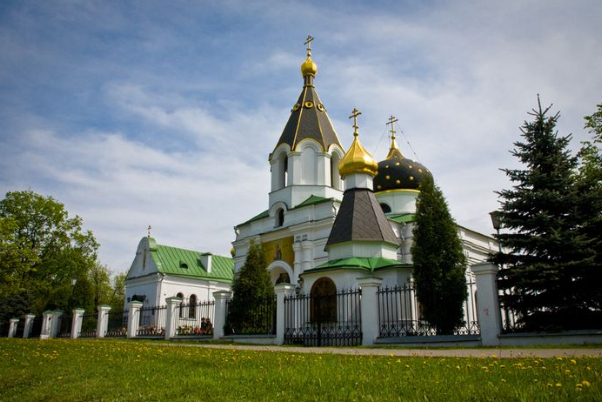
Tucked away in the vibrant cityscape of Minsk, the Maria Magdalena Church stands as a testament to Belarus's rich ecclesiastical history. Founded in 1847, this modest yet charming sanctuary draws visitors with its storied past and striking architectural features. It occupies a site steeped in history, where a humble wooden church once served the spiritual needs of the local community. The transition from wood to the present-day brick structure marked a pivotal moment in the mid-19th century, reflecting a broader movement towards more permanent ecclesiastical buildings in the region.
The church's design is a captivating blend of architectural influences. Its octagonal bell tower and splendid dome dominate the skyline, embodying a classic Orthodox aesthetic while subtly hinting at Western influences. The church's interior is equally compelling, featuring intricate iconostasis and frescoes that narrate religious tales. These artworks are not just decorative; they are windows into the spiritual life of the congregation, each piece rich with symbolic meaning. The use of vibrant colors and detailed iconography is a hallmark of Eastern Orthodox art, drawing worshippers and art enthusiasts alike into its serene embrace.
Beyond its architectural allure, the Maria Magdalena Church is a cornerstone of local culture and tradition. It plays a central role in the religious life of Minsk, hosting significant Orthodox celebrations, including Easter and Christmas. During these times, the church becomes a hive of activity, with locals participating in age-old rituals that have been passed down through generations. These festivals are marked by the lighting of candles, choral hymns, and the scent of incense wafting through the air, creating an atmosphere that is both sacred and communal.
No visit to the church is complete without indulging in the local gastronomy that complements these cultural experiences. Belarusian cuisine is known for its hearty and comforting dishes, many of which have connections to religious events. During Easter, for example, you might find traditional kulich, a sweet bread adorned with icing and sprinkles, being shared among parishioners. Accompanying this, paskha, a rich dessert made of cheese, butter, and eggs, often graces the tables of the faithful. These dishes are not only culinary delights but also carry deep symbolic meanings tied to the themes of resurrection and renewal.
While the Maria Magdalena Church is a well-trodden path for those in the know, it holds a few secrets that often elude the casual visitor. One such curiosity is the ancient crypt beneath the church, a relic from its earliest days. This hidden chamber is said to house the remains of past clergy, quietly preserving the memory of those who served the church in its formative years. Another intriguing aspect is the church's collection of relics, including fragments believed to be from the cross of Saint Helena, the mother of Emperor Constantine, adding a layer of historical depth to this spiritual haven.
For those planning a visit, timing is key to experiencing the church at its most vibrant. The best time to visit is during the Orthodox festivals when the church is alive with tradition and celebration. Early mornings offer a quieter time to reflect and take in the detailed artwork without the usual hustle. Remember to dress modestly as a sign of respect, and take a moment to soak in the peaceful ambiance of the church gardens, which offer a tranquil respite from the bustling city outside.
Whether you're drawn by its history, architectural beauty, or the rich cultural tapestry it represents, the Maria Magdalena Church in Minsk is a destination that promises a profound and unforgettable experience. It stands not just as a place of worship, but as a beacon of the enduring spirit and heritage of Belarus.
