
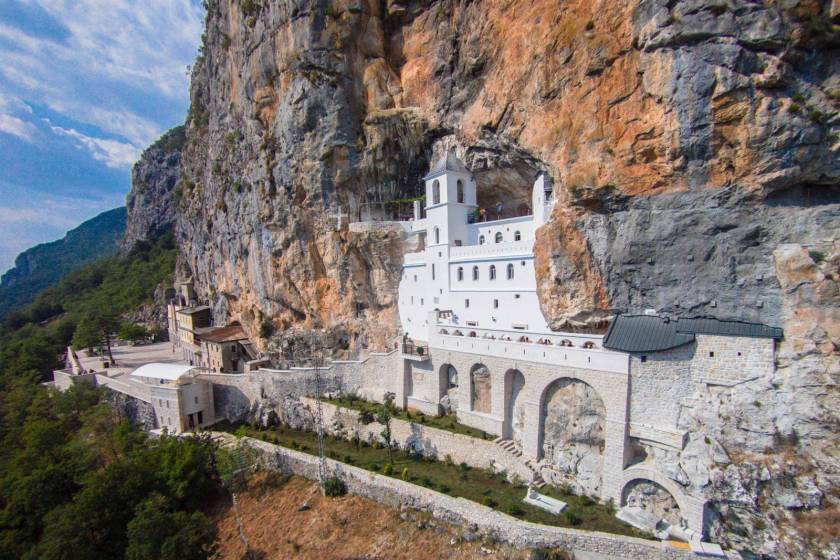

Perched dramatically on a sheer cliff face, Ostrog Monastery captivates visitors with its history, spirituality, and breathtaking views. Located in Montenegro, this stunning site has been a pilgrimage destination for centuries, attracting nearly a million visitors each year. It houses the relics of Saint Basil of Ostrog, a revered figure whose life and miracles continue to inspire devotion across religious lines. Built in the 17th century by Metropolitan Basil, the monastery is a remarkable example of Baroque architecture, harmoniously integrated into the natural landscape. Its whitewashed walls gleam against the rugged cliffs, creating a striking contrast that enchants all who visit.
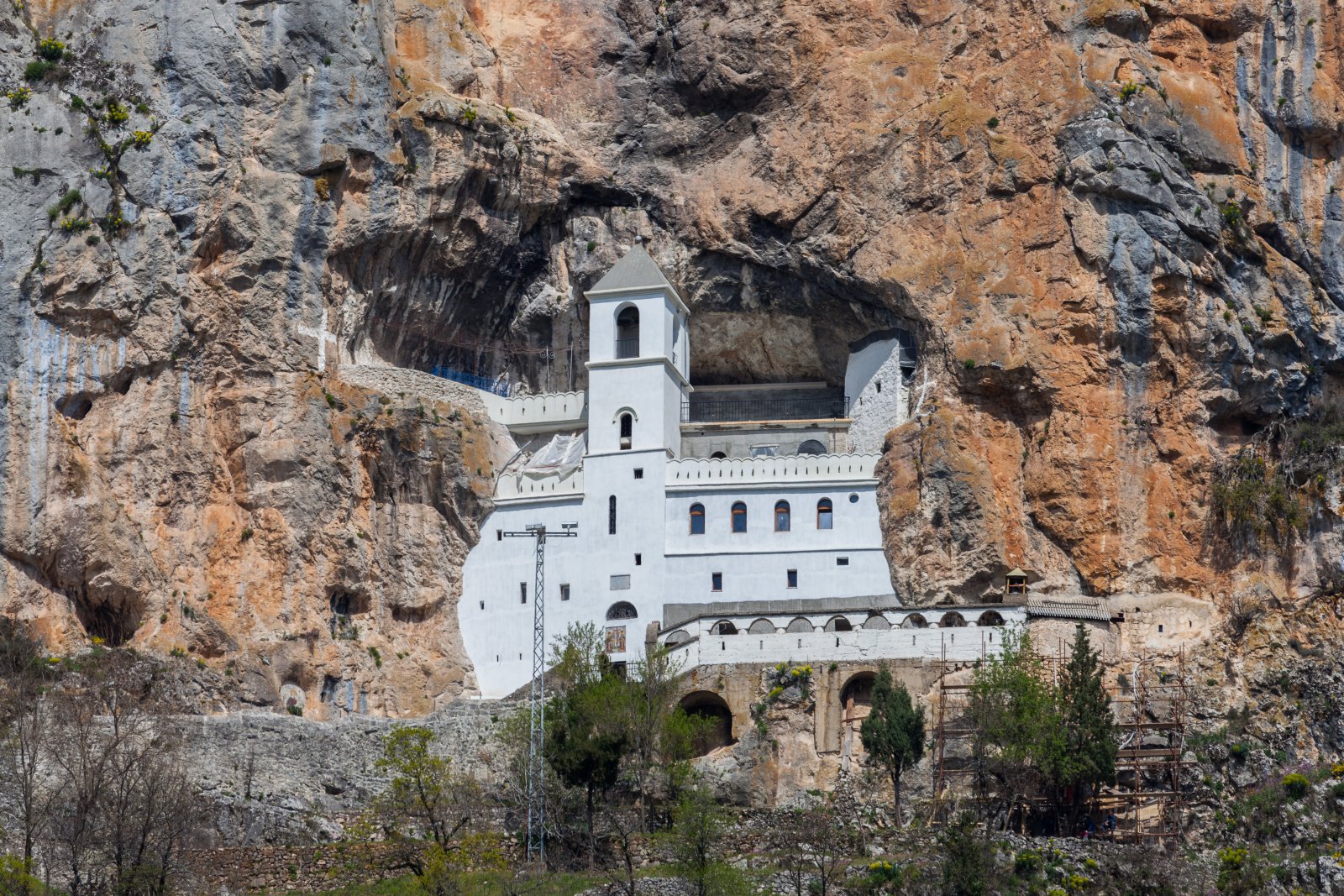
History and Origins The roots of Ostrog Monastery trace back to the mid-17th century when Saint Basil of Ostrog established it as a spiritual haven. This holy man was notable for his miraculous deeds and care for the local populace. The monastery not only served as a religious center but also a safe haven during tumultuous times. Over the years, it has survived various periods of political and social unrest, particularly during the Ottoman rule. The monastery was rebuilt in the 1920s after a devastating fire, ensuring its legacy continued to thrive.
Art and Architecture Architecturally, Ostrog Monastery is a stunning representation of Baroque style, noted for its intricate frescoes and grandiose design. The main church, Upper Monastery, features a stunning altar adorned with gold accents and a series of beautifully executed frescoes that depict biblical scenes and saints, including the life of Saint Basil. The Lower Monastery, carved directly into the cliff, offers an intimate atmosphere, where visitors can experience the sacredness of the space. These artworks not only serve religious purposes but are also key to understanding the cultural identity of Montenegro.
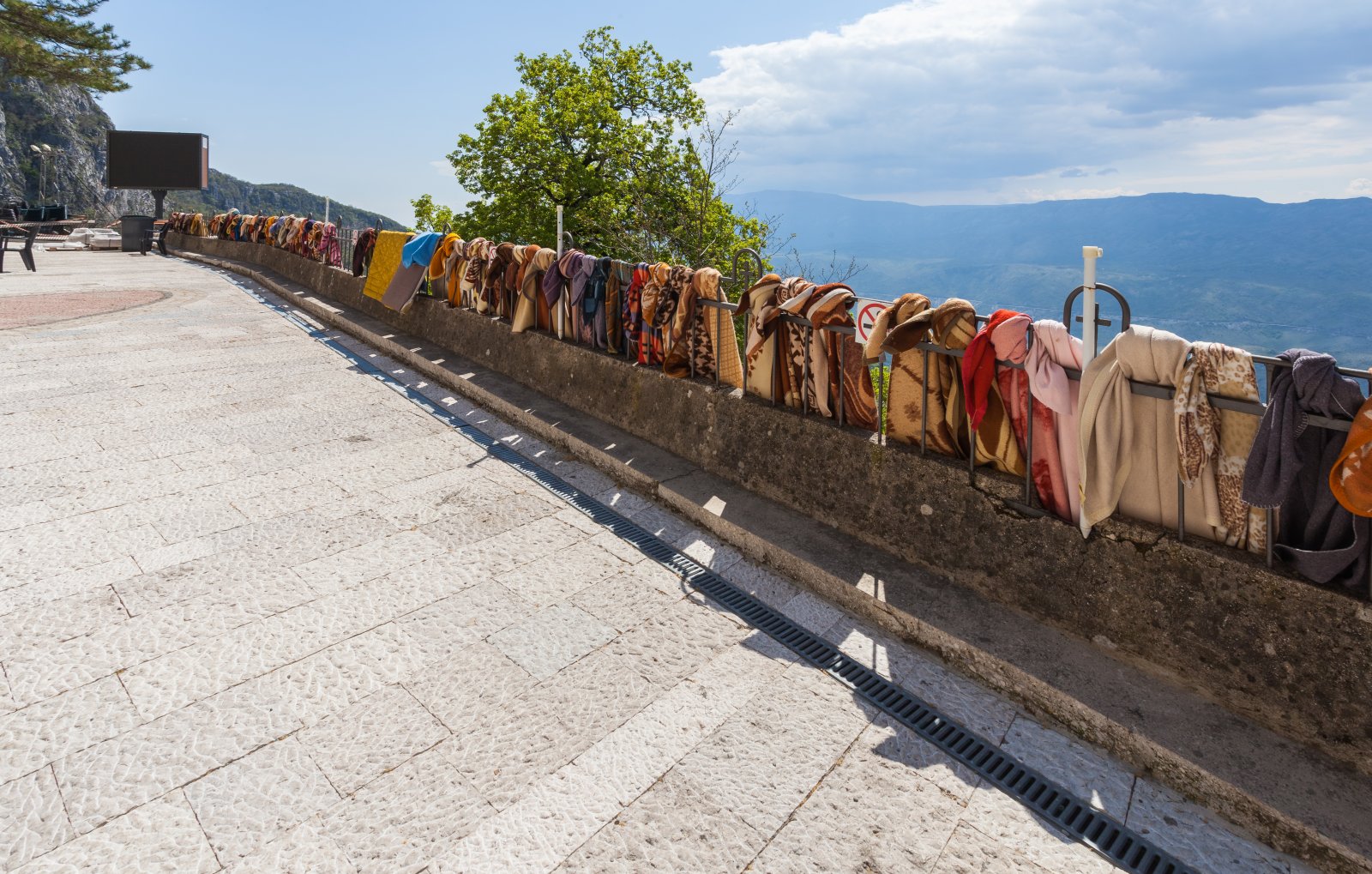
Local Culture and Traditions The area around Ostrog Monastery is rich in Montenegrin culture. Local customs are steeped in tradition, with many villagers participating in religious festivals, particularly the feast day of Saint Basil, celebrated on April 29. Pilgrims walk miles to honor their faith, often participating in communal meals and prayer sessions. The significance of the monastery transcends mere architecture; it embodies a living cultural heritage that fosters unity among diverse religious groups, including Orthodox Christians, Roman Catholics, and Muslims.
Gastronomy A visit to Ostrog is incomplete without savoring the local Montenegrin cuisine. Traditional dishes such as Njeguški pršut (smoked ham), kačamak (cornmeal dish), and šopska salata (a fresh vegetable salad) reflect the region's rich agricultural practices. Pair these with a glass of local Vranac wine, known for its robust flavor, and you’ll experience the essence of Montenegro. Local restaurants often serve meals made with fresh, locally sourced ingredients, allowing visitors to indulge in the authentic flavors of the region.
Lesser-known Curiosities While many tourists flock to Ostrog Monastery for its stunning views and spiritual aura, few know that the site is also home to a unique phenomenon: the **


