
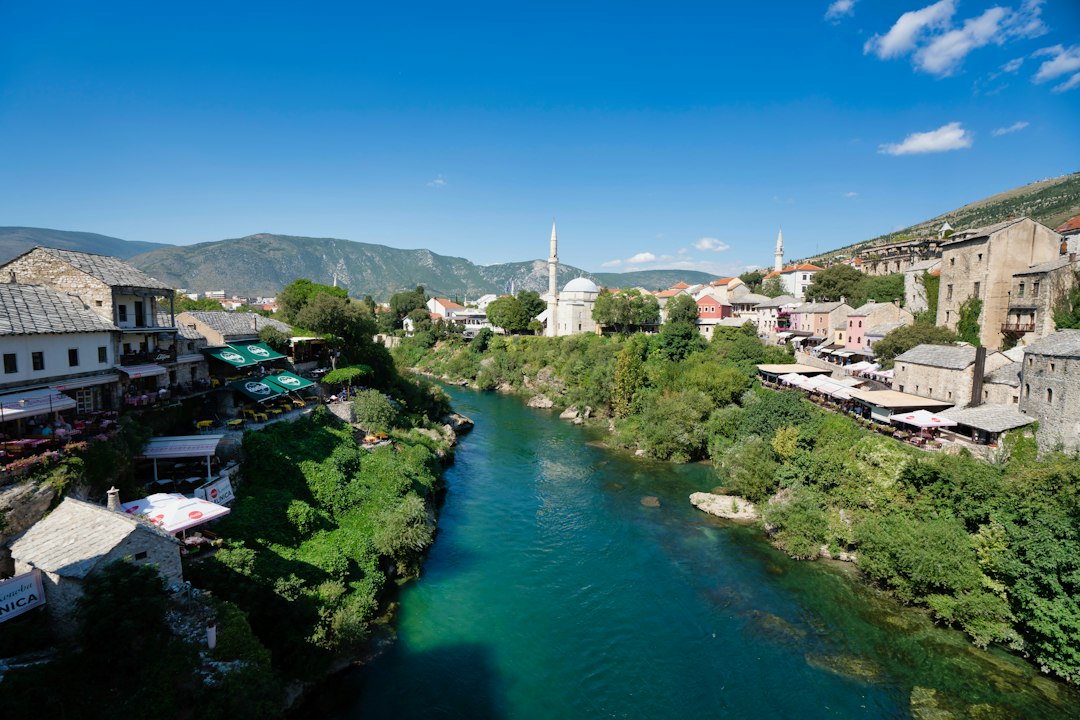

Climbing the narrow and worn steps of the minaret of the Koski Mehmed Pasha Mosque requires a few minutes of attention and a bit of breath. The spiral staircase is so tight that two people cannot pass each other, and the low ceiling forces you to bend your head at certain points. But when you reach the external balcony, about twenty meters above the ground, Mostar opens up beneath you like a hand-painted map.
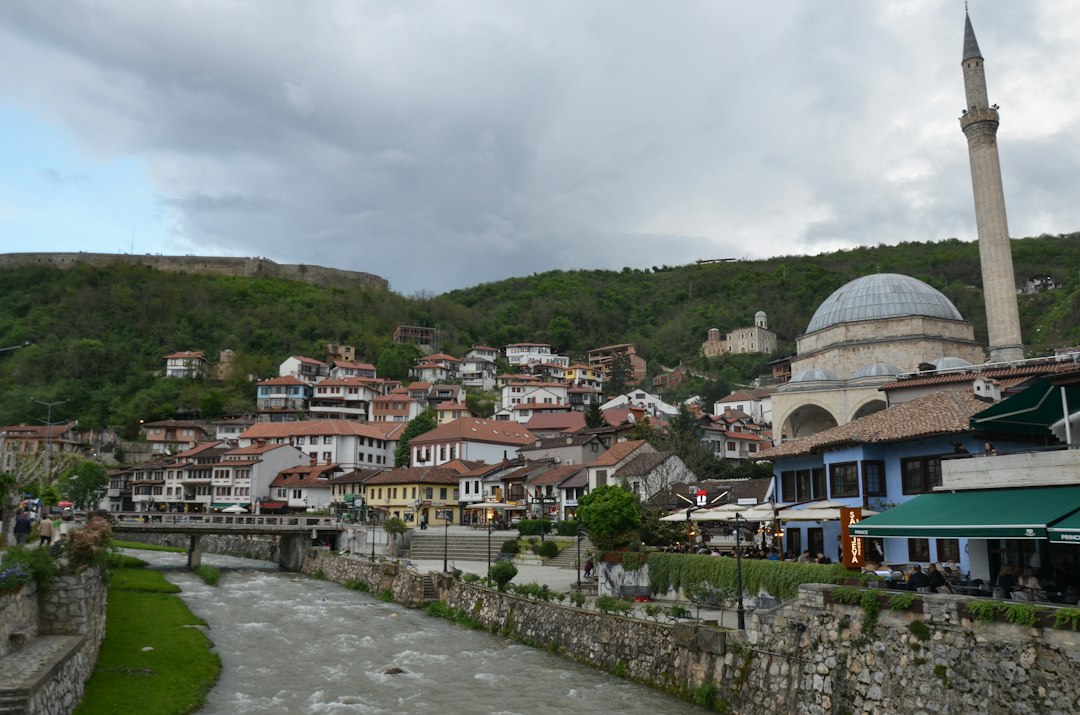
The mosque was built in 1618 during the Ottoman period, commissioned by Koski Mehmed Pasha, a high official of the empire. It is located in the heart of the historic district of Mostar, just a few steps from the Stari Most, the famous bridge reconstructed in 2004 after its destruction in 1993. The building is one of the best-preserved examples of Ottoman architecture in Bosnia and Herzegovina, with its main dome and the columned portico overlooking a small courtyard with a fountain for ablutions.
The view from the balcony
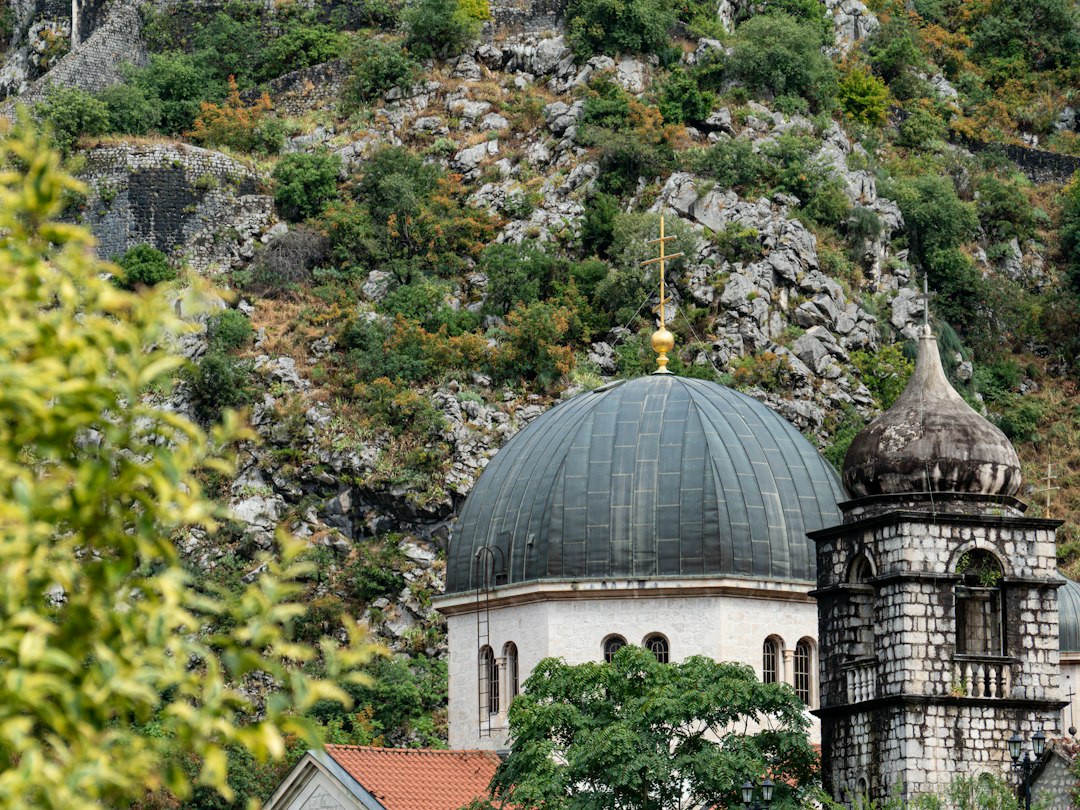
From the minaret, the gaze first falls on the reddish rooftops of the old town, an irregular expanse of brick-colored tiles that stretches towards the Neretva. The river is one of the most surprising elements of Mostar seen from above: the water takes on an almost unreal emerald green hue, particularly intense during the central hours of the day when the light hits the limestone bottom. The Stari Most can be perfectly seen from this position, with its elegant curve connecting the two banks.
The panorama is 360 degrees: turning around, you can see the minarets of the other mosques that dot the urban skyline, the barren hills surrounding the city, and the remnants of buildings still marked by the conflict of the nineties mixed with new constructions. It is a vision that tells the complexity of this city without the need for words.
The colors change with the daylight
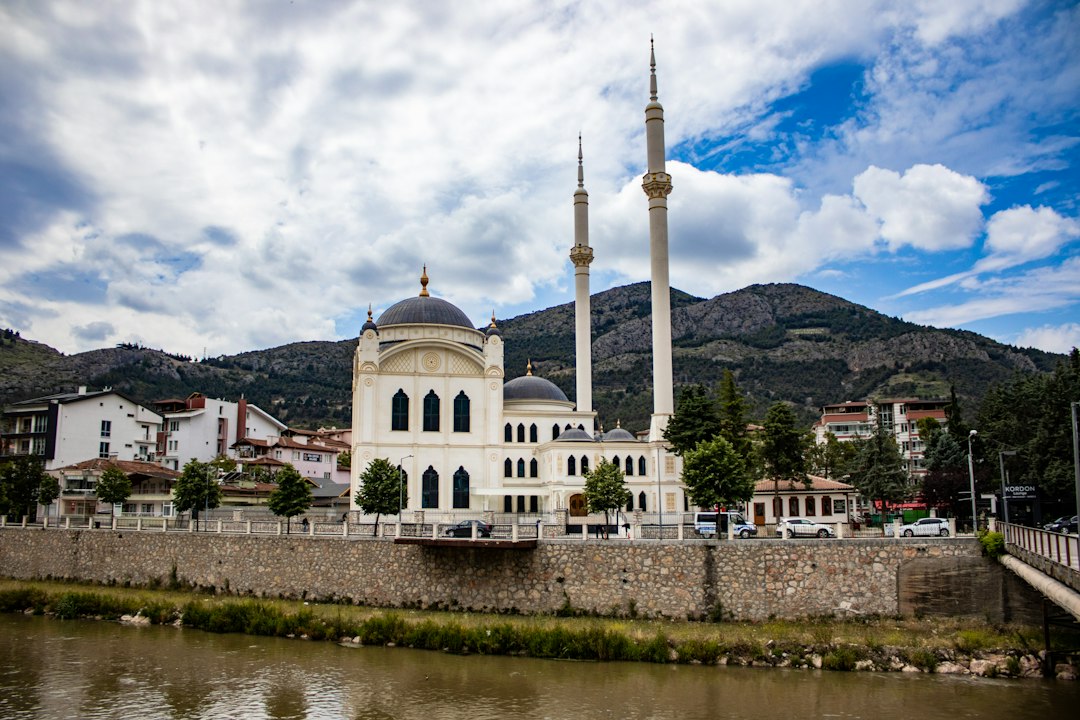
In the early morning, when the sun rises behind the eastern hills, the rooftops take on a warm amber color and the Neretva reflects the sky in shades ranging from blue to turquoise. The air is cooler and the city is still quiet: it is the moment when the call to prayer can clearly be heard coming from the nearby minarets.
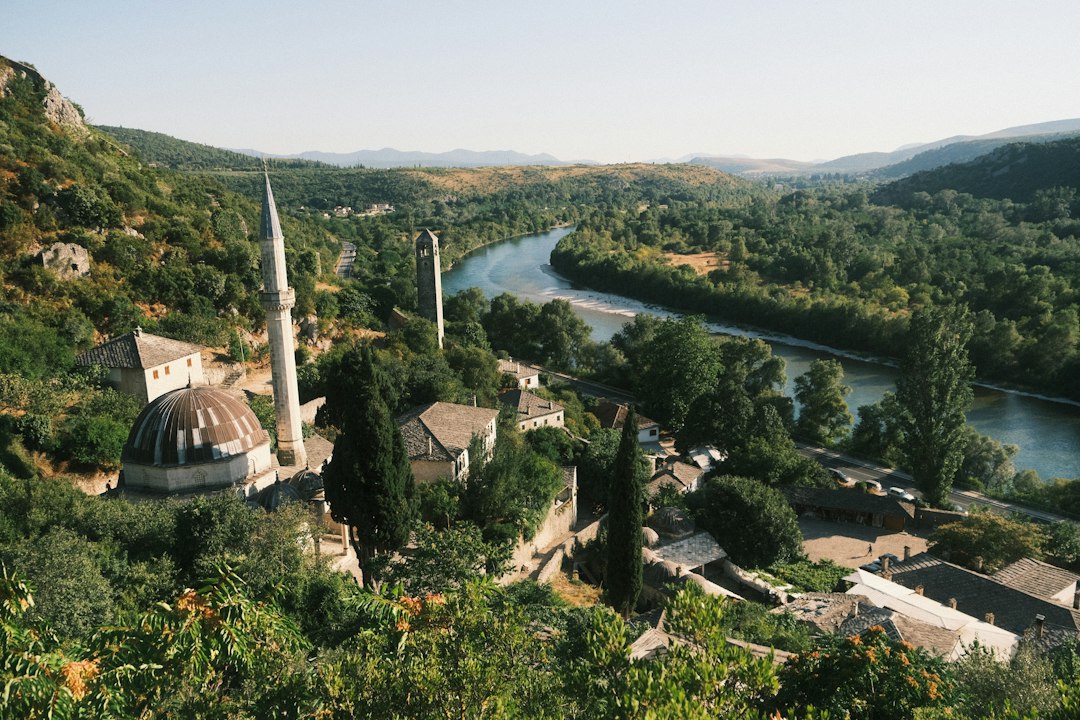
In the afternoon, with the sun high, the contrasts become sharper: the white of the bridge stones, the red of the tiles, the green of the river. At sunset, however, something different happens. The slanting light paints everything orange and ochre, and the long shadows of the minarets are cast upon the rooftops below. Many photographers consider this the best time to shoot from the balcony, even if it means waiting in line with other visitors.
How to visit the mosque and the minaret
Entrance to the mosque and the minaret is paid. The ticket, which includes access to the inside of the prayer hall and the climb to the minaret, is purchased at the entrance of the courtyard. The indicative cost is around 4-5 euros, one of the most affordable and visually significant experiences in all of Mostar. The mosque is open to visitors throughout the day, with closures during prayer times.
A practical tip: arrive by 8:30 in the morning or after 5:00 PM to avoid organized groups that crowd the balcony during peak hours. The minaret's staircase is one-way alternating, so small queues can form during high season. Wearing shoes with non-slip soles is helpful because the stone steps can be slippery. The overall visit time, including the mosque and the climb, is about 30-45 minutes.
The context of the surrounding neighborhood
The mosque is located in the area of Kujundžiluk, the historic bazaar of Mostar, a cobblestone street lined with artisan shops and souvenir vendors. It is worth walking along this street, which leads directly to the Stari Most, before or after the visit. The distance between the mosque and the bridge is about 200 meters, which can be covered in a few minutes on foot.
The neighborhood is lively but not chaotic in the early morning hours. The shopkeepers gradually open, the cats of the old town move between the shadows, and the smell of Bosnian coffee begins to rise from the small cafes. It is in this context, with the minaret of Koski Mehmed Pasha silhouetted against the sky, that Mostar shows one of its most authentic faces.


