
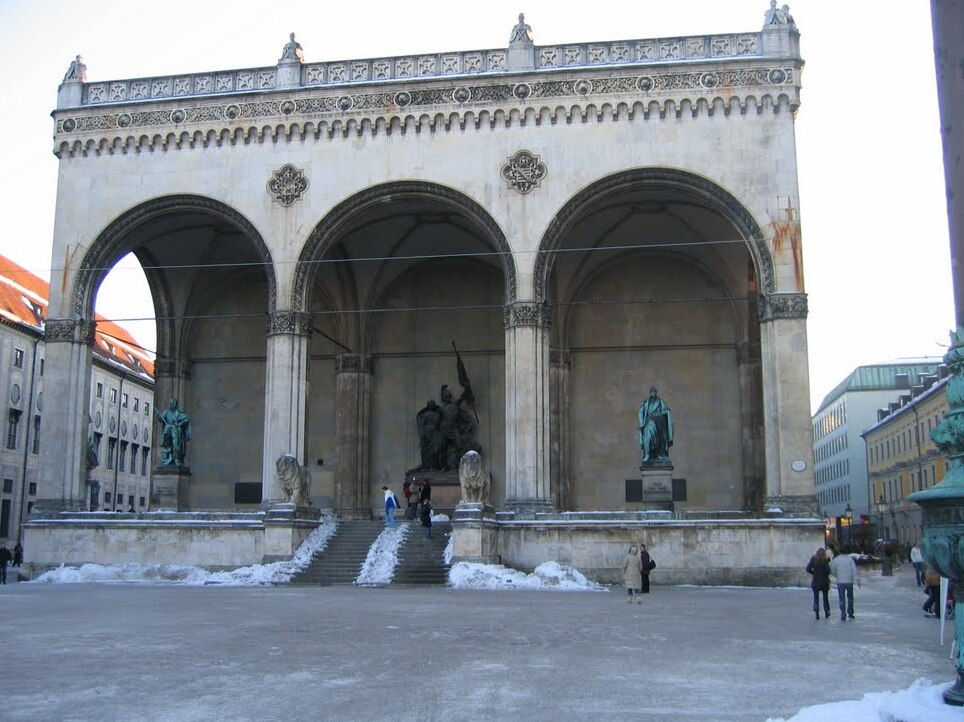

In the heart of Munich, the Feldherrnhalle stands as a testament to the city’s rich history and architectural grandeur. Built between 1841 and 1844 under the direction of King Ludwig I, this iconic structure occupies a significant position at Odeonsplatz, a former gateway known as the Schwabinger Tor. Designed by architect Friedrich von Gärtner, the Feldherrnhalle is inspired by the Loggia dei Lanzi in Florence, Italy, and showcases a neoclassical style that speaks to the artistic ambitions of 19th-century Bavaria.
The origins of the Feldherrnhalle are steeped in the desire to honor the Bavarian military. The name itself translates to Field Marshal's Hall, and the structure was conceived as a memorial to the Bavarian generals who fought during the Napoleonic Wars. The hall features grand columns and an open loggia that beckons visitors to explore its storied past. Notably, it was at this very site that the infamous Beer Hall Putsch unfolded in 1923, marking a pivotal moment in German history when Adolf Hitler attempted to overthrow the Weimar Republic.
Architecturally, the Feldherrnhalle is a splendid example of neoclassical design, characterized by its symmetrical layout and monumental scale. The hall is flanked by six monumental statues of Bavarian generals, each one a tribute to the valor and sacrifice of the military. The central space is dominated by a large archway, inviting visitors to walk through and immerse themselves in the ambiance of one of Munich’s most majestic squares.
Culturally, Odeonsplatz is alive with local traditions and customs. Throughout the year, it hosts various festivals and events, most notably the Munich Christmas Market during the holiday season. Visitors can marvel at the beautifully decorated stalls, offering local crafts, festive decorations, and seasonal treats like Lebkuchen, a type of gingerbread that warms the soul on cold winter nights.
As for gastronomy, Munich is famous for its hearty Bavarian cuisine, and a visit to Odeonsplatz wouldn’t be complete without indulging in some traditional dishes. Local specialties include Weißwurst (white sausage), served with sweet mustard and freshly baked pretzels, and Schweinshaxe (pork knuckle), crispy on the outside and tender on the inside. Pair your meal with a refreshing Helles, a pale lager that is a local favorite, or perhaps a pint of Dunkel, a dark beer that embodies the rich brewing heritage of the region.
For those seeking hidden gems, the Feldherrnhalle has more to offer than meets the eye. Many tourists overlook the eternal flame located just nearby, which honors the soldiers who lost their lives in World War I. Additionally, the site is often a backdrop for local artists and musicians, providing an unexpected opportunity to enjoy live performances or art displays against the stunning architectural backdrop.
If you’re planning a visit, the best time to experience the Feldherrnhalle is during the spring and early fall when the weather is mild, and outdoor events are in full swing. Arrive early in the day to avoid crowds and take the time to appreciate the intricate details of the architecture. Don’t forget to explore the surrounding area, including the impressive Theatinerkirche and the lush gardens of the Hofgarten, both just a short walk away.
In conclusion, the Feldherrnhalle is not just a monument; it is a vibrant part of Munich's cultural tapestry. Its rich history, stunning architecture, and local traditions make it a must-visit for anyone wanting to delve deeper into the soul of this Bavarian city. Plan your visit wisely, and don't miss out on the chance to experience the unique charm of Odeonsplatz. For a personalized itinerary that captures the essence of München, consider using the Secret World app for your travel planning.


