


The smell arrives before everything else. A few steps from the entrance of the Mutrah Souq, a dense cloud of frankincense — the resin of boswellia that Omanis burn in terracotta braziers called mabkhara — mixes with the sweet scent of rose water and the leather of the handcrafted bags hanging from the hooks of the shops. The covered market of Mutrah is one of the oldest souqs in the Arab world, active for centuries along the corniche of the port of Muscat, and even today it functions as a true neighborhood market, not as a theme park for tourists.
The souq extends into a labyrinth of alleys covered by a wooden and metal structure that filters the Omani sunlight into oblique beams, creating an almost theatrical effect on the displayed goods. The shops — it is estimated that there are over 600 — alternate seamlessly: jewelers with windows full of handcrafted silver, spice vendors with open sacks of cumin, cardamom, and saffron, fabric dealers stacking pieces of iridescent silk up to the ceiling.
Silver, khanjar and the crafts of Omani tradition
The most iconic object found at the Mutrah Souq is the khanjar, the curved dagger that even appears on the national flag of Oman. Traditional khanjars have a silver sheath worked with geometric patterns and a handle made of rhinoceros horn — today replaced by alternative materials to comply with international regulations — and can cost from a few dozen Omani rials for decorative versions to several hundred for authentic handcrafted pieces. The jewelers of the souq also sell bracelets, necklaces, and rings in silver with turquoise, a typical color combination of Omani Bedouin tradition.
Alongside precious metals, fabrics tell another story. The disdasha, the white tunics worn by Omani men, are sold in various fabrics and qualities, and some tailors in the market still make alterations on the spot. The handwoven carpets and mats come partly from within the country, from the regions of Nizwa and Bahla, historic centers of Omani craftsmanship.
The colors and sounds of an afternoon at the market
Walking in the Mutrah Souq in the late afternoon means immersing oneself in a palette of colors that changes depending on the section of the market. In the spice area, the golden mounds of turmeric and the deep reds of dried chili alternate with the pale green of cardamom. In the fabric section, the imported Indian fabrics — trade with the Indian subcontinent has historically been central to Muscat, a port city on the Indian Ocean — introduce bright oranges and fuchsias alongside the more subdued colors of local fabrics.
The sounds are equally layered: the clinking of silver bracelets that a merchant arranges in the display, the radio of a shop playing Arabic music, the creaking of a cart loaded with boxes, conversations in Arabic, Hindi, English, and sometimes in Swahili — a language that recalls Oman's historical ties with the eastern coast of Africa, when the Sultanate controlled Zanzibar.
The corniche and the context of the historic port
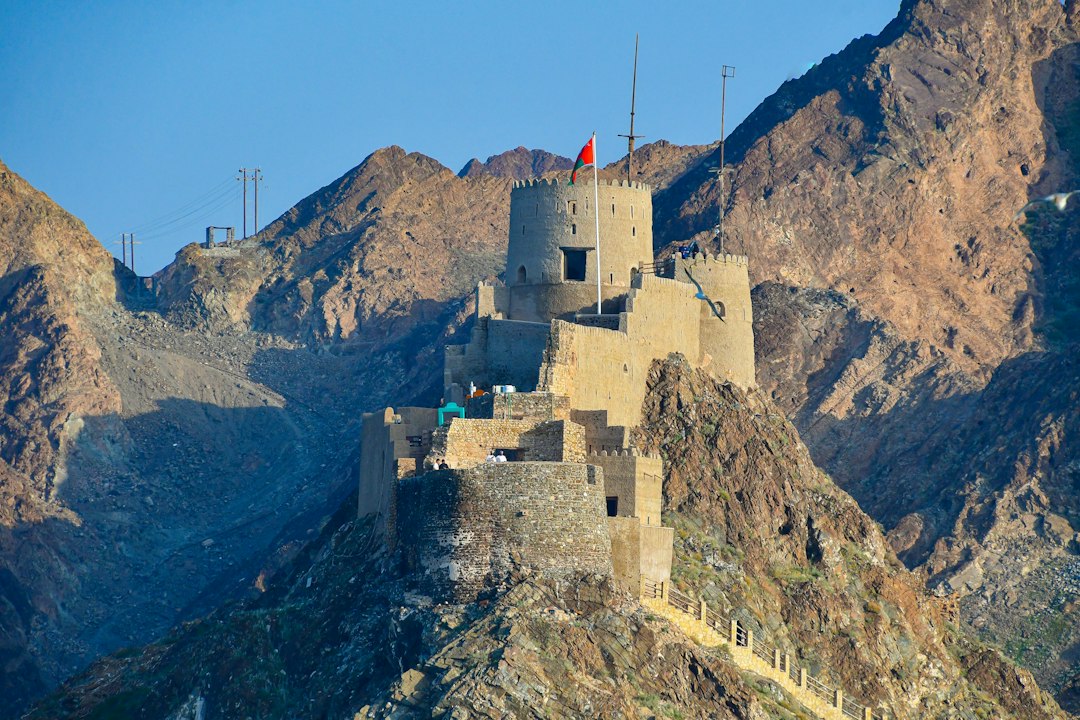
The Mutrah Souq overlooks the Mutrah corniche, the promenade that runs along the natural harbor where dhows — the traditional wooden boats of the Indian Ocean — still dock today alongside modern cargo ships. The walk along the corniche, with the Portuguese fortress of Mutrah dominating the hill behind the market, offers a useful perspective to understand why this place has been a crucial commercial hub for centuries between the Persian Gulf, India, and East Africa.
The fortress of Mutrah, built by the Portuguese in the 16th century, is visible from the outside even without climbing up, and serves as one of the most immediate visual references for navigating the neighborhood. The contrast between the white walls of the fortress, the blue of the harbor, and the bustle of the market below is one of the most photographed views in all of Muscat.
Practical tips for visiting the Mutrah Souq
The best time to visit the souq is in the late afternoon, between 4:00 PM and 8:00 PM, when temperatures drop, merchants reopen after the afternoon break, and the market comes alive with local residents doing their daily shopping. During the central hours of the day, especially in summer when temperatures in Muscat exceed 40°C, the souq is partially deserted and the heat in the covered alleys can be overwhelming.
Entry to the market is free. For shopping, it is useful to know that bargaining is accepted but not always practiced aggressively as in other markets in the region: many merchants display fixed prices, especially in more established shops. It is advisable to carry Omani rials in cash for the smaller shops. The souq is reachable on foot from the Mutrah corniche or by taxi from the old Muscat area, about a 10-15 minute drive.


