
Nestled in the heart of Naples, the Sebeto Fountain stands as a testament to the city's rich history and artistic heritage. This magnificent structure, located in Largo Sermoneta, beckons visitors not only with its beauty but also with the stories woven into its very stone.
### History and Origins
The Sebeto Fountain was commissioned in 1635 by Viceroy Emanuele Zunica y Fonseca, as part of an effort to enhance the urban landscape of Naples. Designed by the architect Cosimo Fanzago, the project was executed by his son Carlo Fanzago, a notable figure in Baroque architecture. Originally located at the end of Gusmana Road, now known as Salita del Gigante or Via Cesario Console, the fountain was strategically placed to face Via Santa Lucia, overlooking the arsenal below.
The fountain's journey through time has been turbulent. In 1900, it was dismantled and faced a long period of neglect until it was reconstructed in 1939 at its current site, following urban developments that included the filling of the final stretch of Via Caracciolo. This relocation allowed the fountain to reclaim its place as a central feature in the city.
### Art and Architecture
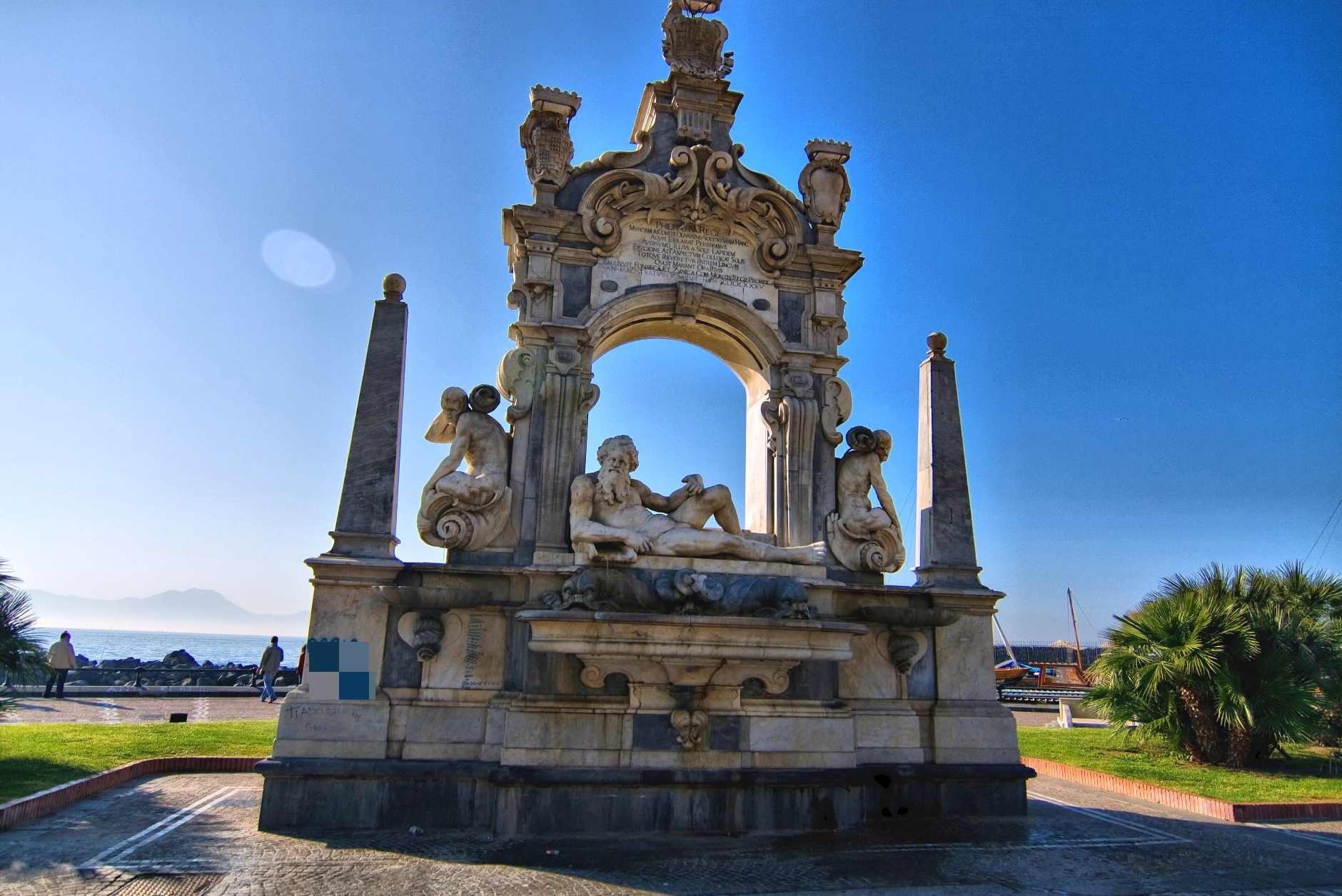
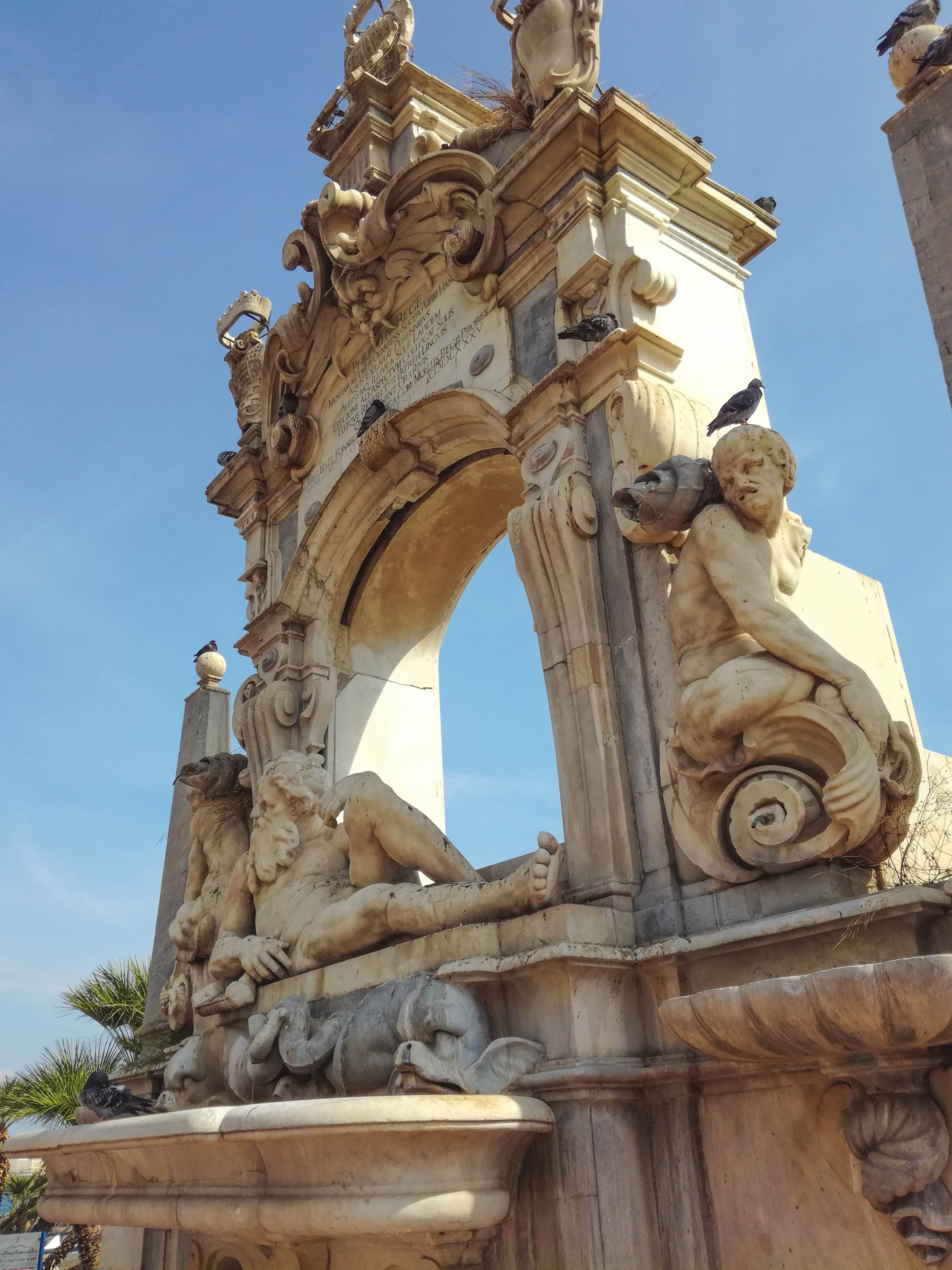
The Sebeto Fountain is a striking example of Baroque architecture, characterized by its dramatic forms and intricate details. The base, crafted from piperno—a local volcanic stone—provides a sturdy foundation, while the upper structure showcases three elegant marble basins, with the central one being the largest and most prominent.
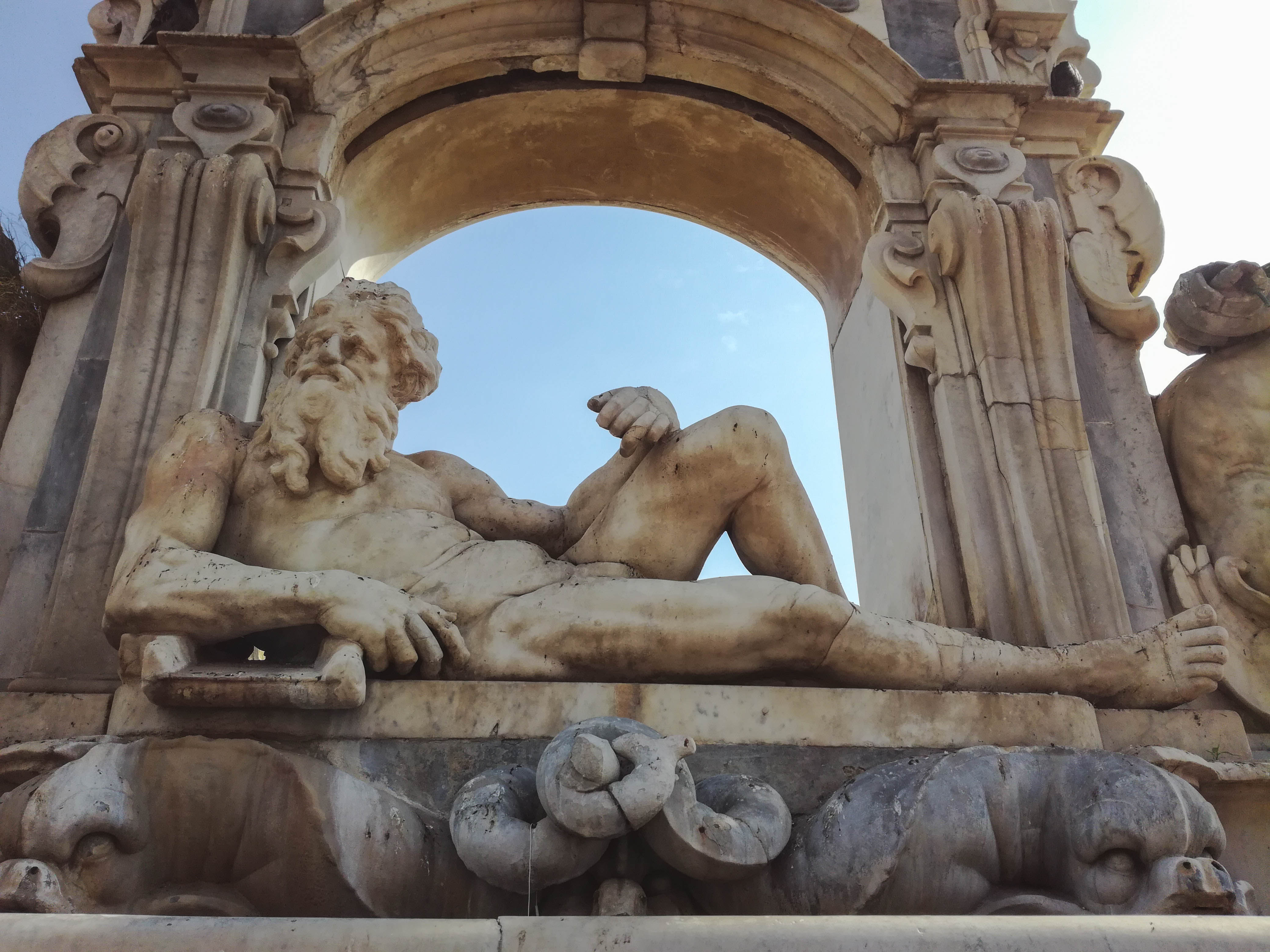
At the heart of the fountain is a compelling relief sculpture of an old man, symbolizing the river Sebeto, which once flowed through the city and served as a vital waterway. Flanking this central figure are two tritons, mythical sea creatures that energetically spout water into side pools, their presence enhancing the dynamic aesthetic of the fountain. Above these figures, a plaque adorned with the coats of arms of the Viceroy, the King of Spain, and the city itself underscores the historical significance of this monument.
### Local Culture and Traditions
The Sebeto Fountain is not just an architectural wonder; it is also a focal point of local culture. In Naples, fountains often serve as gathering places where locals socialize and celebrate. The area around Largo Sermoneta comes alive during local festivals, particularly during the Feast of San Gennaro, the city's patron saint. During this time, the fountain may be adorned with flowers and lights, creating a picturesque backdrop for festivities.
Additionally, the fountain is a reminder of Naples' historical ties to water, which has shaped the city's identity. The annual Sagra del Mare, or Festival of the Sea, is another cultural event linked to the city's maritime heritage, emphasizing the significance of water in Neapolitan life.
### Gastronomy
No visit to Naples is complete without indulging in its culinary delights. The area surrounding the Sebeto Fountain offers a variety of traditional Neapolitan dishes. You must try the iconic pizza margherita, with its simple yet flavorful combination of tomatoes, fresh mozzarella, and basil. Pair this with a glass of Limoncello, the zesty lemon liqueur that embodies the spirit of the region.
For those with a sweet tooth, the local sfogliatella—a shell-shaped pastry filled with ricotta and candied fruit—is a must. Street vendors often set up nearby, allowing visitors to savor authentic Neapolitan treats while enjoying the vibrant atmosphere around the fountain.
### Lesser-Known Curiosities
While many tourists admire the fountain's beauty, few know about the local legends associated with it. One such tale speaks of the river Sebeto being personified as a wise old man who would bestow blessings upon those who offered him a coin. This belief added a layer of mystique to the fountain, attracting visitors who sought good fortune.
Another interesting detail often overlooked is the intricate carvings on the fountain's side pools, which depict various marine life, symbolizing the connection between Naples and the sea. These details highlight the artistic craftsmanship of the Fanzago family, who were renowned for their ability to blend functionality with beauty.
### Practical Visitor Information
The best time to visit the Sebeto Fountain is during the spring and early autumn months when the weather is mild, and outdoor activities are plentiful. Arriving early in the morning allows you to experience the peaceful ambiance before the hustle and bustle of daily life takes over.
When visiting, take a moment to appreciate not just the fountain itself, but also the surrounding architecture and local life. Look for the small plaques that detail the fountain's history and explore the narrow streets nearby, where charming cafes and shops await.
For a truly immersive experience, consider capturing your visit with a few photos in the golden light of sunset, reflecting off the water—a sight that embodies the spirit of Naples.
With its rich tapestry of history, art, culture, and gastronomy, the Sebeto Fountain is a must-see for anyone visiting Naples. Embrace the local customs, savor the delicious food, and let the fountain's stories wash over you.
To plan your personalized journey through this vibrant city, consider using the Secret World app for an AI-generated itinerary that caters to your interests.