



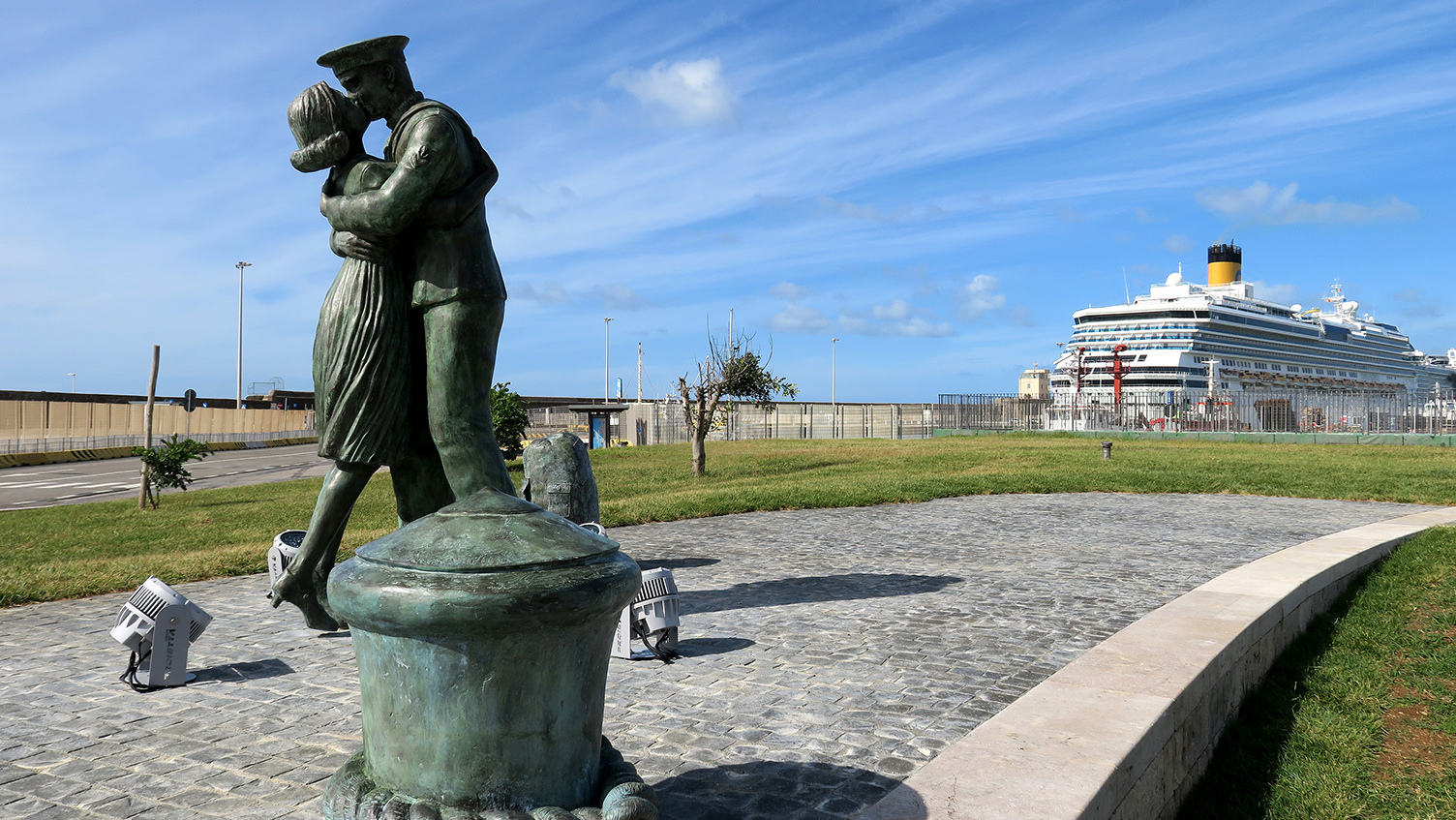
Nestled along the picturesque coastline of Civitavecchia, near the imposing Fort Michelangelo, lies a hidden gem that speaks volumes about the city's maritime heritage. The Molo del Bicchiere is not just a dock; it is a vibrant canvas where history meets modern artistry. Here, visitors are greeted by the striking statue "Il Bacio della Memoria di un Porto", a symbol of love and remembrance for the port's storied past.
### History and Origins
Civitavecchia's roots can be traced back to ancient Rome when it was known as Centumcellae, a vital harbor for maritime trade. Established by Emperor Trajan in the early 2nd century AD, this port was crucial for the shipping of goods and military supplies. Over centuries, it has seen the rise and fall of empires, with Pope Leo X commissioning the construction of Fort Michelangelo in the early 16th century to protect the harbor from Ottoman attacks.
The port's significance continued through the ages, serving as a gateway for pilgrims heading to the Holy Land and later becoming an important commercial hub in the Renaissance. In 1870, the Port Authority of Civitavecchia was established, marking a new era for the city that celebrated its 150th anniversary in 2020—a milestone commemorated with the unveiling of the statue that now graces the waterfront.
### Art and Architecture
The statue "Il Bacio della Memoria di un Porto" was conceived by artist Ivana Puleo and crafted by the renowned Marinelli foundries, known for their exceptional metalwork. Inaugurated on September 16, 2020, this artwork is more than just a tribute; it encapsulates the essence of the port’s emotional and historical tapestry.
The statue depicts an embrace, symbolizing the connection between the city and the sea, a union that has sustained Civitavecchia through centuries. Standing tall along the promenade, it invites visitors to reflect on the stories of sailors and merchants who once navigated these waters. The surrounding architecture, including the sturdy walls of Fort Michelangelo, provides a beautiful backdrop, making this spot not just a viewing point but a gathering place for locals and tourists alike.
### Local Culture and Traditions
Civitavecchia boasts a rich cultural heritage that is reflected in its festivals and local customs. One of the most significant events is the Festa di Santa Fermina, celebrated in May, honoring the city's patron saint. This vibrant festival features a colorful procession, traditional music, and local delicacies that fill the streets with life and joy.
Moreover, the city has a long-standing tradition of maritime activities, with fishing and boat-building still playing a vital role in local life. The community's connection to the sea is palpable, and visitors can often catch sight of fishermen at work or hear tales of the ocean’s bounties in local cafés.
### Gastronomy
No visit to Civitavecchia would be complete without indulging in its culinary delights. The coastal city is known for its fresh seafood, particularly the famous spaghetti alle vongole (spaghetti with clams), which showcases the flavors of the Tyrrhenian Sea. Additionally, the local specialty "porchetta"—a savory, herb-infused roast pork—offers a taste of tradition that is not to be missed.
Pair your meal with a glass of Est! Est!! Est!!! di Montefiascone, a refreshing white wine, or savor a local craft beer that reflects the burgeoning brewing scene in the region. The bustling Mercato del Pesce is a must-visit for food lovers, where the catch of the day is sold alongside seasonal fruits and vegetables.
### Lesser-Known Curiosities
While many tourists flock to the more popular destinations, Civitavecchia has its share of hidden gems. One such curiosity is the Cathedral of San Francesco d'Assisi, an architectural marvel that dates back to the 18th century. Many visitors overlook this site, yet it houses exquisite frescoes and a serene atmosphere perfect for quiet reflection.
Another intriguing aspect is the Civitavecchia Underground, a network of tunnels and chambers beneath the city that date back to the Roman era. Guided tours offer a glimpse into this subterranean world, revealing stories of ancient Romans and the city's evolution through time.
### Practical Visitor Information
The best time to visit Civitavecchia is during the spring and early autumn months when the weather is mild, and the crowds are smaller. For those looking to explore the best of the city, an early morning stroll along the Molo del Bicchiere provides stunning views of the sunrise over the harbor, while the afternoon sun casts a golden hue on the statue.
When planning your visit, be sure to check local events or festivals, as they offer a unique insight into the vibrant culture of the city. Engaging with locals over a meal or at a market can enrich your experience, revealing stories and traditions that might not be apparent at first glance.
Whether you are wandering the historical streets, savoring local cuisine, or simply soaking in the views near Fort Michelangelo, Civitavecchia offers a charming blend of history, art, and culture waiting to be uncovered.
For a personalized experience in Civitavecchia, consider using the Secret World app to craft your ideal itinerary.
