
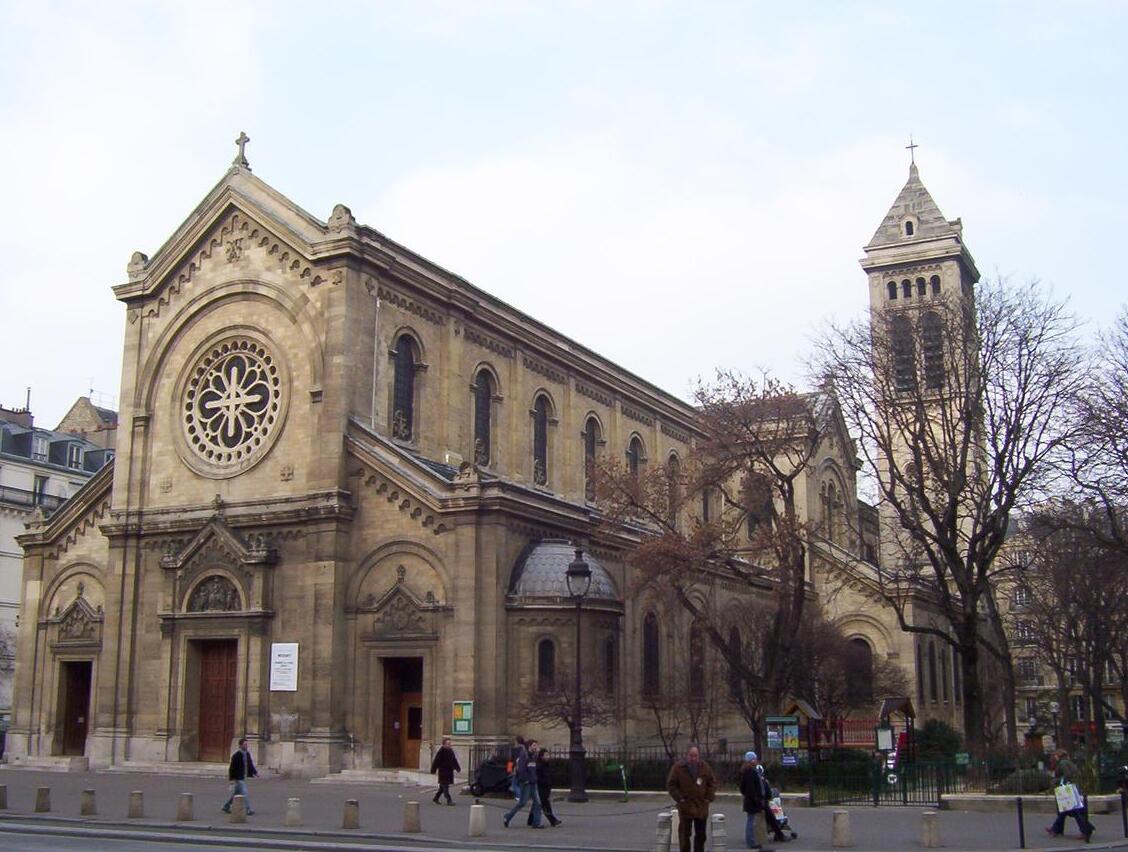

Nestled in the vibrant heart of Paris, Notre-Dame des Champs stands as a testament to the city's rich tapestry of history, spirituality, and art. This lesser-known gem attracts fewer tourists than its more famous counterparts, yet it holds a captivating story worth exploring.
The origins of Notre-Dame des Champs are steeped in ancient history. A temple dedicated to the God Mercury once graced this land, marking it as a site of worship long before it became a Christian sanctuary. Following the evangelizing efforts of the first apostles in the area, the temple was transformed and dedicated to the Virgin Mary, originally named Notre-Dame des Vignes (Our Lady of the Vineyards). Under the reign of King Robert the Pious (996-1031), the church was rebuilt to honor the spot where Saint Denis, the first bishop of Paris, is said to have celebrated the Eucharist.
The transformation of the parish continued as the surrounding vineyards were uprooted, and the church was renamed Notre-Dame des Champs (Our Lady of the Fields). In 1603, the Carmelite Order, arriving from Spain, took over the church from the Benedictines, further enriching its historical significance during the lavish reign of Louis XIV. However, the church faced turmoil during the French Revolution; it was closed and eventually destroyed, leaving only fragments of its storied past, preserved in the name of Rue Notre-Dame des Champs.
In the mid-19th century, the spiritual needs of the burgeoning population led to the construction of a new parish church. A wooden chapel was erected in 1858, and the first stone of the current church was laid on March 17, 1867. By October 31, 1876, the church received its benediction, and on March 25, 1912, it was consecrated by Cardinal Amette, Archbishop of Paris. Today, visitors can admire the church's neo-Gothic architectural style, characterized by pointed arches, intricate stained glass, and towering spires that reach towards the Parisian sky.
The interior of Notre-Dame des Champs is equally impressive. Art enthusiasts will find a wealth of sacred art, including stunning stained glass windows that depict biblical stories and figures. Noteworthy artists contributed to the church's artistic heritage, with works by Gabriel Ferrier and Louis Chalon adding to its visual splendor. The altar, adorned with exquisite carvings and gold leaf, invites worshippers and visitors alike to pause and reflect.
Local culture around Notre-Dame des Champs remains vibrant, showcasing traditions that resonate deeply with Parisians. The church is a focal point for community gatherings and religious celebrations. One of the notable events is the annual Feast of Our Lady of the Fields, where locals celebrate with music, food, and processions, echoing the spiritual significance of the church. Additionally, the surrounding neighborhood, known for its artistic heritage, often showcases local artists' works, melding contemporary culture with historical reverence.
When visiting, one must indulge in the local gastronomy that Paris is famous for. The area around Notre-Dame des Champs is dotted with charming bistros and cafes where one can savor croissants, escargots, and perhaps a glass of Bordeaux. The nearby Rue de la Goutte d'Or is renowned for its cheese shops, where visitors can sample local varieties, providing a taste of the region's culinary heritage.
For those looking for hidden gems, the church's crypt holds lesser-known curiosities. Here, the remnants of the earlier churches and artifacts from its long history can be found, telling a story that many tourists miss. Additionally, the nearby Jardin du Luxembourg offers a serene escape, where one can relax and reflect on the rich history just steps away.
The best time to visit Notre-Dame des Champs is during the spring and early autumn months when the weather is mild, and the gardens bloom beautifully. Weekdays tend to be less crowded, allowing for a more intimate experience. Visitors should take the time to explore the nearby streets, where small art galleries and local shops add to the charm of the area.
As you plan your visit, consider taking the opportunity to discover the layers of history, art, and culture that Notre-Dame des Champs has to offer. With its enchanting architecture and vibrant local life, this hidden treasure is sure to leave a lasting impression.
For a more personalized journey through Paris's enchanting sites, consider using the Secret World app to craft your ideal itinerary.


