
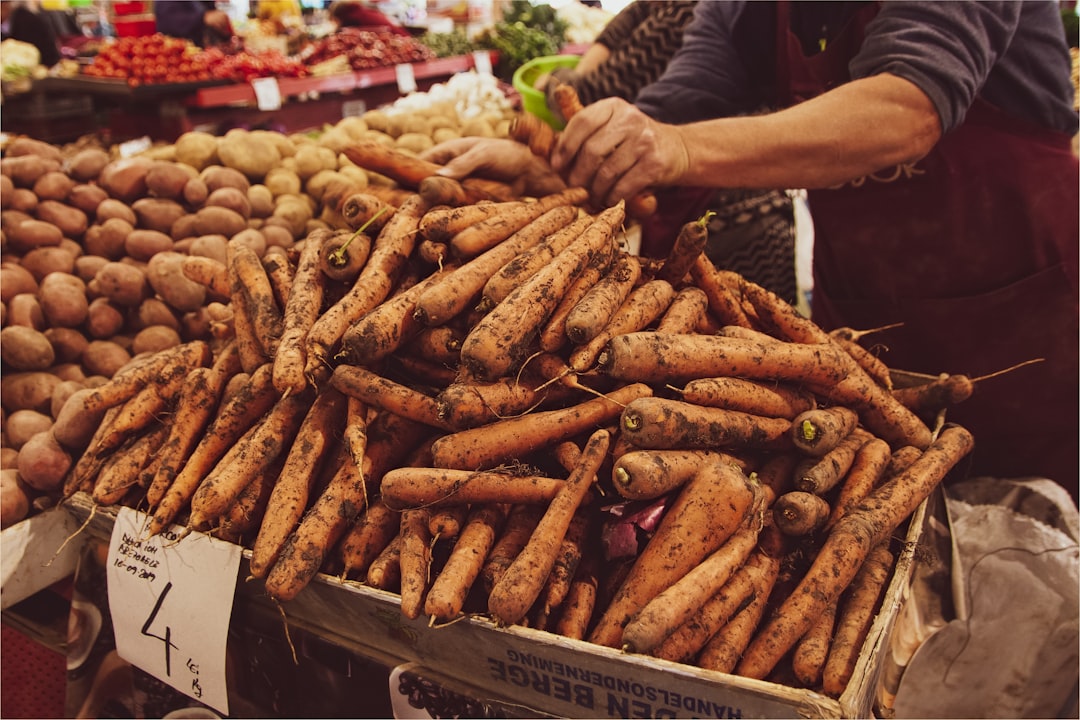

In the heart of Bucharest, in the Obor area, there is a market that does not appear in the most frequented tourist guides. Here, among wooden stalls and worn asphalt, vendors and customers move to the rhythm of a tradition that has endured for decades. The scent of local honey mixes with that of spices, while voices in Romanian create a constant background that changes with the hours of the day.
Obor Market represents an authentic piece of everyday life in Bucharest, far from the tourist squares. It is not an open-air museum, but a space where local people actually buy what they need: fresh vegetables, cheeses, bread, and those handcrafted items that you will rarely see in downtown shops.
The history and location of the market
Obor Market is located in district 3 of Bucharest, in an area that has undergone significant transformations throughout the 20th century. The market occupies a space that has historically been a trading hub for the neighborhood, although its current configuration reflects the urban developments of the last fifty years. The Obor metro station, inaugurated in the 1970s during the communist era, has made the market easily accessible from various neighborhoods in the city.
Unlike the more famous covered markets in Bucharest, Obor Market is predominantly open-air, with some structures for protection against the elements. This makes it a place where the weather directly influences the experience: spring rains transform the paths between the stalls, while summer further amplifies the aromas of the displayed goods.
The authentic colors and scents
Entering the market means being immediately enveloped by a chromatic variety that changes with the seasons. In autumn, yellow and orange pumpkins dominate the fruit and vegetable stalls. In spring, however, it is the bunches of fresh flowers and green leafy vegetables that catch the eye. The embroidered fabrics displayed by some vendors show geometric patterns in blue, red, and white, colors that recall the Romanian textile tradition.
The scents are perhaps the most memorable element. The local honey, sold in glass jars by vendors who often produce it themselves, emanates a sweet and persistent aroma. The spices — cumin, sweet and hot paprika, sunflower seeds — create olfactory layers that vary with each step. Some vendors of traditional cheeses keep their products on marble counters, and the characteristic acidity of brânză (Romanian fresh cheese) is clearly felt in the surrounding space.
Craftsmanship and Local Products
Among the stalls of vegetables and fruits, there are sellers of handcrafted items. Traditional Romanian embroidery — tablecloths, blankets, handkerchiefs — showcases techniques passed down through generations. These pieces are not mass-produced: often the women who create them still work by hand, and the prices reflect this labor. A good quality embroidered handkerchief costs between 20 and 50 Romanian lei (about 4-10 euros), while a larger tablecloth can reach 100-150 lei.
Honey deserves special mention. In Romania, honey is a product with a strong beekeeping tradition, and at Obor Market you will find sellers offering different varieties: acacia honey, wildflower honey, linden honey. Some sellers place small jars to allow customers to taste before buying. Prices range from 25 to 40 lei per liter, depending on quality and origin.
Practical tips for the visit
The market is open almost every day, with greater crowds on Saturday and Sunday mornings. The best time to visit is between 8 and 11 in the morning, when the selection of products is wider and the atmosphere is less chaotic compared to the afternoon. Getting there is easy: the Obor metro station (line M1) is just a few minutes' walk from the main entrance.
Bring a bag or a backpack with you, as vendors do not provide plastic bags — a practice that is becoming increasingly common in Romanian markets. If you wish to take photos, do so discreetly and ask for permission from the older vendors, who are generally tolerant but appreciate respect. Avoid visiting after heavy rains, when some areas become muddy. Finally, bring cash: although some vendors accept cards, most still operate only in cash.


