
← Back

Ostuni: Cathedral of Santa Maria dell'Assunzione

Piazza Beato Giovanni Paolo II, 72017 Ostuni BR, Italia ★★★★☆ 633 views
Ranita Tata
Ostuni
🏆 AI Trip Planner 2026

Get the free app

Discover the best of Ostuni with Secret World — the AI trip planner with 1M+ destinations. Get personalized itineraries, hidden gems and local tips. Free on iOS & Android.

🧠 AI Itineraries 🎒 Trip Toolkit 🎮 KnowWhere Game 🎧 Audio Guides 📹 Videos
Scan to download Scan to download

About Ostuni: Cathedral of Santa Maria dell'Assunzione

Ostuni: Cathedral of Santa Maria dell'Assunzione - Ostuni | Secret World Trip Planner

Nestled atop the highest hill in Ostuni, the Cathedral of Santa Maria dell'Assunzione stands as a majestic testament to the architectural and spiritual heritage of this enchanting town. Known as the "White City" for its dazzling whitewashed buildings, Ostuni has captivated visitors for centuries, and the cathedral, a national monument since 1902, is at the heart of its historical narrative.

### History and Origins

The cathedral's origins trace back to the early 15th century, during a time when Ostuni was a burgeoning center of commerce and culture. The site was originally home to a smaller church, built in the 12th century, but it was after a devastating earthquake in 1456 that the current structure began to take shape. The reconstruction, completed in 1495, was led by Benedetto Della Porta, who infused it with a blend of Gothic and Renaissance styles, creating an architectural gem that reflects the resilience of the community.

Over the centuries, the cathedral has witnessed numerous historical events, serving not only as a place of worship but also as a gathering space for significant communal activities. It played a pivotal role during the Italian unification in the 19th century, when the citizens of Ostuni rallied around their local identity and cultural heritage.

### Art and Architecture

The architectural style of the Cathedral of Santa Maria dell'Assunzione is a stunning illustration of Gothic and Renaissance influences. Its grand facade features three intricately carved portals, each adorned with beautiful sculptures that narrate biblical stories. The central portal, particularly, is crowned by a magnificent rose window, a highlight of the cathedral that boasts 24 rays formed by delicate columns and arches.

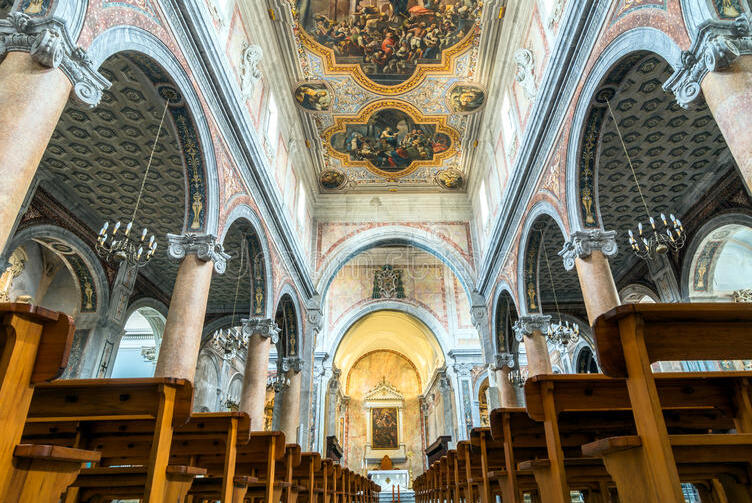
At the heart of this rose window is a captivating depiction of Christ, accompanied by the apostles and seven cherubic heads, symbolizing divine protection over the earth. Inside, the cathedral is structured like a typical Latin cross, with three naves separated by elegant arches supported by five robust columns. The central nave is adorned with exquisite 18th-century paintings, depicting scenes from the life of Jesus, as well as the veneration of Saint Oronzo, the town's patron saint, and the martyrdom of Saint Blaise.

### Local Culture and Traditions

The rich cultural tapestry of Ostuni is woven with local customs and vibrant festivals, many of which are centered around the cathedral. One of the most significant events is the celebration of Saint Oronzo, held every August. This festival features a dazzling procession that winds through the streets of Ostuni, culminating at the cathedral, where the saint's statue is paraded and venerated.

During this time, the town comes alive with music, traditional dance, and culinary delights that showcase the region's heritage. The community's connection to the cathedral and its patron saint reinforces the bond between the people of Ostuni and their history, making this a vital part of local identity.

### Gastronomy

No visit to Ostuni would be complete without indulging in its gastronomic offerings. The region is famous for its extra virgin olive oil, often regarded as some of the best in the world, thanks to the ancient olive groves that dot the landscape. Local dishes highlight the abundance of fresh ingredients, with orecchiette pasta served with broccoli rabe and cicoria, showcasing the simplicity and richness of Apulian cuisine.

Seafood is also a highlight, with dishes like frittura mista, a mixed fry of local fish and seafood, reflecting the town's coastal proximity. Pair your meal with a glass of Primitivo wine, a robust red that complements the flavors of the region perfectly, and you’ll understand why Ostuni is a culinary destination in its own right.

### Lesser-Known Curiosities

While many visitors flock to the cathedral for its stunning architecture and art, there are hidden details that often go unnoticed. One such curiosity is the sundial embedded in the cathedral's facade, which not only tells the time but also indicates the feast days of the saints celebrated throughout the year. Additionally, the crypt beneath the cathedral reveals ancient artifacts and a glimpse into the spiritual practices of the past, offering a fascinating insight into the history of religious life in Ostuni.

Another intriguing story surrounds the cathedral's bell tower, which was once a watchtower used to alert citizens of approaching invaders. Today, it offers panoramic views of the surrounding countryside, a reminder of the town's strategic importance throughout history.

### Practical Visitor Information

The best time to visit the Cathedral of Santa Maria dell'Assunzione is during the spring and fall, when the weather is mild and the crowds are thinner. Early morning or late afternoon visits are ideal for experiencing the cathedral in a quieter atmosphere, allowing for reflection and appreciation of its beauty.

When visiting, take note of the intricate details in the carvings and paintings, and don’t forget to explore the nearby streets of Ostuni, where charming cafes and artisan shops beckon. For a truly immersive experience, consider participating in a local cooking class or attending one of the town's lively festivals.

To enhance your visit further, consider using the Secret World app to craft a personalized itinerary, ensuring you uncover all the hidden gems Ostuni has to offer.

🗺 AI Trip Planner

Plan your visit to Ostuni

Suggested itinerary near Ostuni: Cathedral of Santa Maria dell'Assunzione

MAJ+
500.000+ travelers worldwide
  1. 🌅
    Morning
    Ostuni: Cathedral of Santa Maria dell'Assunzione
    📍 Ostuni
  2. ☀️
    Afternoon
    Ostuni Cathedral,
    📍 0 km · Ostuni
  3. 🌆
    Evening
    Ostuni and the majestic St. James Church of Compostela
    📍 0.1 km · Ostuni

Buy Unique Travel Experiences

Powered by Viator

See more on Viator.com

Explore nearby · Ostuni

Frequently Asked Questions

The cathedral's current structure began taking shape after a devastating earthquake in 1456 destroyed the original 12th-century church that stood on the site. The reconstruction was completed in 1495 under the leadership of architect Benedetto Della Porta, who blended Gothic and Renaissance styles to create the architectural masterpiece we see today.
The cathedral's grand facade features three intricately carved portals adorned with biblical sculptures, with the central portal crowned by a magnificent rose window containing 24 rays formed by delicate columns and arches. At the heart of the rose window is a captivating depiction of Christ accompanied by the apostles and seven cherubic heads, symbolizing divine protection.
Located atop the highest hill in Ostuni, the cathedral has served as more than just a place of worship since the 15th century—it has been a gathering space for significant communal activities and played a pivotal role during Italian unification in the 19th century. Recognized as a national monument since 1902, it stands at the heart of Ostuni's historical and cultural narrative.
The rose window is a highlight of the cathedral's architecture, featuring 24 rays formed by delicate columns and arches that create an intricate geometric pattern. The window's center depicts Christ surrounded by the apostles and seven cherubic heads, making it a remarkable example of Gothic and Renaissance design.
The cathedral is nestled atop the highest hill in Ostuni, the enchanting 'White City' famous for its dazzling whitewashed buildings. Its prominent hilltop location makes it a striking landmark visible throughout the town and a natural focal point for visitors exploring Ostuni's historical center.
