
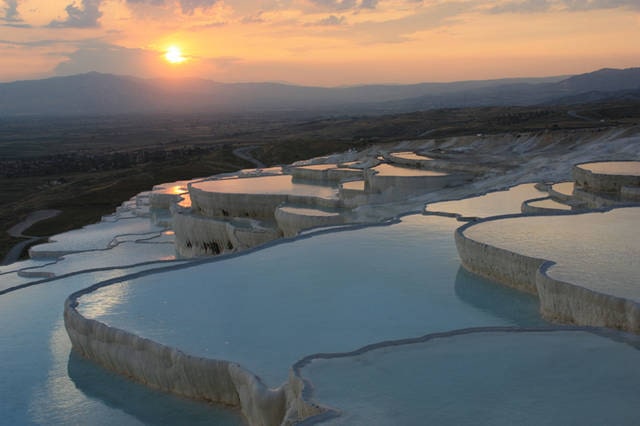

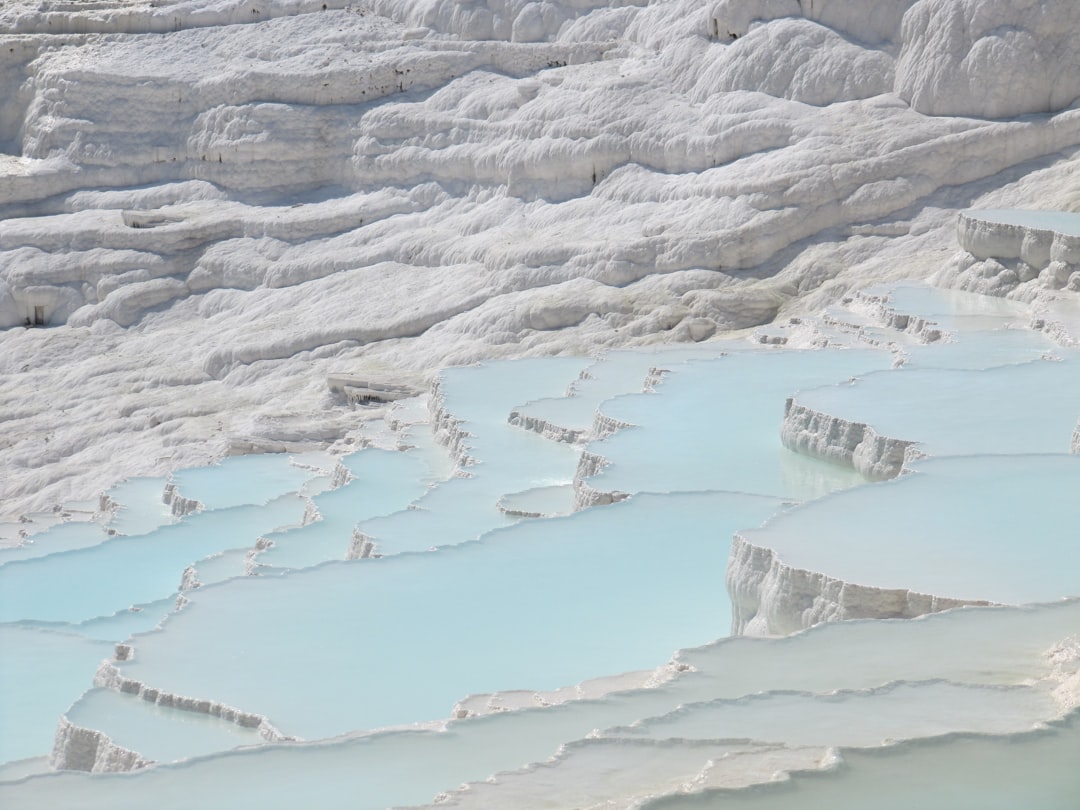
In the heart of Turkey's Denizli Province, nestled within the Akköy District, lies Pamukkale, a surreal landscape that has drawn visitors for centuries with its ethereal beauty. This remarkable site, whose name translates to "Cotton Castle" in Turkish, is renowned for its dazzling white terraces formed by calcium-rich thermal waters. The allure of Pamukkale extends beyond its visual spectacle; it is a place steeped in history, culture, and unique natural phenomena.
The origins of Pamukkale date back to antiquity when it was part of the ancient city of Hierapolis, founded in the early 2nd century BCE by the kings of Pergamon. The city was named after Hiera, the wife of Telephos, the legendary ancestor of the Attalid dynasty. Hierapolis thrived as a healing center during the Roman Empire, drawing people from all over the known world who sought the curative properties of its thermal springs. The Romans built extensive baths and a necropolis, remnants of which still stand today, offering a window into a rich past where leisure and wellness intertwined.
Architecturally, Hierapolis was a marvel of its time. The city was adorned with grandiose structures like the Roman Theatre, which seated over 12,000 spectators and is still remarkably well-preserved. Its intricate stone carvings and statues reflect the artistic prowess of the era. Another significant site is the Temple of Apollo, believed to be constructed over an ancient Plutonium, a sacred cave emitting toxic gases, which the ancients associated with the underworld. Such sites were not merely architectural feats but also held deep spiritual significance for the people of Hierapolis.

Culturally, Pamukkale and its surroundings are imbued with a rich tapestry of traditions. The local community celebrates various festivals throughout the year, such as the Denizli Rooster Festival, highlighting the region's emblematic rooster breed. Music and dance are integral parts of these celebrations, with traditional Turkish folk dances offering a vibrant display of the region's heritage. Visitors often find themselves captivated by the rhythmic beats and colorful costumes that bring local legends and stories to life.
No visit to Pamukkale would be complete without indulging in the local gastronomy. The region is famous for its Denizli kebabs, a succulent dish of lamb or beef cooked over a wood fire, seasoned with unique local spices. Another must-try is the Buldan cloth börek, a savory pastry made with thin layers of dough, cheese, and herbs. Pair these delicacies with a glass of Çalkarası wine, a local varietal that perfectly complements the robust flavors of the regional cuisine.
Beyond the well-trodden paths, Pamukkale holds lesser-known curiosities that intrigue the inquisitive traveler. Few know that the thermal waters remain at a constant temperature of about 36 degrees Celsius year-round, offering a warm embrace even during the cooler months. Moreover, the spectacular terraces are a result of millennia of mineral deposits, forming a landscape that resembles snow-covered slopes, yet remains warm to the touch. Another fascinating detail is the nearby Karahayit, a village known for its red thermal waters, rich in iron, offering a compelling contrast to the white travertines of Pamukkale.
For those planning a visit, the best time to experience Pamukkale is during the spring (April to June) or autumn (September to November) when the weather is pleasantly mild. To fully appreciate its beauty, arrive early in the morning or late in the afternoon to avoid the peak tourist crowds and witness the sunrise or sunset casting golden hues over the terraces. While exploring, remember to respect the natural formations by staying on designated paths to preserve this UNESCO World Heritage Site for future generations.
In conclusion, Pamukkale is much more than a mere mineral-bath spa. It is a place where history, nature, and culture converge to create an experience that is as enriching as it is enchanting. Whether you're soaking in its therapeutic waters, wandering through ancient ruins, or savoring the local cuisine, Pamukkale promises a journey that will linger in your memory long after you leave.


