
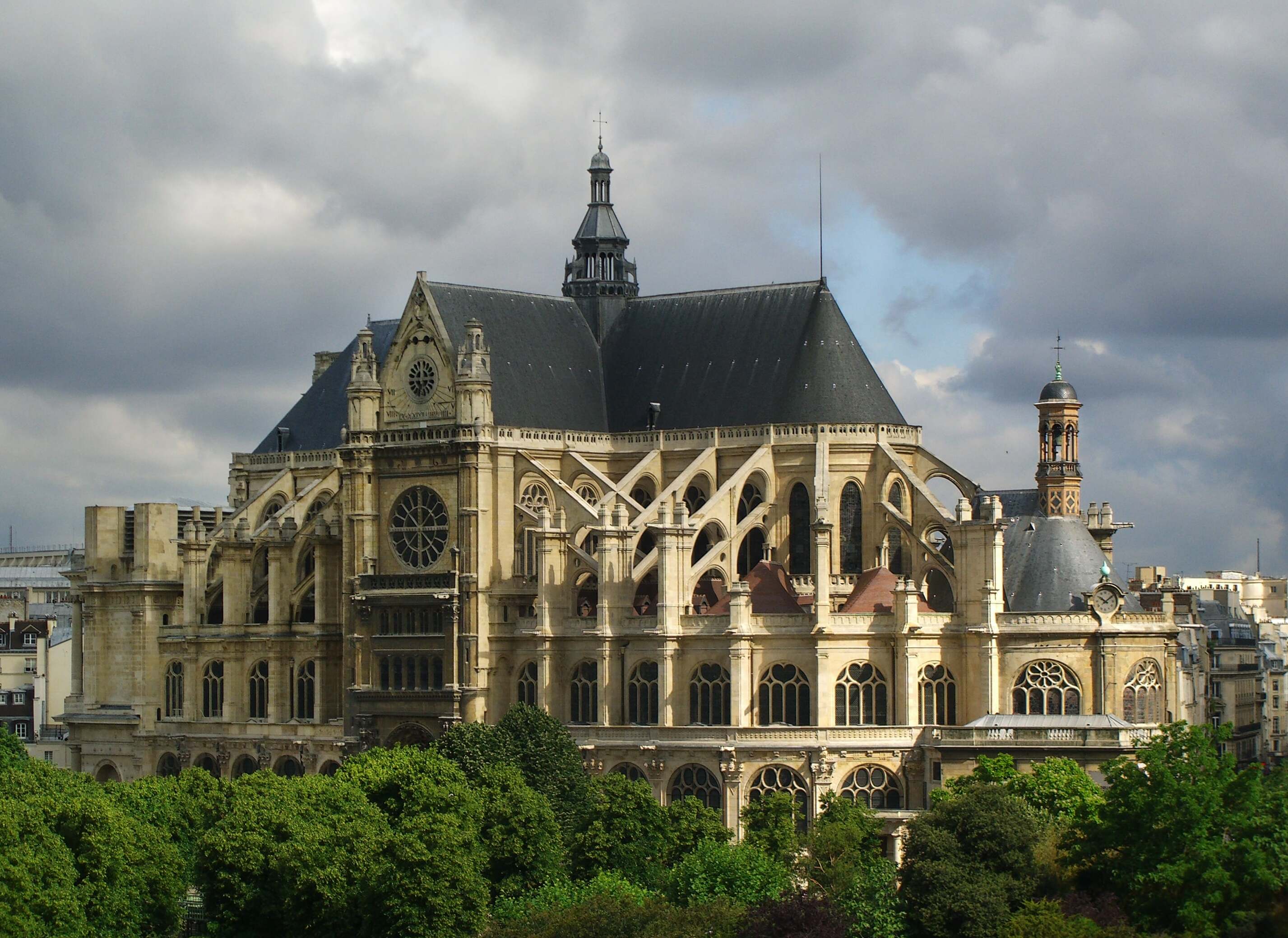

In the heart of Paris, amidst the bustling ambiance of the Les Halles district, stands the majestic Saint-Eustache Church—a testament to both Gothic grandeur and Renaissance elegance. This architectural marvel, located at coordinates 48.8635861, 2.3452004000001, tells a story of artistic evolution and royal patronage that has captivated visitors for centuries.
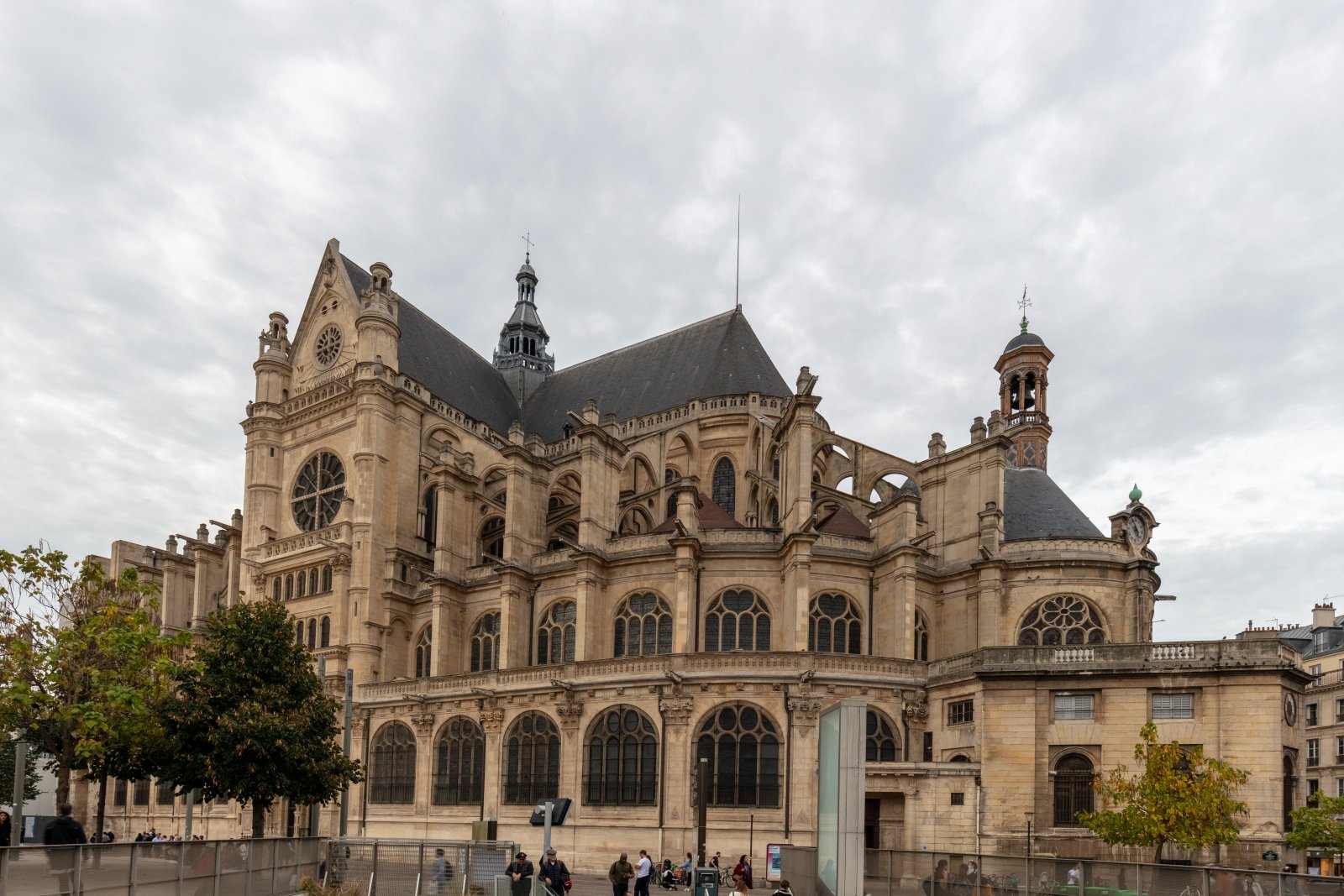
The origins of Saint-Eustache date back to the early 13th century when a modest chapel was first established on the site. As the population of the surrounding market district grew, there was a need for a larger place of worship. Construction of the current structure began in 1532 and spanned over a century, culminating in its completion in 1637. This extended building period allowed the church to incorporate both the towering verticality of Gothic architecture and the ornate details of the emerging Renaissance style. The church's façade, completed in the 18th century, is a harmonious blend of these artistic movements, echoing its unique historical journey.
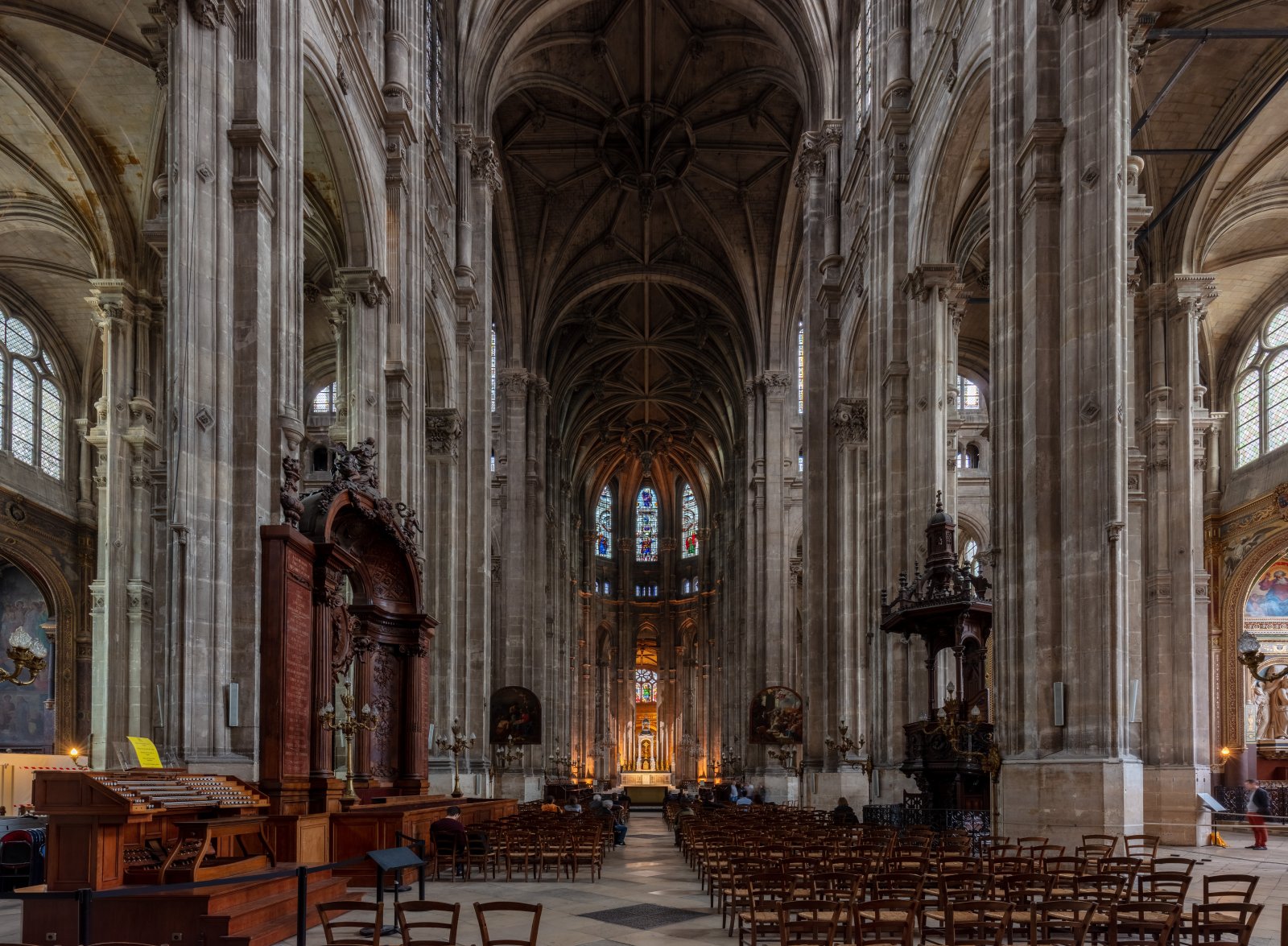
Step inside, and the interior of Saint-Eustache will leave you breathless. Its soaring 33-meter-high vaults are adorned with intricate ribbed designs that draw the eye upwards, inviting contemplation and awe. The church is home to a wealth of notable artworks, including the stunning "Triumph of St. Thomas Aquinas" by the renowned Baroque painter Antoine Coypel. Visitors can also admire the grand organ, one of the largest in France, known for its deep, resonant tones that have filled the church with music for over four centuries.
Beyond its architectural and artistic splendor, Saint-Eustache plays a significant role in local culture and tradition. The church is deeply intertwined with the history of Parisian life, having hosted the likes of Louis XIV, who received his first communion here, and the funeral of Mozart's mother. Today, it remains a vibrant cultural hub, hosting regular classical music concerts that attract both locals and tourists. Every year, the church celebrates the Feast of Saint Eustace on September 20th, drawing visitors to experience its spiritual and cultural heritage.
No visit to Saint-Eustache would be complete without indulging in the local gastronomy that surrounds it. The nearby Rue Montorgueil is a paradise for food lovers, offering an array of typical Parisian treats. Savor a flaky croissant or a buttery pain au chocolat from one of the many patisseries, or indulge in a decadent tarte aux framboises. For a more substantial meal, the area offers traditional French bistros where you can enjoy a comforting coq au vin or a perfectly cooked steak frites, paired with a glass of local wine.
For those keen on uncovering lesser-known aspects of Saint-Eustache, the church is home to a small detail that often goes unnoticed. Above the main entrance, a series of carved reliefs depict various scenes from the life of Joseph, the patron saint of workers. These intricate carvings are a beautiful example of the church's craftsmanship and a nod to the working-class roots of the Les Halles district.
When planning a visit to Saint-Eustache, consider timing your trip for the late afternoon when the setting sun bathes the interior in a soft, golden light, enhancing its ethereal beauty. The church is open to visitors every day, with free entry, although donations are appreciated to help with its maintenance. Take a moment to sit quietly in one of its pews, absorbing the serene atmosphere and reflecting on the centuries of history that echo through its walls.
As you explore this iconic Parisian landmark, remember to look for its hidden details and let the timeless beauty of Saint-Eustache enrich your understanding of both Paris's past and its living cultural tapestry.


