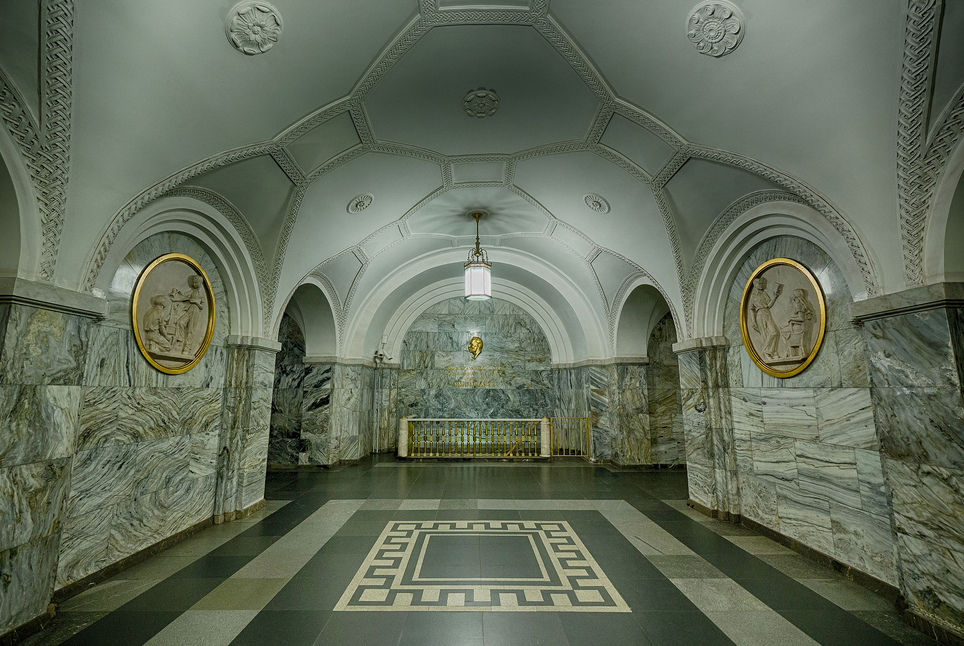

Park Kultury Station, nestled in the heart of Moscow, is not merely a transit point; it serves as a gateway to Gorky Park, the city's most iconic green space. The station, opened in 1935, is a testament to Soviet architectural grandeur, featuring five types of marble—from veined light gray to deep black—alongside empire chandeliers that illuminate the grand hall. The intricate marble bas-reliefs, designed by the talented Isaac Rabinovich, depict the vibrant life of Soviet citizens, showcasing leisure activities that flourished in Gorky Park, such as model airplane flying, dancing, and various sports like football and tennis.
### History and Origins Gorky Park has a rich history that dates back to the 1920s when it was transformed from a private estate into a public park. Named after the renowned Russian writer Maxim Gorky, it became a symbol of the Soviet era's push for a new, collective cultural identity. The park was designed by architect Mikhail K. Kolesnikov and officially opened in 1928. Over the decades, it has witnessed significant historical events, including public celebrations, protests, and cultural festivals, serving as a barometer of the city's changing social landscape.
### Art and Architecture A walk through Park Kultury Station reveals its striking Stalinist architecture, characterized by monumental proportions and lavish details. The marble walls, adorned with bas-reliefs, tell stories of Soviet life, encapsulating the spirit of an era. Beyond the station, Gorky Park itself is a blend of classic and contemporary designs, featuring open-air sculptures and installations by modern artists. The park's Central House of Artists showcases rotating exhibitions, marrying the past with the present and inviting visitors to experience the vibrant Russian art scene.
### Local Culture and Traditions In addition to its historical significance, Gorky Park is a living embodiment of Moscow's culture. It hosts various festivals throughout the year, including Moscow City Day celebrations and the popular Gorky Park Summer Festival, where locals and tourists gather for music, dance, and art. The park also serves as a venue for open-air cinema events, showcasing both classic films and contemporary cinema, reflecting the city's love for storytelling through visual arts.
### Gastronomy A visit to Gorky Park is incomplete without sampling local delicacies. The park is dotted with cafes and kiosks offering traditional Russian fare. Don't miss out on trying pyrizhki (stuffed buns), blini (thin pancakes), and syrniki (cottage cheese pancakes) paired with a steaming cup of chai (tea). For a more modern twist, the park also features trendy eateries serving fusion cuisine, allowing visitors to experience culinary creativity in a beautiful setting.
### Lesser-Known Curiosities While many flock to Gorky Park for its greenery and recreational offerings, few notice the hidden nooks that tell stories of the past. One such gem is the small Sculpture of a Young Pioneer, a nod to the Soviet youth movement, which many visitors overlook. Additionally, the park is home to the Gorky Park Museum, a lesser-known spot that chronicles the park's evolution and its impact on Moscow's social fabric.
### Practical Visitor Information The best time to visit Gorky Park is during the spring and summer months (May to September) when the flowers bloom, and the atmosphere is vibrant with activity. For an optimal experience, consider visiting on weekends when the park hosts various performances and activities. Bring comfortable shoes, as the park is expansive, and don't forget your camera to capture the stunning views and lively scenes.
Whether you're delving into the architectural wonders of Park Kultury Station or enjoying a leisurely day in Gorky Park, this cultural oasis in Moscow is sure to captivate and inspire.
For a personalized itinerary that includes these cultural gems, consider using the Secret World app to explore Moscow.