
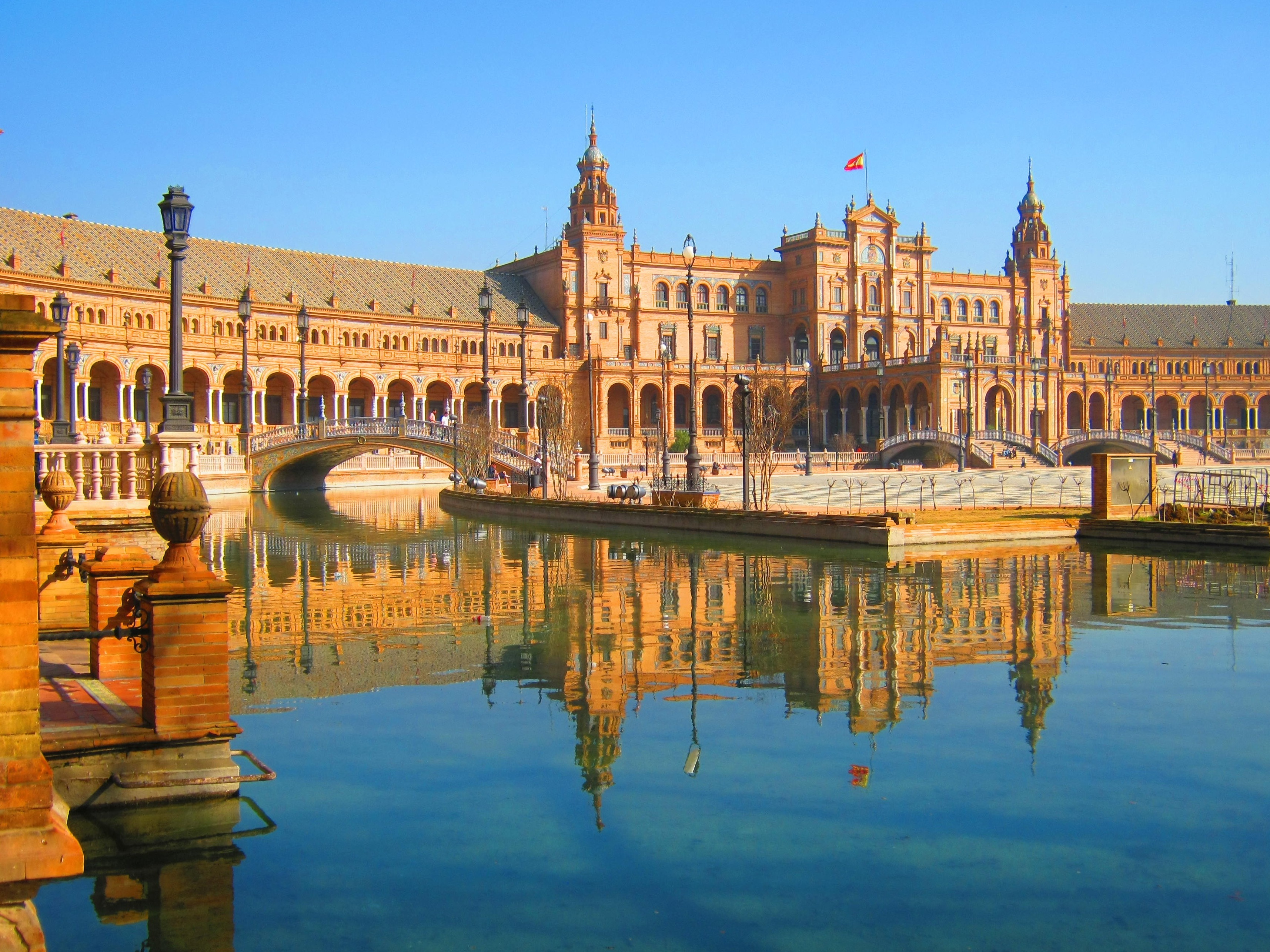

Plaza de España is a breathtaking architectural gem nestled in the heart of Seville, Spain. Renowned for its neo-Moorish architecture, this monumental square captivates visitors with its grandeur and intricate details. Located within the lush María Luisa Park, the plaza is easily accessible from the Cid Campeador roundabout, just opposite the historic Royal Tobacco Factory. Open to the public, the square closes at 10 PM during the winter months and at midnight in summer, allowing ample time for exploration.
### History and Origins The Plaza de España was conceived as part of the Ibero-American Exhibition of 1929, an event aimed at showcasing Spain's cultural heritage and fortifying ties with Latin America. The initial design was entrusted to architect Annibale González, who envisioned a space that would celebrate Spain's diverse regions. Construction began in 1914 and spanned a period of fourteen years, concluding in 1928 under the stewardship of Vicente Traver after González's resignation in 1926. The square's design reflects a fusion of architectural styles, drawing heavily from Moorish influences, which resonate deeply within the architectural fabric of Seville.
### Art and Architecture Covering a sprawling 50,000 square meters, the Plaza de España is a semi-circular structure flanked by a canal, accessible by picturesque bridges. The building's façade is adorned with vibrant ceramic tiles representing each of Spain's provinces, symbolizing unity in diversity. The central tower rises impressively to 74 meters, embodying the Renaissance style with a distinct Moorish twist, while intricate brickwork and ornate arches enchant onlookers.
A prominent feature is the central fountain, surrounded by benches that invite visitors to sit and soak in the beauty of their surroundings. The plaza is not only an architectural marvel but also a canvas of artistic expression, with numerous sculptures and mosaics that tell stories of Spain’s illustrious past.
### Local Culture and Traditions The Plaza de España serves as a vibrant meeting point for both locals and tourists. It often hosts spontaneous performances, from flamenco dancers to musicians, celebrating the rich cultural heritage of Andalusia. Festivals like Feria de Abril see the square transform into a bustling hub of activity, where locals showcase traditional costumes and gastronomic delights.
Moreover, the plaza has become an integral part of local traditions, serving as a backdrop for weddings, celebrations, and artistic gatherings. The sense of community and cultural pride is palpable, making it a living testament to the soul of Seville.
### Gastronomy No visit to the Plaza de España is complete without indulging in local gastronomy. The area is dotted with tapas bars offering a plethora of traditional dishes. Try the salmorejo, a creamy tomato soup, or espinacas con garbanzos, a delightful blend of spinach and chickpeas. For the adventurous palate, fried fish and jamón ibérico are must-tries, paired with a glass of local sherry or tinto de verano, a refreshing summer drink.
### Lesser-known Curiosities Among the many stories that permeate the Plaza de España, one particularly stands out: the plaza was featured in the film Star Wars: Episode II – Attack of the Clones, where it represented the fictional planet Naboo. Additionally, the intricate mosaics depicting each province of Spain often go unnoticed; each tile tells a unique story, rich in history and tradition, waiting to be uncovered by curious visitors.
### Practical Visitor Information The best time to visit the Plaza de España is during the mild months of spring (March to May) or autumn (September to November) when the temperatures are pleasant for strolling and exploring. Early mornings and late afternoons provide the perfect light for photography and a chance to enjoy the plaza with fewer crowds. When visiting, don’t forget to look for the hidden alcoves and benches adorned with exquisite tiles; each one is a mini masterpiece.
Plan your visit with local events in mind, as the plaza often hosts cultural exhibitions and performances. Bring a camera to capture the enchanting details and perhaps a picnic to enjoy on the beautifully manicured lawns.
The Plaza de España in Seville is not just a square; it is a celebration of culture, history, and artistry that invites visitors to immerse themselves in the lively spirit of Andalusia. Use the Secret World app to craft a personalized itinerary to discover the best of Seville.


