

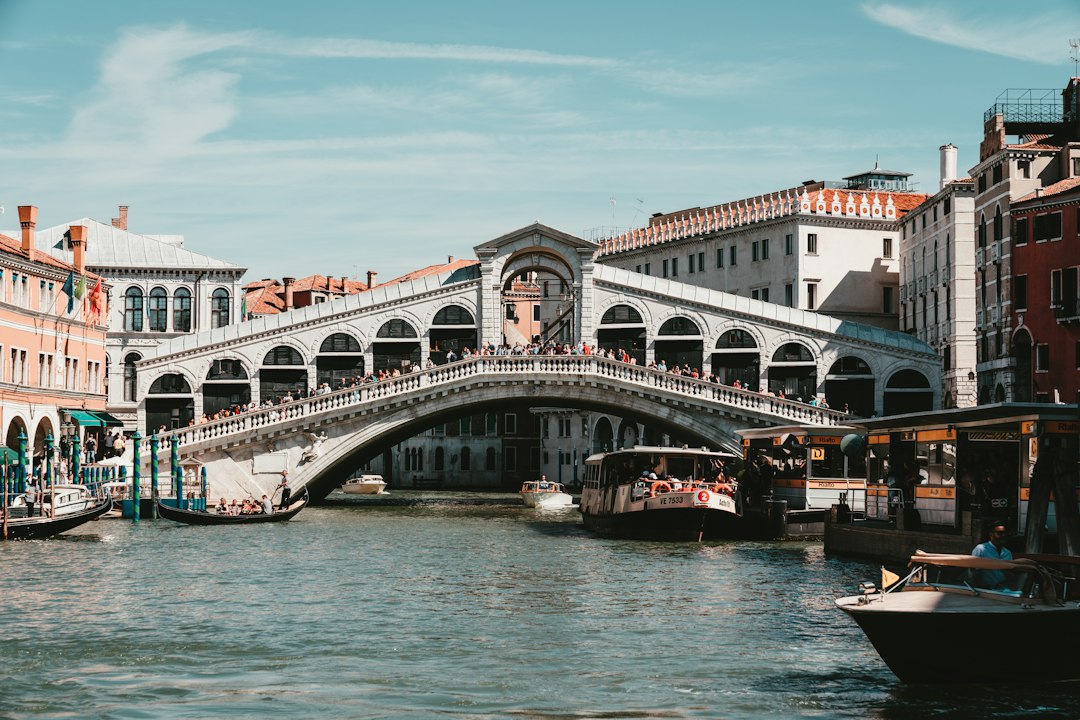
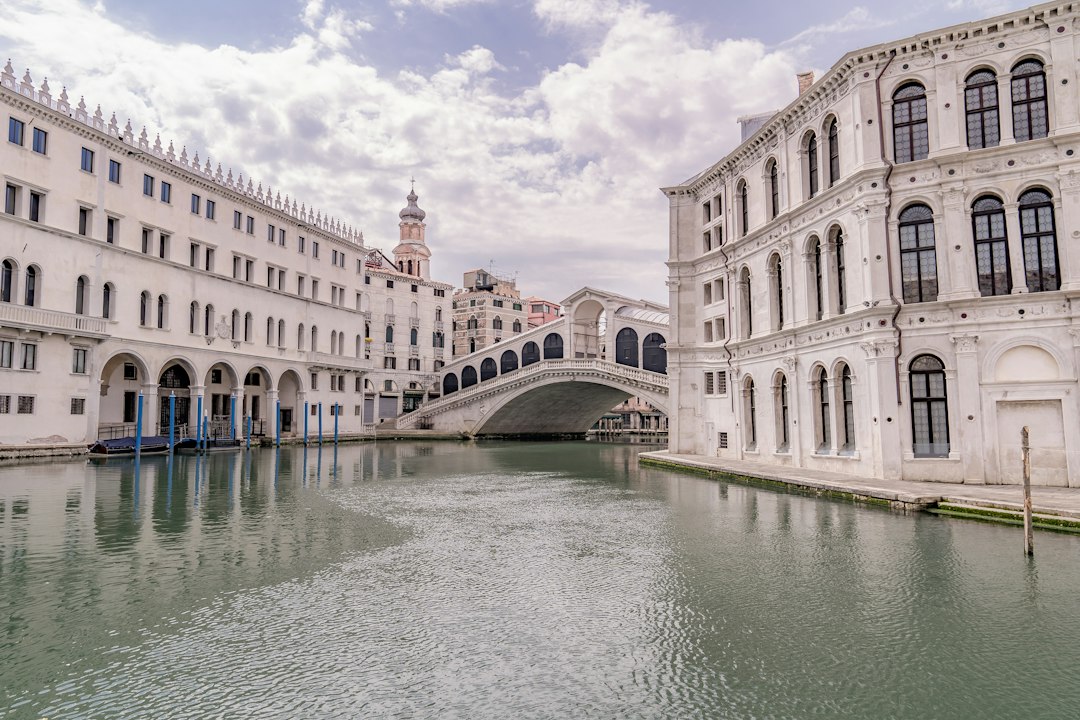
Three hundred and thirty years of footsteps, voices, and goods changing hands: the Rialto Bridge is not simply a crossing over the Grand Canal, but a stage where Venice presents itself without filters. Built in 1591 based on the design of architect Antonio da Ponte, this arch of white Istrian stone was the result of a debate lasting decades, during which Michelangelo and Andrea Palladio also presented alternative proposals. In the end, the boldest solution won: a single arch with a humped back, 22 meters wide and 48 meters long, capable of supporting the weight of shops, crowds, and centuries.
Before this stone bridge, the point was crossed by wooden structures, the last of which collapsed in 1444 under the weight of a crowd that had gathered to witness the passage of a wedding procession. That catastrophe accelerated the reflection on a permanent solution, but the work on the current bridge only began in 1588, three years before the inauguration. Walking over it today, it is hard to imagine how controversial that architectural choice was: many contemporaries doubted that a single arch could withstand. It withstood, and it still stands.
The architecture that you can touch with your hands
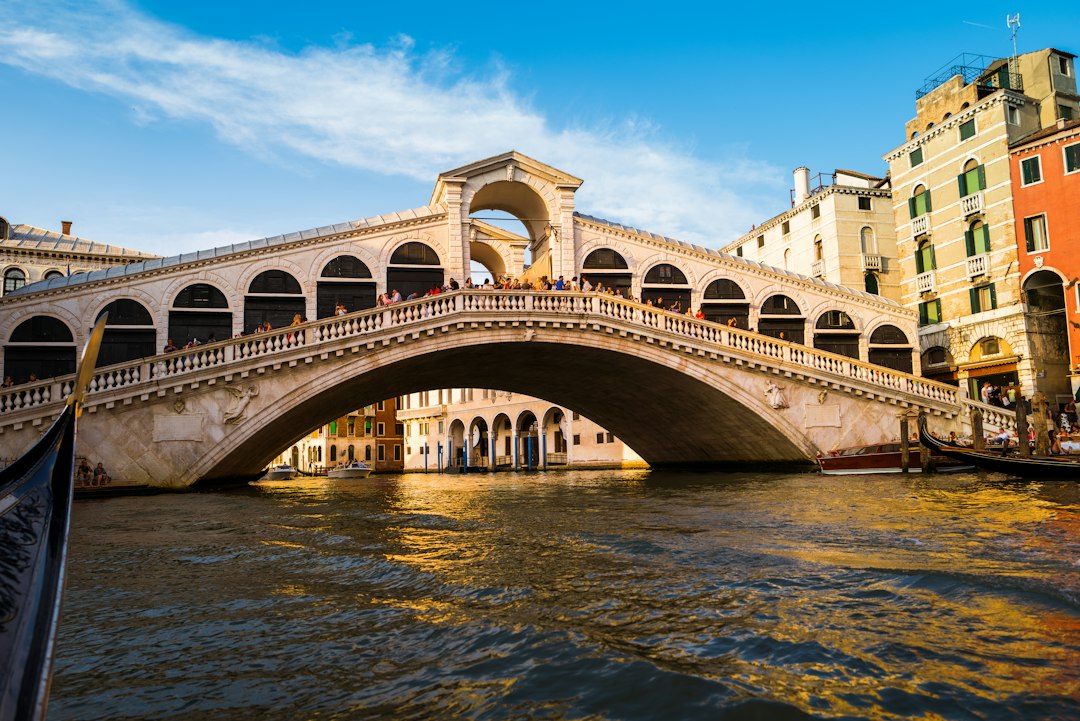
Climbing the Rialto Bridge means walking up two parallel flights of steps that converge towards a central loggia with three arches. Along the inner sides, 24 shops open up, arranged in two symmetrical rows, originally assigned to money changers and merchants of fine fabrics. Even today those shops are active, mainly with jewelry, souvenirs, and Murano glass items, and their commercial rhythm closely resembles the original function of the bridge as an economic hub of the Serenissima.
The Istrian stone, extracted from the quarries of the Istrian peninsula in present-day Croatia, is the material that gives the bridge its unmistakable white-cream color. This limestone was chosen by the Venetians for its resistance to saltwater and erosion. Observing the parapets up close, one can notice the bas-reliefs that decorate the shoulders of the bridge: figures of the Annunciation and the patron saint of Venice, Saint Mark, carved with the precision typical of the late Venetian Renaissance.
The Rialto Market and the Surrounding District
The bridge is inseparable from the market that bears its name. The Rialto Market, located on the left bank of the Grand Canal, is one of the oldest food markets in Europe: its origins date back at least to 1097. Even today, every morning from Monday to Saturday, the stalls of fruit, vegetables, and fish animate the Fish Market and the Herb Market, the two historic sectors of the market. Bluefin tuna, cuttlefish, spider crabs, and moeche — the soft crabs typical of the lagoon — arrive fresh every day and are sold until they run out, usually by noon.
Walking through the alleys that radiate from the bridge means crossing one of the most vibrant commercial districts of Venice, where true Venetians still do their daily shopping. It is a radically different experience from that of San Marco: fewer organized tourists, more carts with crates of vegetables, more Venetian dialect in the air.
Come visit it at its best
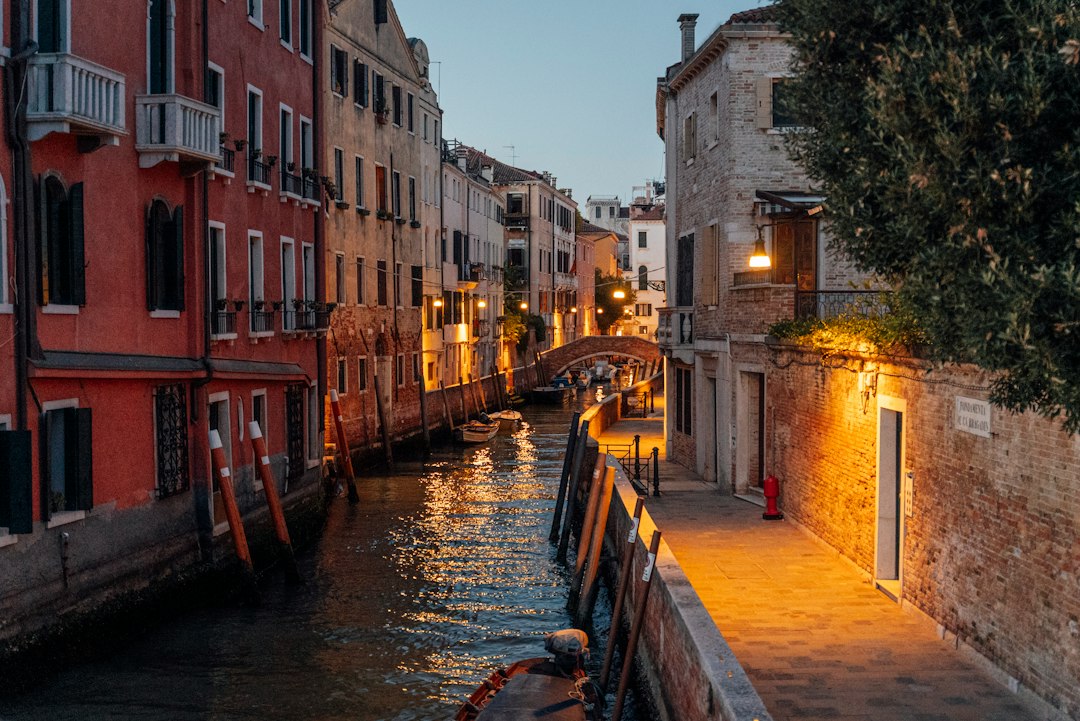
The most effective time to cross the Rialto Bridge is in the early morning, before 8:30 AM. At that time, the slanting light spectacularly illuminates the white stone, the Grand Canal is traversed by water buses and supplier boats — not yet by tourist gondolas — and the crowd is still manageable. Between 10 AM and 6 PM, especially in the summer months, the bridge becomes almost impassable due to the density of visitors.
To get there, the most direct way is the water bus line 1, which stops exactly at the Rialto stop on both sides. Alternatively, walking from St. Mark's Square takes about 15-20 minutes following the yellow arrows that indicate Rialto. It is advisable to avoid the restaurants immediately adjacent to the bridge, where prices are significantly inflated: by moving just two or three alleys away, you can find traditional bacari where a glass of wine and a cicchetto cost a fraction of the tourist price. Visiting the bridge itself does not require a ticket and has no closing hours.
Why this bridge tells the story of Venice better than any museum
The Rialto Bridge serves as an involuntary synthesis of everything that has made Venice unique: engineering that defies logic, commerce as an identity vocation, stone that floats on water. It is not a monument to admire from a distance — it is an urban object that is used, that is crossed, that is consumed with one's feet.
Looking towards the Grand Canal from the central steps, with the Gothic and Renaissance palaces reflecting in the green-gray water, one understands why generations of painters — from Canaletto to Giovanni Bellini — have chosen this very perspective. Not out of nostalgia, but because from here Venice appears exactly as it is: a city built against all good sense, and survived thanks to it.


